


Read time: 5 minutes
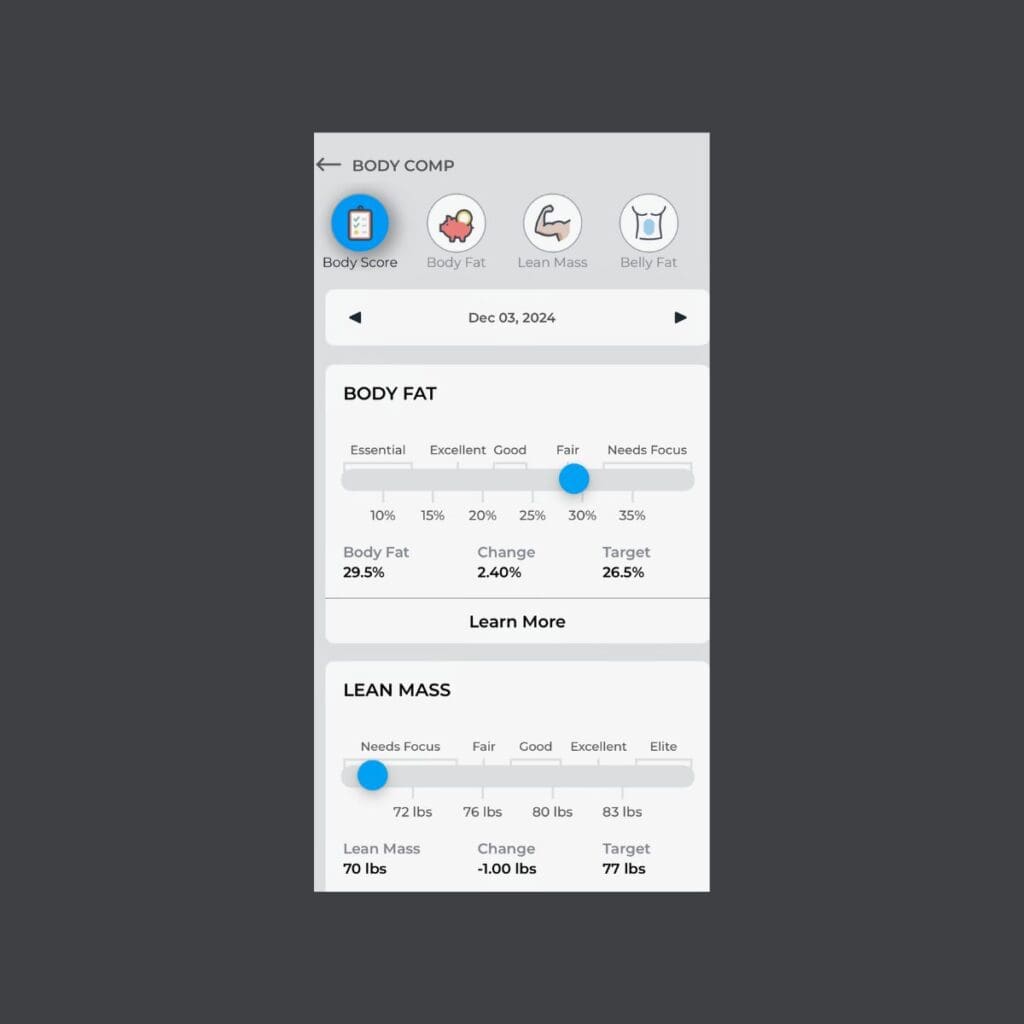
At 53, I just gained 2 pounds of muscle—but only after losing a pound first. That progression from 71 to 70 to 72 pounds of lean mass taught me something crucial: you can lose muscle faster than you think, and what feels like you’re “maintaining” might actually be gradual decline.
If you’re over 40 and concerned about maintaining your strength as you age, here’s what I learned from tracking my lean mass for the past 18 months—and why measuring my progress changed my approach.
Why Muscle Mass Matters More Than You Think
Here’s what most people don’t realize: muscle mass affects far more than your ability to lift heavy things. It’s your body’s metabolic powerhouse, your protection against chronic disease, and your insurance policy for quality of life as you age.
The benefits of maintaining and building muscle include:
- Metabolic health: More muscle means better blood sugar control and fat burning, even at rest
- Chronic disease prevention: Strong muscles reduce your risk of diabetes, heart disease, and metabolic dysfunction
- Cognitive function: Research shows muscle mass correlates with brain health and memory
- Bone protection: Muscle-building activities also strengthen bones, reducing fracture risk
- Daily life strength: Participating in your favorite sports, climbing a long flight of stairs, keeping up with your kids and grandkids—all easier with adequate muscle
- Longevity: People with more muscle mass live longer and with better quality of life
The stakes: Most people lose 3-8% of muscle mass every decade after 30, and the loss accelerates with age. That gradual decline directly impacts your metabolism, strength, and quality of life in your later decades.
Every pound of muscle you maintain or build now is an investment in your future self.

Why My Second Scan Was a Wake-Up Call
After hearing about Dexafit from the Netflix documentary “You Are What You Eat: A Twin Experiment,” I booked my first DEXA scan at their new Manhattan location. I was their first appointment on their first day (this was not in my master plan). I walked out with a discounted 3-pack.
A single scan would have given me critical data on my lean mass, visceral fat, and bone density, but I wanted to see progression over time. Were my efforts in strength training at Bar Method translating to muscle gain? Results are motivation to continue, especially when something’s hard. The only way to know for sure was to track it.
My three DEXA scans told a story:
- First scan (baseline): 71 pounds lean mass
- Second scan (6 months later): 70 pounds lean mass—1 pound lost, classified as “Needs Focus”
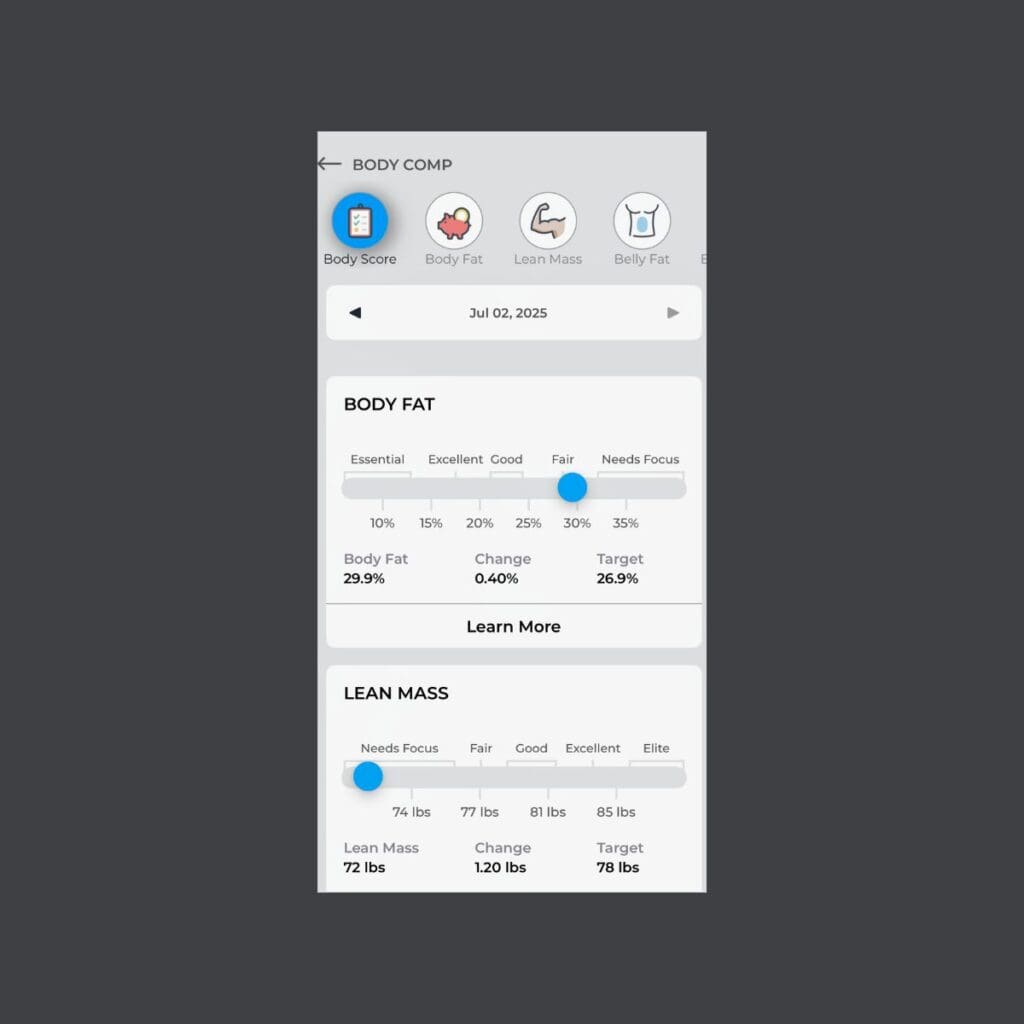
- Third scan (7 months after that): 72 pounds lean mass—2 pound gain, exceeding my original baseline
That’s when I realized something crucial: what you think is working might not be working. I’d added Bar Strength classes with more focus on weights between my first and second scans. I expected muscle gain, or at worst, no change. Instead, I lost a pound of lean mass in just six months.
Assumptions can be costly.
The Turnaround
Seven months after that concerning second scan, I returned to Dexafit after making specific adjustments to my routine. The result: 72 pounds of lean mass—not only reversing the decline but exceeding my original baseline.
My physical therapist noted that gaining muscle with minimal fat gain is difficult to achieve—something I attribute to my whole food plant-based diet.
The key insight: I made targeted changes based on what the measurements showed me, not on what I assumed was happening. The adjustments weren’t revolutionary—they were evidence-based responses to what the data made clear.
Worth noting: I’m still classified as ‘Needs Focus’ for lean mass, and I don’t build muscle easily. This isn’t a problem I’ve solved—it’s a long-term project that requires consistent effort and ongoing measurement.
Your Action Plan
The point isn’t that you need a DEXA scan—it’s having a plan and measuring whether or not your approach is working.
DEXA scans provide the most precise data: At $179 per scan, body composition analysis shows exactly what’s happening with your muscle mass, but it’s not the only option.
Other ways to track your progress:
- Strength benchmarks: Can you lift heavier weights than 6 months ago?
- Functional measures: Can you do more pushups? Hold a plank longer? Perform pull-ups (even a few)?
Expect to make adjustments. My first approach didn’t work, despite feeling like I was doing everything right. Having data allowed me to course-correct instead of wasting months or years on ineffective strategies.
The specific changes I made to reverse the trend will be the focus of next week’s post.
If you’re over 40, some form of progress tracking becomes essential health intelligence, not vanity metrics. Because muscle loss can happen faster than you realize. Whether that’s DEXA scans, strength benchmarks, or functional assessments, the specific method matters less than the principle: measure, adjust, validate.
Start today: Test your current strength. Do as many pushups as you can, time how long you can hold a plank, and write it down. Retest in 12 weeks to see if your current approach is working.
Thanks for reading!
Like this post? The newsletter is the blog, plus. Subscribe to You Are What You Read — one email a month on redefining your Next 50. Only what works.
References & Additional Reading
- The underappreciated role of muscle in health and disease
- Muscle tissue changes with aging
- How can strength training build healthier bodies as we age?
Image credit: Photo by cottonbro studio
This post does not constitute medical advice. Please consult with your healthcare provider regarding your specific health needs.