


Read time: 7 minutes
Most “best of” health lists focus on products that promise to solve specific problems. This one’s different. These five investments created the framework that made consistent progress possible in 2025.
I’m not talking about supplements or gadgets. I’m talking about the infrastructure: measurement, tracking, support, community, and simplicity. These categories are the framework. The tools you use are yours to choose—what fits your life, your schedule, your preferences.
Here’s the framework plus the specific tools I used to move the needle this year.
Investment 1: Measurement
Whoop Advanced Labs
My love for Whoop runs deep—it tells me my biological age is 10 years younger than my chronological age, and I’ll take it. So when they launched Whoop Advanced Labs this fall, I thought: yes, I’m in. Why use a separate testing platform like Inside Tracker or Function Health when I can keep everything in Whoop?
The beauty of Whoop Advanced Labs is not only can you get your biomarkers tested, but you can also upload previous lab tests from your doctor to track progress over time. And the Whoop Coach function works whether you’ve paid for Whoop’s testing or you’ve uploaded your own labs (free).
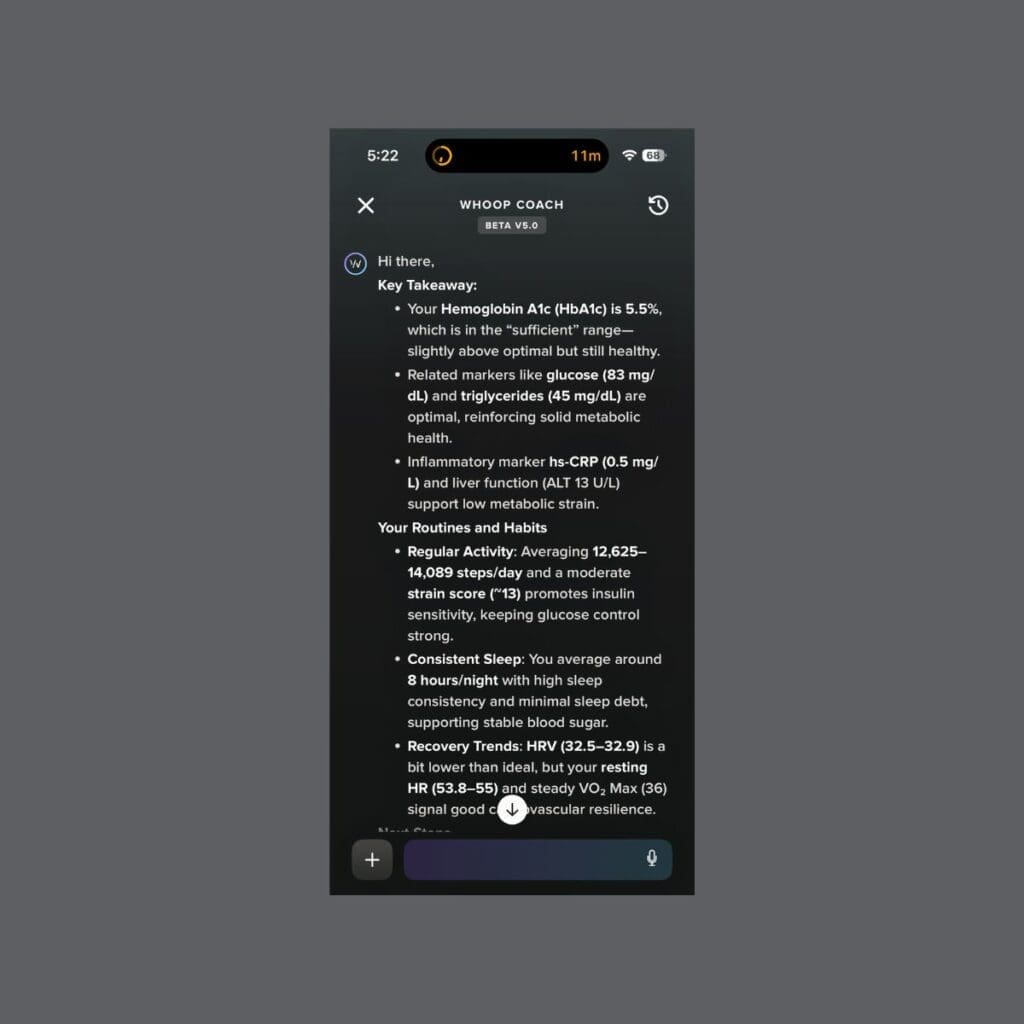
I knew Whoop would assess each biomarker individually similar to my experience using Inside Tracker. What I didn’t expect: Whoop Coach synthesizes all the data it has available—not just tests I paid for via Whoop (which I haven’t), but any tests I’ve uploaded from my doctor’s office. And Whoop isn’t looking at each biomarker in isolation. It’s evaluating my health across multiple, related biomarkers (see image).
I’ve had access to Whoop Advanced Labs since October, so I’m just now diving into everything it can do, but let’s say this: I’m impressed. You might learn things about your health from this tool that your doctor isn’t telling you.
Investment 2: Tracking
Full Focus Planner
I’ve been using the Full Focus Planner since 2024 (love it!). Use whatever works for you—digital app, paper planner, doesn’t matter. What matters is writing down your goals daily and tracking completion.
Two reasons this works:
Visual encoding. The act of writing activates memory and commitment. Seeing the same goal day after day makes it harder to ignore.
Example: I’ll walk all day. Gym workouts? I’ve never been consistent. So I write “Bar Method” as one of my three daily goals, five times a week. Seeing it keeps me focused on what’s important.
Celebrating wins. Every day I take class, I add a checkmark. Small? Yes. Motivating? Absolutely.
Writing it down turns intention into action. The checkmark turns action into momentum.

Investment 3: Support
Personal Trainer
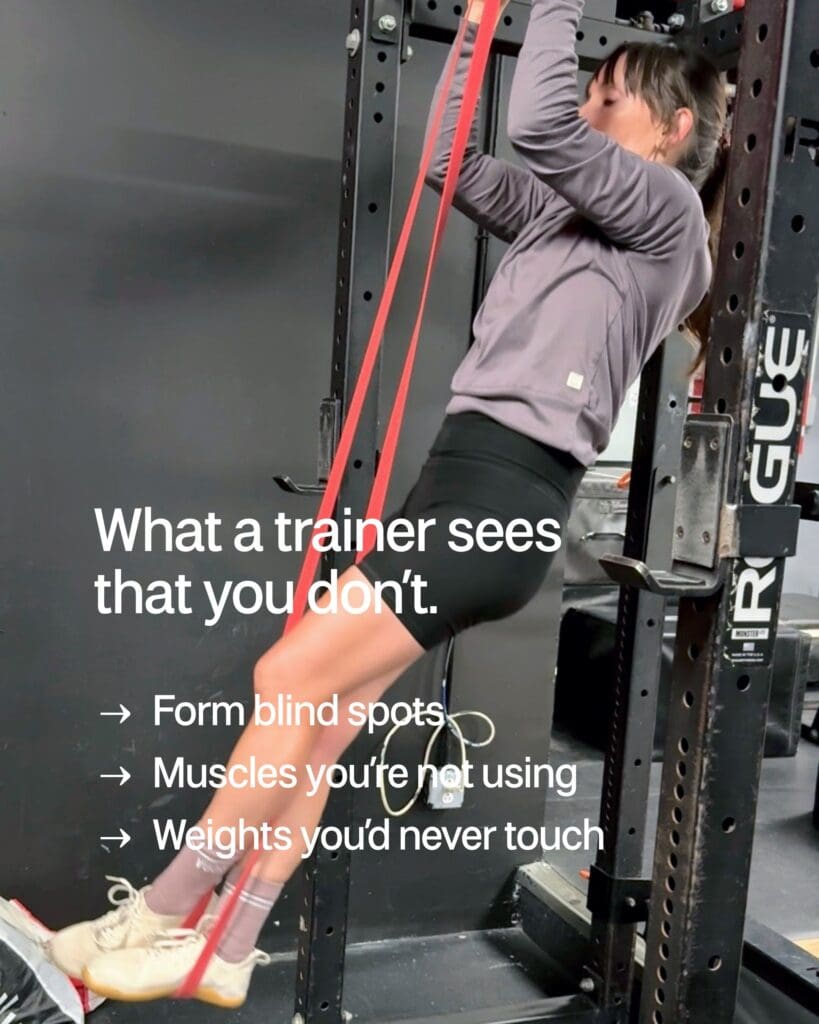
If you read my post about my osteoporosis diagnosis at 53, you know I added weight training to my schedule this year. I have a fleeting joy/hate relationship with it. The hate part: if it’s up to me to do it on my own, it won’t happen.
So on a referral from my physical therapist, I started working with my personal trainer, Shawn, in October. Expert guidance plus the accountability of a weekly appointment.
Plot twist: at 53, I’m using my gluteus medius for the first time.
My body avoids using this muscle by any means necessary. Bar Method changed that with movements specifically targeting glute med activation. Using heavier weights with Shawn is strengthening it further.
If you’re wondering whether your glute meds have been underutilized like mine, ask a trainer or physical therapist for an assessment. This muscle is critical for your next 50—maintaining balance, preventing falls, moving with confidence.
You can’t fix what you can’t see. Expert support uncovers the blind spots.
Investment 4: Community
Bar Method
Walking into a studio where the instructor greets you by name. Finishing a brutal set alongside people who get it. This is why community matters.
Find your version of this—it doesn’t have to be Bar Method. The framework is community. The tool is whatever group environment you’re drawn to—CrossFit, running clubs, yoga studios, pickup basketball.
Research backs this up: group exercise increases adherence rates and pain tolerance compared to solo workouts. There’s actual neurochemistry at work—exercising with others triggers endorphin release that makes hard work feel more manageable. Your brain literally processes effort differently when you’re surrounded by people doing the same thing.
Here’s what the research can’t measure: the instructor who’s seen your progression year-over-year and knows when to encourage you to push further (and when not to). The person next to you, who becomes a friend, who shows up at 8am as consistently as you do. The collective energy in a room of people choosing to be there.
My first Bar Method class was on Labor Day 2022, one month after starting my sabbatical. The science explains why it works. The community is why I keep coming back.
Investment 5: Simplicity
Recipe-free Meals
You don’t need a recipe to make a meal. Think you do? It’s programming—that’s how your parents cooked. Plus, recipes are everywhere: social media, cookbooks, every food influencer.
Here’s what actually works when you’re out of time and patience: simplicity. The people who stay focused on nutrition with relative ease? They keep it simple.
Use recipes when you want. Just don’t let not having one keep you from getting nutrients on your plate.
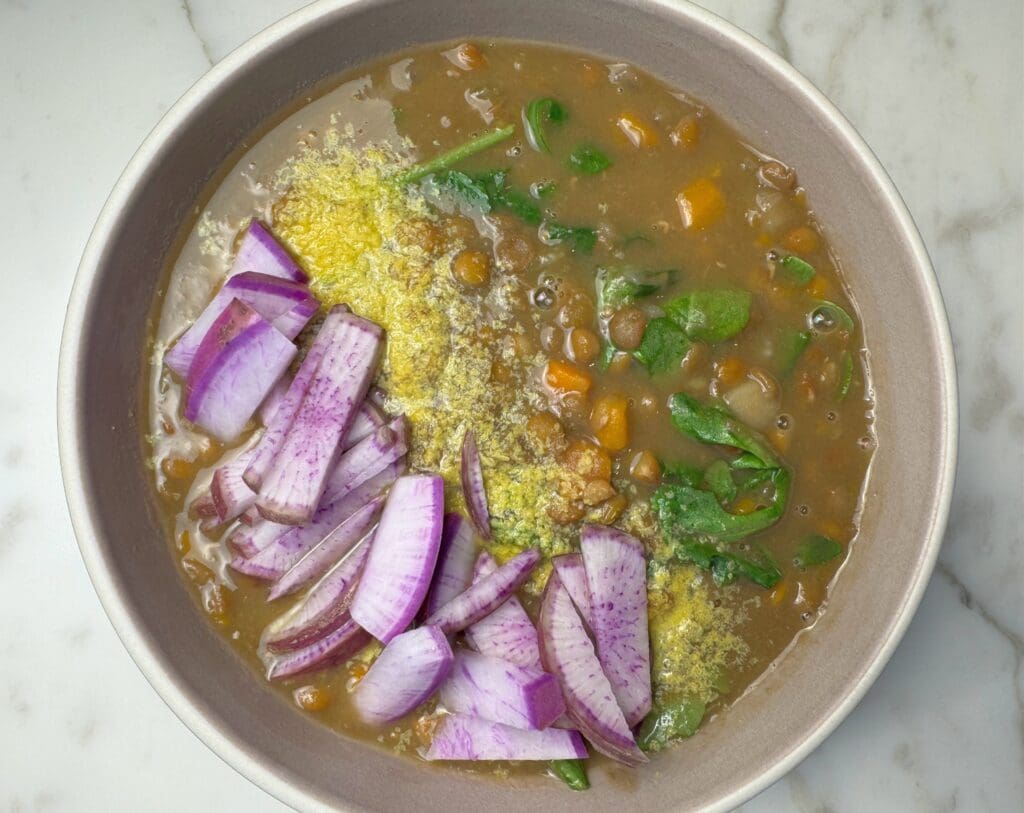
Here’s how: Preparing a whole food, plant-based meal at home is as simple as throwing a leafy green or cruciferous vegetable (cooked or raw) in a bowl with beans or tofu, avocado or seeds, a whole grain or potato, and a simple sauce like store-bought salsa, hot sauce, or tamari. If you’re feeling ambitious, go ahead and meal prep a nut-based sauce that stores well in the fridge.
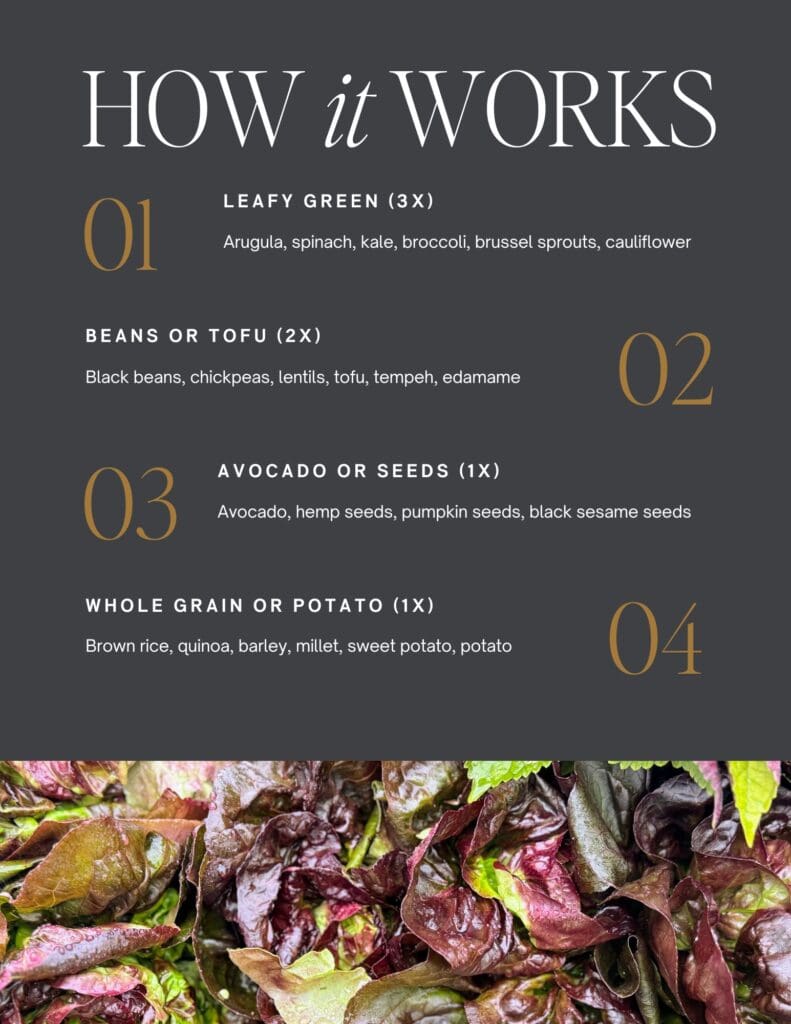
That’s it. No recipe required, no meal plan, no decision fatigue about what to make.
When you remove the complexity, eating well becomes automatic. You’re not deciding what to eat every night—you’re just assembling nutrients from what’s in your kitchen. Less thinking, more consistency.
Simplicity isn’t about deprivation. It’s about removing the friction that stops you from doing what you already know works.
Start Here
These five investments—measurement, tracking, support, community, and simplicity—work together as a system. Each one amplifies the others.
Whoop data shows me what’s working. The planner keeps me consistent. My trainer pushes me beyond what I’d do alone. Bar Method provides the collective energy of people doing hard things together. Simple meals remove the friction that derails progress.
None of these investments are particularly sexy. There’s no hack here, no shortcut, no magic supplement. Just the infrastructure that makes health sustainable when life gets complicated.
Pick one category. Build consistency there before adding another. The framework matters more than the specific tools you choose.
Thanks for reading!
Like this post? Get more. Subscribe to You Are What You Read — one email a month on redefining your Next 50. Only what works.
References & Additional Reading
Group Exercise and Adherence:
- Burke, S. M., Carron, A. V., Eys, M. A., Ntoumanis, N., & Estabrooks, P. A. (2006). Group versus individual approach? A meta-analysis of the effectiveness of interventions to promote physical activity. Sport and Exercise Psychology Review, 2(1), 19-35. https://pubmed.ncbi.nlm.nih.gov/26510676/
Plant-Based Nutrition:
- Melina, V., Craig, W., & Levin, S. (2016). Position of the Academy of Nutrition and Dietetics: Vegetarian Diets. Journal of the Academy of Nutrition and Dietetics, 116(12), 1970-1980. https://pubmed.ncbi.nlm.nih.gov/27886704/
Cover image credit: cottonbro studio
This post does not constitute medical advice. Please consult with your healthcare provider regarding your specific health needs.