


Read time: 5 minutes
The science is moving faster than our health system, by a lot. This is unlikely to change.
What does this mean for you right now? There’s a cholesterol test that predicts cardiovascular risk more accurately than standard LDL. Your doctor probably isn’t ordering it. Not because they don’t care, but for all the reasons that make treatment rather than prevention the standard of care in the United States.
This requires a shift from passive reliance on the medical system to active responsibility for your own outcomes. Your doctor is part of your team. You’re the team owner.
Here’s what you need to know about ApoB, and how to decide if you should request this test.
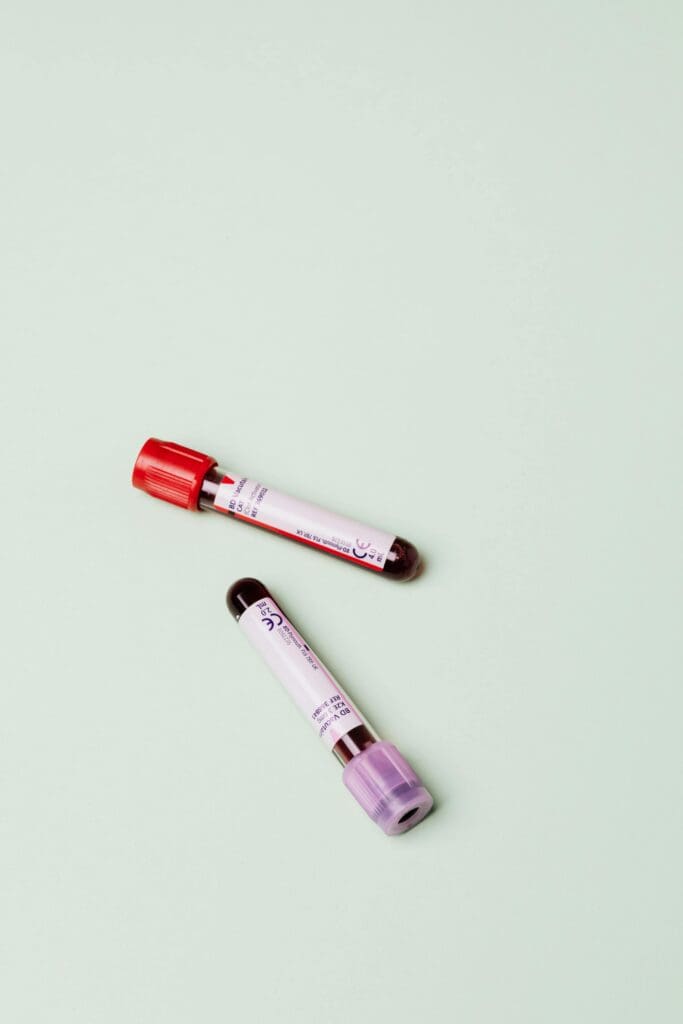
The Science: What ApoB Measures
Cholesterol, when elevated, leads to atherosclerosis (narrowing of arteries), which can cause heart attacks, strokes, and vascular dementia. Standard lipid panels measure total cholesterol, LDL cholesterol (the “bad” cholesterol), HDL cholesterol (the “good” cholesterol), and triglycerides. LDL cholesterol has been the primary marker for cardiovascular risk assessment for decades.
ApoB (apolipoprotein B) has emerged as a more predictive measurement of the outcomes associated with “bad” cholesterol than LDL alone. Think of it as a more fine-tuned instrument. It doesn’t negate LDL cholesterol—it provides additional precision.
ApoB isn’t included in the basic metabolic panel (BMP) or comprehensive metabolic panel (CMP) that most doctors order for annual physicals. You have to specifically request it.
Should You Request This Test?
If every measure on your standard bloodwork is in range, if you meet all 5 criteria of metabolic health, if you consistently feel physically and mentally well, you are physically active and you sleep well, should you concern yourself with the latest in cholesterol measurement?
My answer is probably not.
The 5 criteria for metabolic health are:
- Waist circumference less than 40 inches (men) or 35 inches (women)
- Blood pressure below 120/80 mm Hg
- Fasting glucose below 100 mg/dL
- Triglycerides below 150 mg/dL
- HDL cholesterol above 40 mg/dL (men) or 50 mg/dL (women)
If you don’t meet these criteria, or if you have a family history of cardiovascular disease, this test becomes more relevant. I’ll write about metabolic health in more depth in a future post.
Why I Request ApoB Testing
I have a family history of heart disease, type 2 diabetes, and cancer. I also have high lipoprotein(a), which is the one (and only) cholesterol marker that is truly genetic.
Side note: Total cholesterol is not “genetic” in case you’ve heard anyone claim their high cholesterol is genetic. What I mean by “genetic” is: can’t be controlled or changed by lifestyle. Lp(a) is genetic. Standard cholesterol markers respond to lifestyle interventions.
Given my family history and elevated Lp(a), I requested ApoB testing. Here are my results:
May 2, 2024: ApoB = 82 mg/dL
March 19, 2025: ApoB = 85 mg/dL
I have a great primary care physician (she’s a Nurse Practitioner) who’s always been open to my requests for tests outside of the standard panel.
How I’m Interpreting My Results
My May 2024 result of 82 mg/dL wasn’t alarming by standard medical guidelines. Most doctors would consider anything under 100 mg/dL acceptable. But given my family history and elevated Lp(a), “acceptable” becomes less, well, acceptable.
Here’s my thinking: Standard guidelines often aim for “normal” (avoiding disease), not “optimal” (maximizing longevity and performance). For someone with my risk profile, I want to be below 80 mg/dL. Longevity-focused research suggests levels below 60 mg/dL offer the best long-term cardiovascular protection.
My March 2025 result of 85 mg/dL shows my numbers went up slightly, which tells me I’ll have to be more aggressive with my interventions if I want to get below 80. When I say aggressive I mean fewer sweets, more greens—back to basics.
Context matters. Work with your doctor to interpret these numbers within your full lipid panel (LDL, triglycerides, HDL) and your overall risk picture (family history, blood pressure, lifestyle factors).
Your Action Plan
Pull out your last lipid panel. Look at your LDL, HDL, and triglycerides. Consider your family history. If you have cardiovascular risk factors, ApoB testing probably makes sense.
Talk to your doctor. Request the test if it makes sense for you.
The goal isn’t to over-test or become hypervigilant about every possible biomarker like I am. The goal is to make informed decisions based on evidence, not just standard practice.

The Bigger Picture
This is about more than one cholesterol test. It’s about recognizing that you have agency in your health outcomes. The medical system provides essential support, but it’s not designed to keep you at the cutting edge of preventive health.
85-90% of health outcomes are determined by lifestyle factors you control. The rest is genetics and luck. When you take ownership of your health, you’re not just managing disease risk—you’re giving yourself a place at the starting line for your next 50 years.
Thanks for reading!
Like this post? The newsletter is the blog, plus. Subscribe to You Are What You Read — one email a month on redefining your Next 50. Only what works.
References & Additional Reading
- Apolipoprotein B as a marker of coronary artery disease
- What To Know About High Cholesterol That Runs in the Family – Cleveland Clinic
- American Heart Association: Cholesterol and Heart Health
- Understanding Metabolic Health Criteria
Image credits: www.kaboompics.com, Sebastian Voortman
This post does not constitute medical advice. Please consult with your healthcare provider regarding your specific health needs.