


Read time: 4 minutes
What if there was a test that could show a metabolic problem forming years before your blood sugar ever moved?
There is. It’s inexpensive, any standard lab runs it, and getting it takes one simple request to your doctor.
I asked my doctor to add fasting insulin to my last lab order. My glucose has been normal for as long as I can remember. Here’s why I asked anyway.
Why I asked
Type 2 diabetes runs on both sides of my family. My dad. My maternal aunt. My maternal grandfather.
The most common response I hear to that is some version of “it runs in the family, so I’ll probably get it too.” I don’t buy it.
Family history is the one risk factor on my list I can’t do anything about. The others I can. In the Diabetes Prevention Program, a trial of more than 3,000 adults with prediabetes, a structured lifestyle program cut new cases of type 2 diabetes by 58% over about three years. It outperformed metformin.
Inherited risk raises the odds. It doesn’t set them.
Which is why a normal glucose has never settled anything for me. It’s good news about today, not a forecast. I’d rather watch the number that moves first than wait for the one that moves last.
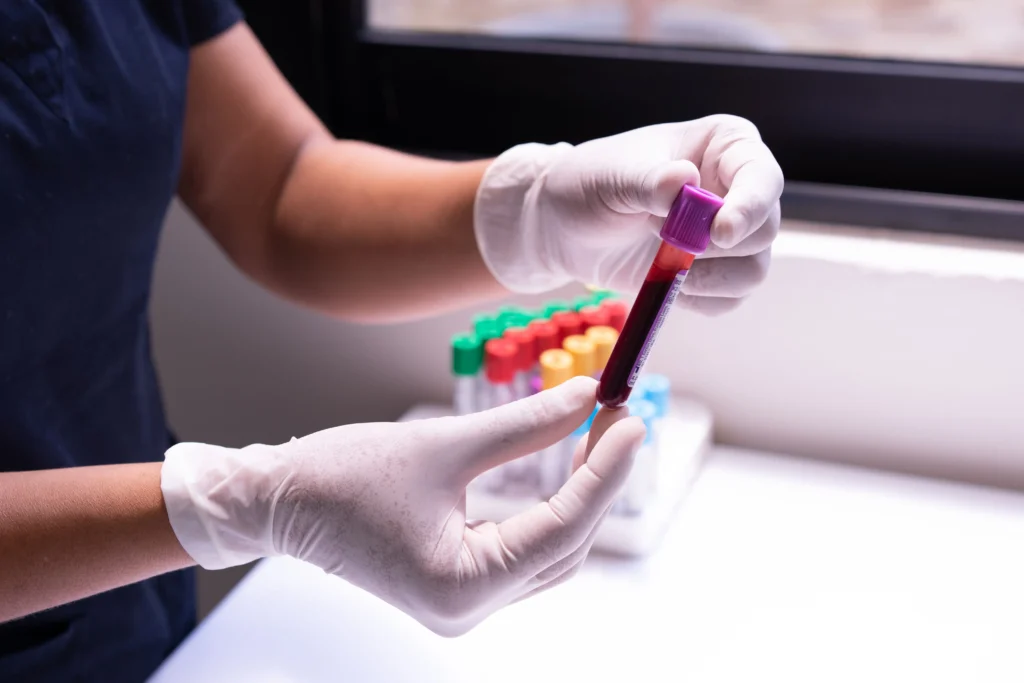
What it is
Fasting insulin, sometimes just called an insulin test, measures the hormone rather than the sugar.
Those are different questions. Glucose tells you where your blood sugar sits. Insulin tells you how much hormone your body needed to put it there. It isn’t a more accurate blood sugar test. It’s a separate measurement, and standard panels leave it out.
Why it matters
Your pancreas releases insulin to move glucose into your cells. When those cells stop responding well, it compensates by making more. Insulin rises. Your blood sugar stays normal, because the compensation is working.
That state has a name: insulin resistance. It’s the process underneath type 2 diabetes, and it’s well underway before anyone gets diagnosed.
The head start is bigger than I expected. Researchers following a high-risk cohort for an average of 13 years found compensatory hyperinsulinemia and reduced glucose clearance present one to two decades before type 2 diabetes was diagnosed. Everyone in that group had normal glucose tolerance when the study began.
A normal glucose result is real information. But it isn’t proof.
Who it’s for
Anyone whose glucose and A1c come back normal and who wants to know whether that’s the whole story. That’s most people, and it’s the group standard screening tells the least. A family history of type 2 diabetes makes the case stronger, but it isn’t a requirement.
If your glucose or A1c is already out of range, this isn’t your next move. You have your answer from a cheaper test. What you need is a conversation with your doctor.
When and how to ask
Ask your doctor to add fasting insulin to your next lab order, on the same requisition as your fasting glucose.
Name both, even if glucose is already on the order. I added insulin to a panel my doctor had built for an unrelated reason, and it turned out to have no glucose on it. An existing order carries its own blind spots.
No major guideline currently recommends routine fasting insulin screening, so don’t be surprised if your doctor hasn’t suggested it. That’s more a gap in the field than a verdict on the test. There’s no approved biomarker for insulin sensitivity yet, and researchers in preventive medicine call early detection of insulin resistance an unmet need.
None of which means you’ll get pushback. I sent mine a message through the patient portal and she added it without comment, no appointment needed. A family history, an A1c near the top of the normal range, or high triglycerides with low HDL all give you a reason to point to.

What came back
Mine was 5.5 µIU/mL, against a reference range of 2.6 to 24.9. That range is wide enough that the absence of a flag wouldn’t have told me much.
The number did. It told me my habits are doing what I want them to do, and that’s the kind of result that keeps me doing the work. What I have now is a clearer read on my own metabolic health, and a better sense of where to put my effort against a family history I can’t change.
Why I write about tests like this
I first heard about this test from my step-dad, who was diagnosed with type 2 diabetes a few years ago. No one had ever ordered him a fasting insulin. He went looking afterward for what might have told him sooner, and this is the test he found.
That’s what I write about here: the tests that don’t show up on a standard panel, and why you might want them anyway. Vitamin D was one. Fasting insulin is another.
Thanks for reading!
Like this post? The newsletter is the blog, plus. Subscribe to You Are What You Read — one email a month on redefining your Next 50. Only what works.
References & Additional Reading
- Slow glucose removal rate and hyperinsulinemia precede the development of type II diabetes in the offspring of diabetic parents — Annals of Internal Medicine, 1990
- Reduction in the incidence of type 2 diabetes with lifestyle intervention or metformin — New England Journal of Medicine, 2002
- Biomarkers of insulin sensitivity/resistance — Journal of International Medical Research, 2024
Image credit: Los Muertos Crew
This post does not constitute medical advice. Please consult with your healthcare provider regarding your specific health needs.