


Read time: 5 minutes
I was awake for my colonoscopy. I watched it happen on the monitor, and walked home afterward. The default is propofol and a ride home.
No polyps, and I don’t have to do it again for ten years.
The American Cancer Society recommends starting at 45. If you’ve been putting this off, here’s the conversation to have before you go, and what it’s like to be awake.
Three options, and only one finds polyps
This was my first visit to a gastroenterologist. He laid out three options: a stool test, a blood test, or a colonoscopy. My call.
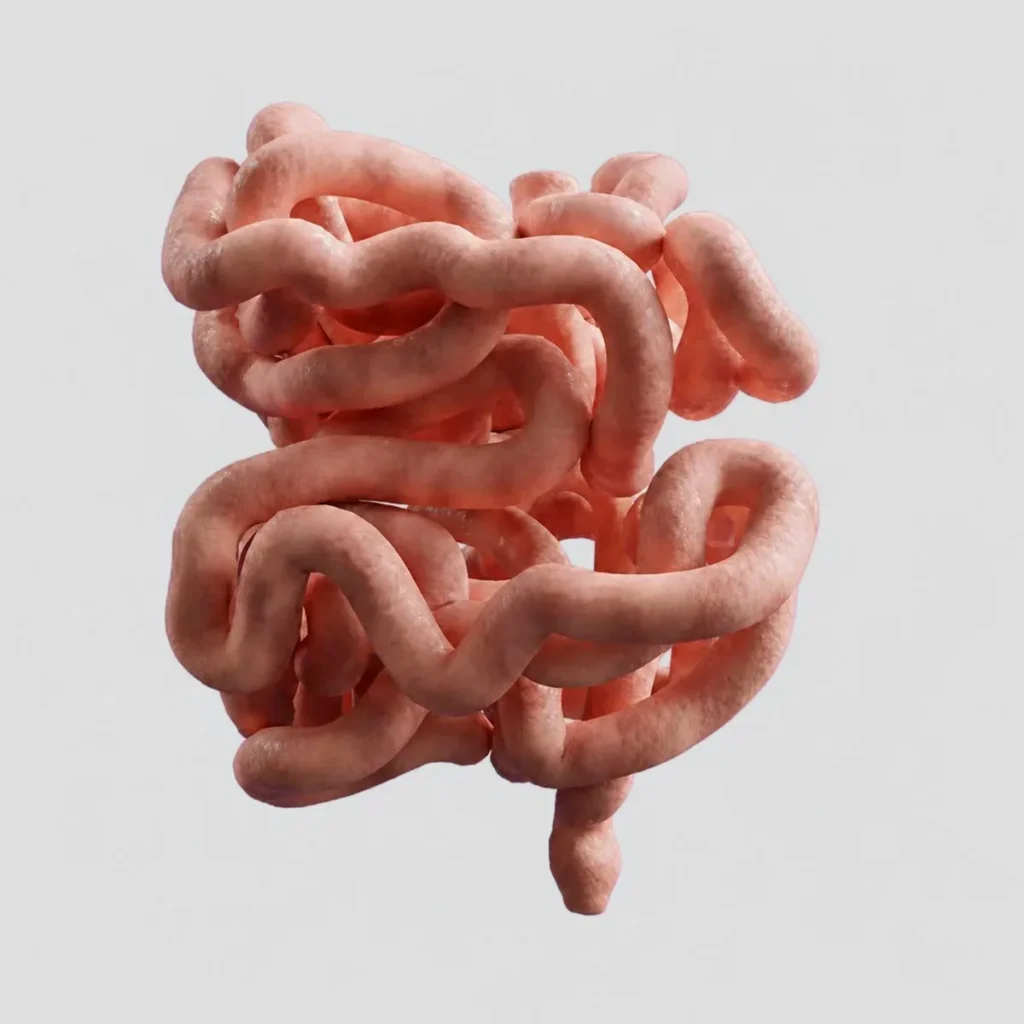
The stool and blood tests screen for cancer. A colonoscopy gets your doctor inside your large intestine, where they can spot polyps — small growths that can turn into cancer — and take them out.
Did I have polyps? Only the colonoscopy would tell me.
Why I waited
It’s a commitment. Three days of low-fiber eating, a fourth day of clear liquids that ends with running to the bathroom while trying to drink the prep solution at just the right pace to avoid nausea.
Three days of eating the opposite of how I eat, to check on an organ that way of eating protects. I complained the entire time. White pasta from Italy and olive oil crackers from England sound like a treat. My body’s expectations have changed. Neither was as satisfying as a giant salad, quinoa and black beans with avocado, or a Plant Strong pizza.
At 50, I started thinking about it. I went at 54.
I asked for no sedation
This was a decision spanning several weeks and multiple conversations.
I asked about my sedation options at that first visit with my gastroenterologist. The night before the procedure, I did my own research. Colonoscopies without sedation are routine in much of Europe and Asia. I became convinced pretty quickly I could do this.
If I have a choice between awake or unconscious, I’ll choose awake every time.
The morning of, I brought it up at check-in, with both nurses who prepped me, and again with my doctor. Then came the conversation that mattered most, with the anesthesiologist.
I told him my intention was to do the procedure without sedation. Propofol is commonly used for colonoscopy, and it’s what he planned to use. I also asked him about Versed — a drug my mom mentioned a few days before.
My anesthesia pre- and post-procedure evaluations posted to my portal a few days later: “After extensive discussion about anesthesia patient would like to attempt colonoscopy without any sedation. Informed her that I would be present to provide sedation should she require.”
The IV goes in either way, even if nothing is administered.
What it’s like to be awake for a colonoscopy
When they wheeled me into the procedure room, the IV was in, and I’d made my sedation intentions clear to everyone I’d met.
A nurse asked if I wanted music. Easy yes — but now I have to pick an artist? By this point in the morning, I’d already reached decision fatigue. Put on anything.
There were two monitors in the room: one in front of the anesthesiologist, one running the feed from the scope. The anesthesiologist asked if I wanted to watch something on YouTube. Now I’m trying to figure out what a nurse and two doctors might enjoy. My gastroenterologist suggested The Great British Baking Show. Not my genre, but sold.
The procedure was mostly uncomfortable. Cramping and pressure as air, water and the scope move through the natural turns of the large intestine — my research the night before told me to expect that, and it was manageable.
Then my left side cramped. It didn’t let up. Uncomfortable turned into painful. Not unbearable, but enough that I said something to the anesthesiologist. I asked my gastroenterologist how much longer. I was on the fence even as I gave the green light.
The anesthesiologist gave me a low dose of Versed. I didn’t specify — he chose the Versed instead of propofol. I’d raised it in our meeting earlier, and when it came time to act, he reached for the thing I’d asked about instead of the thing he’d planned. Versed is a benzodiazepine, the same drug family as Xanax.
Though I could still feel the scope up to about chest height, my stomach seemed to unclench.
Turns out the Great British Baking Show is less interesting than the inside of my colon. That’s what I spent most of the procedure watching.
I walked home from my colonoscopy
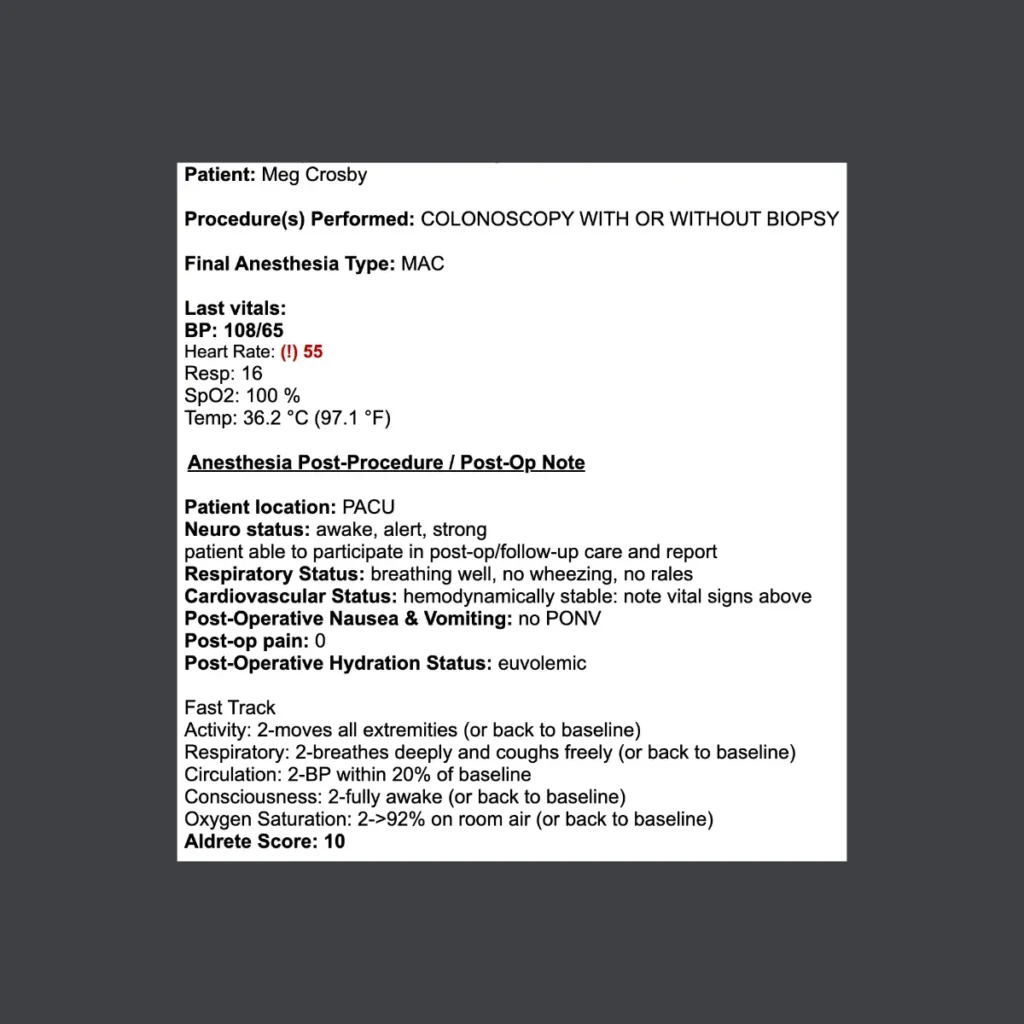
My Aldrete score was 10 out of 10. That’s the top of the standard recovery scale, though I didn’t know it at the time — it came from the anesthesiologist’s post-procedure evaluation that showed up in my portal a few days later.
I was in the recovery room long enough to change back into my clothes.
A friend mentioned people go straight from their colonoscopy to a restaurant. The woman prepping me was more specific: hamburger.
Bring your own snack. That morning, I’d thrown a Happy Wolf chocolate chip bar into my bag — marketed for children? Yes. Delicious? Also yes.
Hospital policy required a wheelchair down to the lobby. First time in a wheelchair. That was awkward.
The attendant wheeled me out. Back to life as normal. First stop, Westside Market, for the banana I’d been craving. Then down to Nolita for a matcha — something about coffee wasn’t appealing after a day of fasting. Whole Foods on the way home, to stock up on the greens and berries I’d been bitter about having to avoid. Back home about an hour and a half later.
More than half of the risk is modifiable
I’ve been whole food plant-based for more than a decade. No polyps at 54. One clean scope doesn’t prove the other, but it’s the result I wanted, and I’ll take it.
Experts estimate that more than half of colorectal cancer cases in the U.S. may be linked to modifiable risk factors — diet, physical inactivity, smoking, alcohol.
An eating pattern high in processed food and red meat and low in fiber, fruits and vegetables is associated with higher risk.
Most Americans get about 15 grams of fiber a day. Here’s a day of eating that hits 70.
While incidence is falling in adults 65 and older, it’s climbing in those under 50 — nearly 3% a year. Today 1 in 5 people diagnosed is under 55.
I’ll decide in ten years whether to do another colonoscopy or the blood test. This result is data for that decision.
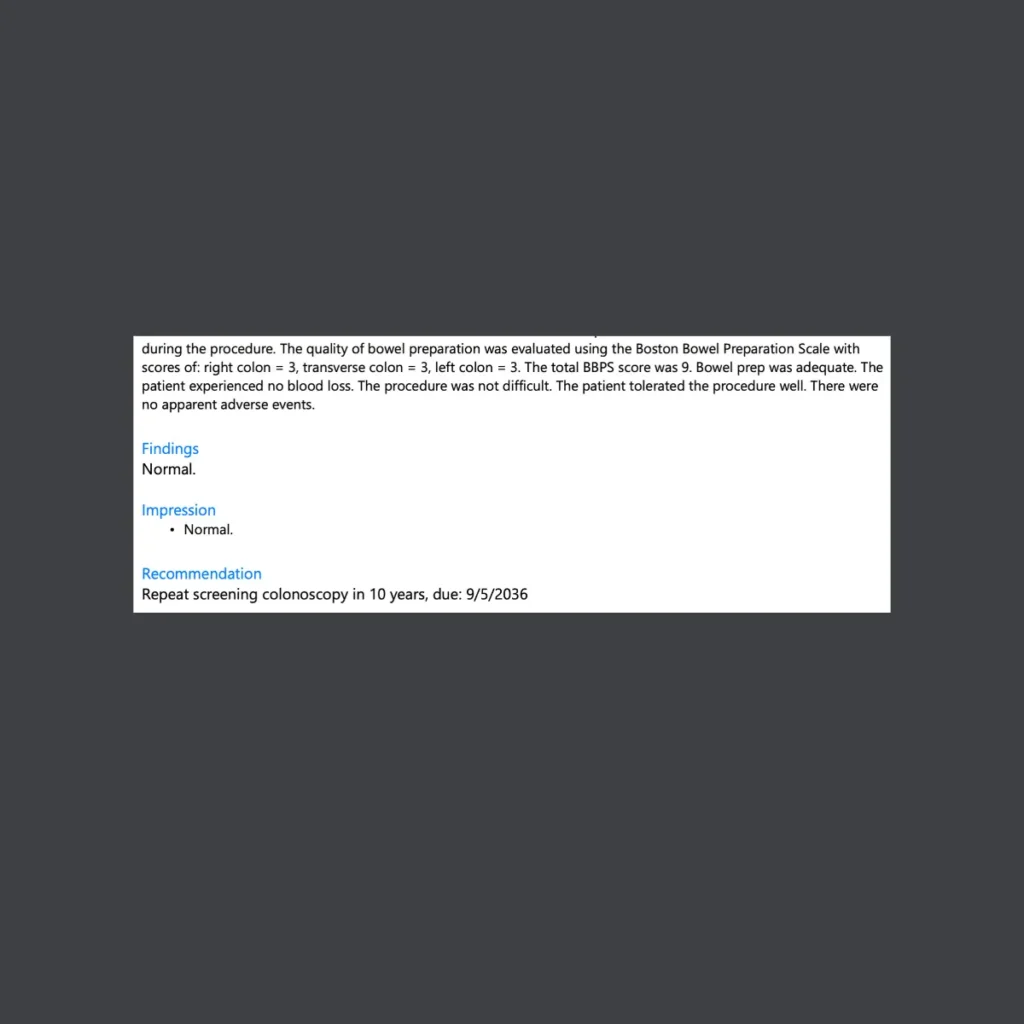
An estimated one in four colonoscopies has inadequate prep, which means doing it again. My prep score was 9 out of 9. NYU gave me a list of eight clear liquids: six were sugar. Next post: what I ate and drank during prep, and what I’d change.
Thanks for reading!
Like this post? The newsletter is the blog, plus. Subscribe to You Are What You Read — one email a month on redefining your Next 50. Only what works.
References & Additional Reading
- Colon Polyps – Mayo Clinic
- Colonoscopy – American Society of Anesthesiologists
- Unsedated Colonoscopy – World Journal of Gastroenterology
- Colorectal Cancer Risk Factors – American Cancer Society
- Colorectal Cancer Rates Are Skyrocketing in Young Adults – Cancer Research Institute
- Fiber – Harvard T.H. Chan School of Public Health
- Midazolam Injection — Cleveland Clinic
Image credit: Aakash Dhage on Unsplash
This post does not constitute medical advice. Please consult with your healthcare provider regarding your specific health needs.