


Read time: 3 minutes
What if you could put a number on your heart disease risk in 10 minutes — right from your laptop, using data you already have?
A link to the American Heart Association’s PREVENT calculator caught my attention in a One Medical newsletter — you know, the ones you archive on receipt. It was tucked into an article I almost didn’t click. The tool turns five health metrics into cardiovascular risk percentages.
Heart disease remains the leading cause of death in America, yet most of us have no idea where we stand on the risk spectrum. In 10 minutes you get a number instead of a vague worry.

My labs
Four numbers, straight from my patient portal. Here’s what I entered, from my March 2025 lab results and vitals:
- Total cholesterol: 165 mg/dL
- HDL cholesterol: 51 mg/dL
- eGFR (kidney function): 101 mL/min/1.73m²
- Systolic blood pressure: 102 mmHg
BMI you’ll calculate yourself — mine was 19.8.
The calculator also takes HbA1C if you have it. Mine was 5.5%. It’s not on a standard panel, but some providers now include it — worth asking for.
Plus a few questions about smoking, diabetes, and medication.
Start to finish, the whole thing took about 10 minutes.
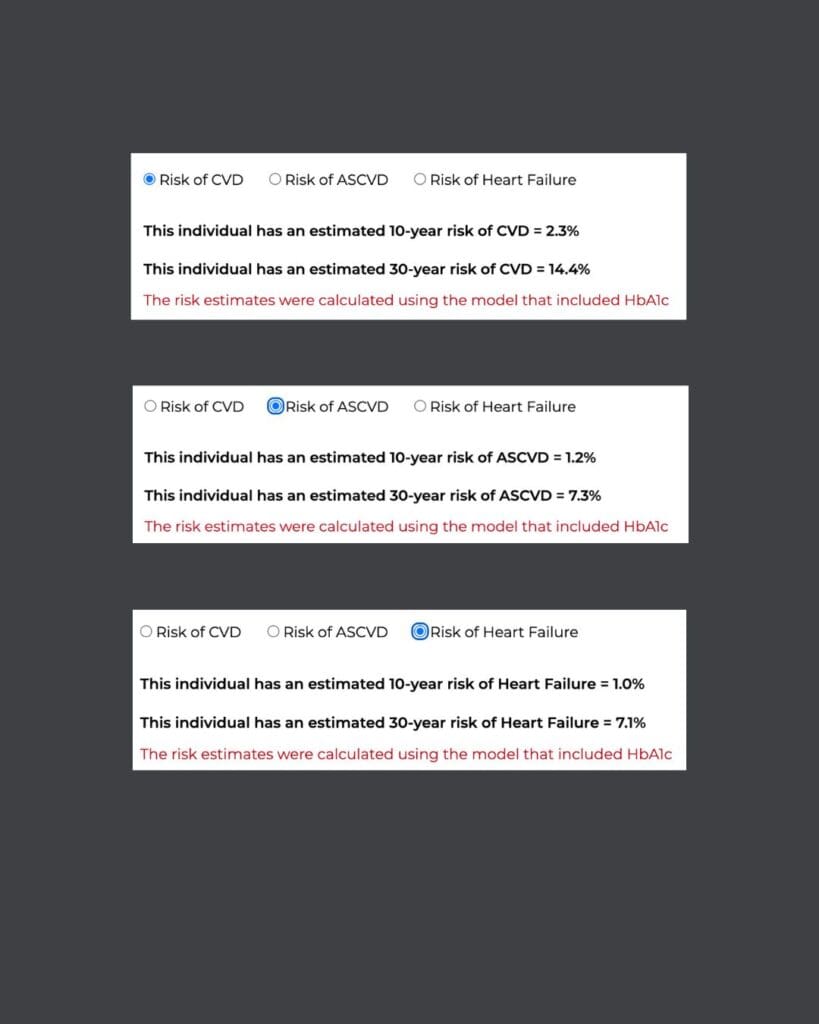
My 10-year risk: 2.3%
- Cardiovascular disease: 2.3%
- Atherosclerotic cardiovascular disease: 1.2%
- Heart failure: 1.0%
30-year risk: CVD 14.4%, ASCVD 7.3%, heart failure 7.1%.
The 30-year numbers are higher because they cover three more decades — my 30-year window ends at 83. I focus on the 10-year figures because I can act on them now. I’ll rerun the whole thing every few years as the inputs change.
That 2.3% reads differently when you know my family history. My dad had a quadruple bypass. His father had open-heart surgery before him. That history is the reason I ran the calculator.
Inherited risk raises the odds. It doesn’t set them.
Whole food plant-based for more than a decade. That’s how I eat. Blood pressure at 102 systolic, BMI at 19.8 — that’s what it produced. The calculator counts all of it.
What the calculator is
PREVENT is built for primary prevention — people without existing heart disease who want to know where they stand before symptoms arrive. It covers adults 30 to 79 and returns three numbers:
- Cardiovascular disease (CVD)
- Atherosclerotic cardiovascular disease (ASCVD) — heart attacks and strokes
- Heart failure
If you’re over 59, only the 10-year number will calculate — the 30-year equations were built on adults 30 to 59.
Reading your result
The AHA publishes risk categories — under 5% is low, 5 to 7.5% borderline, 7.5 to 20% intermediate, 20% and above high. Those categories guide treatment decisions — your doctor’s call, not the calculator’s.
Start here
- Pull your most recent labs from your patient portal. If it’s been more than a year, book the blood draw first.
- Calculate your BMI — the NHLBI calculator takes a minute.
- Run the PREVENT calculator.
- Write down the question your number raises. Bring it to your next appointment.
Every input on that list is modifiable except your age. Most of what it reads, you can change. I’ve been building these numbers for over a decade. Here’s what that did to my biological age.
Thanks for reading!
Like this post? The newsletter is the blog, plus. Subscribe to You Are What You Read — one email a month on redefining your Next 50. Only what works.
References & Additional Reading
- New Aspects of the Risk Assessment Guidelines – American College of Cardiology
- 2019 AHA/ACC Primary Prevention Guidelines – American Heart Association/American College of Cardiology
Image credit: Photo by jesse orrico on Unsplash
This post does not constitute medical advice. Please consult with your healthcare provider regarding your specific health needs.