


Read time: 4 minutes
Strong bones aren’t just about preventing fractures in your 80s. They support movement, protect vital organs, and serve as mineral storage for essential bodily functions. When bones weaken, the impact extends far beyond occasional aches and pains.
Here’s what I don’t understand: why do we wait until 65 (women) or 70 (men) to check bone density? By then, you’ve potentially missed critical years when you could have made different choices.
When a friend shared that her recent bone density test showed signs of osteopenia, it got me thinking. I scheduled an appointment at DexaFit where a single scan includes not just bone density, but body composition and visceral fat as well.
Why Bone Density Matters for Your Future
According to the Mayo Clinic, your bones constantly remake themselves through a process called remodeling—the body breaks down old bone and builds new bone tissue. When you’re young, new bone forms faster than old bone breaks down, so bone mass increases. Most people reach peak bone mass around age 30.
How likely you are to develop osteoporosis depends on how much bone mass you have by the time you’re 30 and how quickly you lose it after that. The higher your peak bone mass, the more bone you have built up—and the less likely you are to develop osteoporosis as you get older.
After 30, bone remodeling continues, but you start losing slightly more bone mass than you gain. For women, bone loss accelerates dramatically around menopause due to dropping estrogen levels. This is why the years following menopause are so critical for bone health—and why waiting until 65 to check seems counterproductive.
Multiple factors affect this bone remodeling process. The Mayo Clinic identifies key influences including calcium intake, physical activity levels, tobacco and alcohol use, sex and body size, race and family history, and hormone levels. Certain medications and medical conditions can also impact bone health. Understanding these factors helps explain why a comprehensive approach to bone health matters more than focusing on any single element.
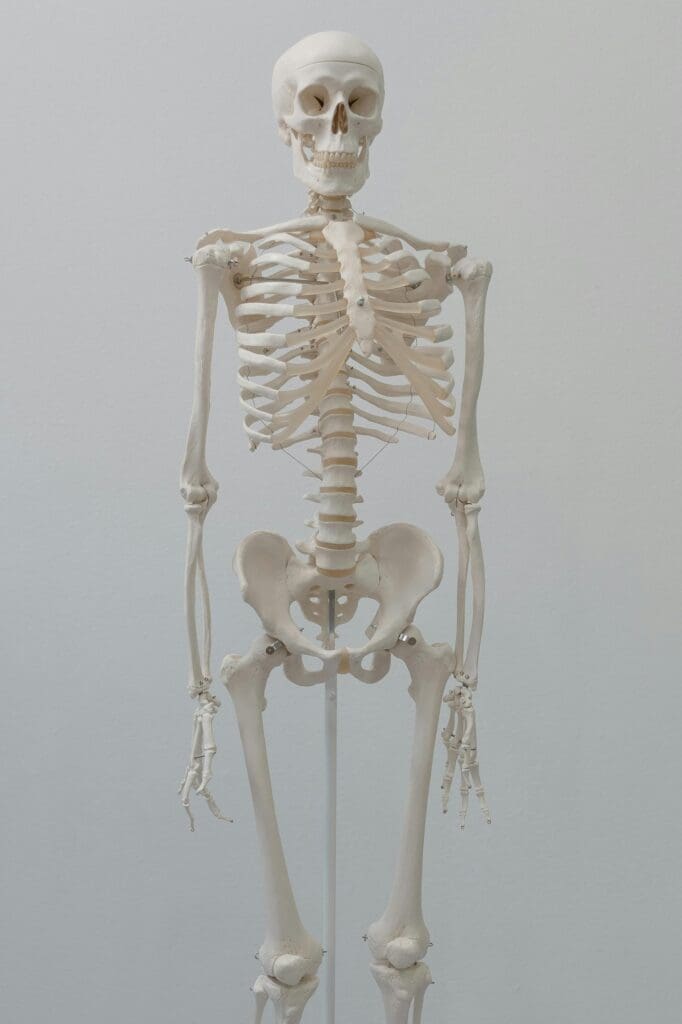
What DEXA Scans Tell You
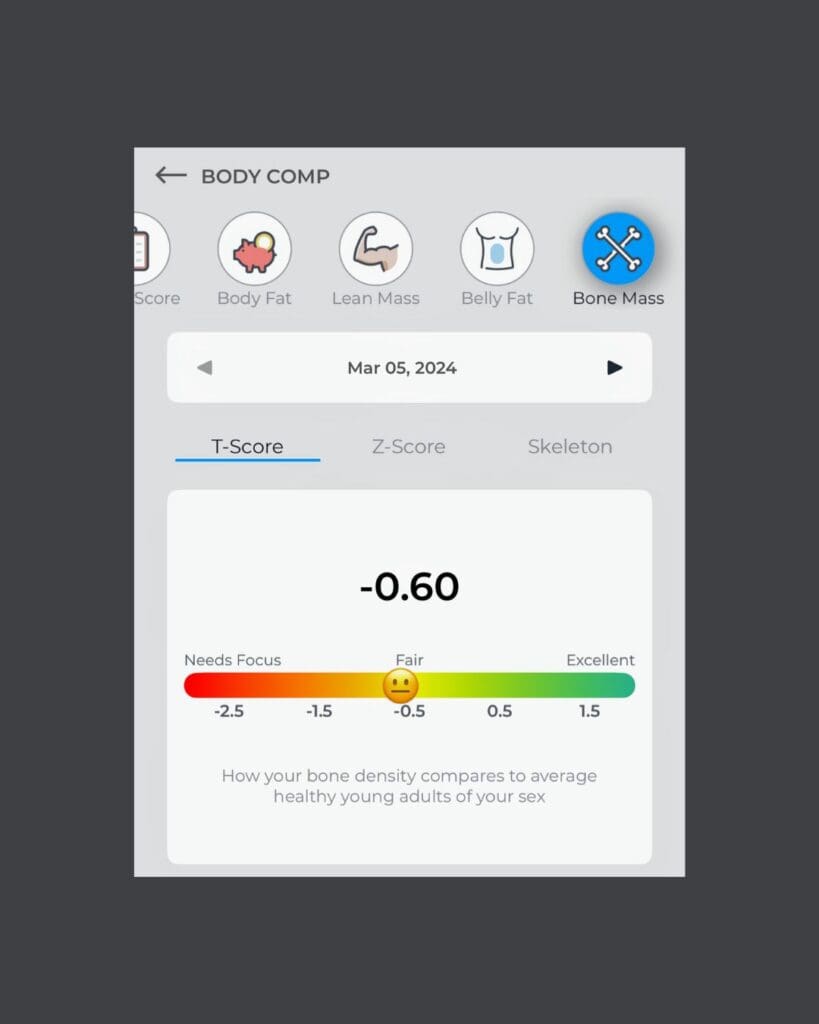
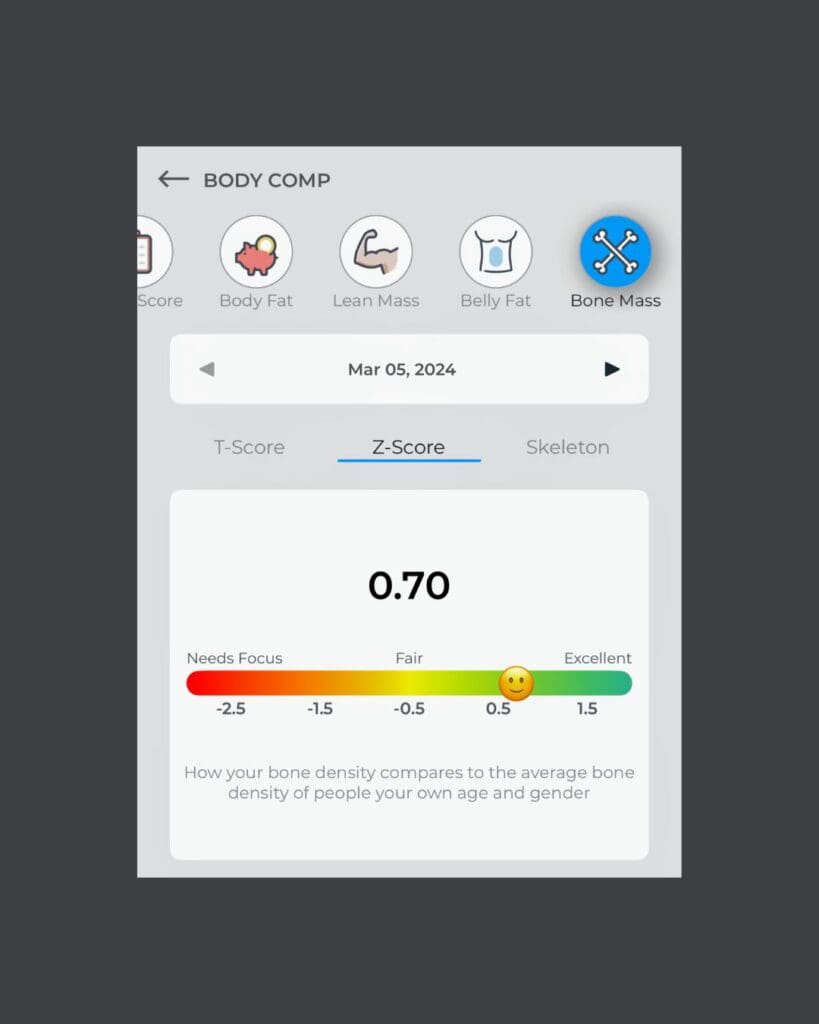
DEXA scans measure two key indicators: your T-score compares your bone density to a healthy 30-year-old (the peak bone mass standard), while your Z-score compares you to others your age.
Unlike weight or appearance, these numbers show something you can’t see—objective data about whether your current approach is working.
My DEXA Results at 52
As a petite woman (5’1″) who’s post-menopausal, I check multiple boxes for osteoporosis risk factors. Add a plant-based diet to the mix, and conventional wisdom would predict below average bone density outcomes.
At 52, post-menopause, and dairy-free for well over a decade, my DEXA scan results revealed:
T-score of -0.60: Places me in the “Fair” range compared to a healthy 30-year-old
Z-score of 0.70: Shows I have above-average bone density compared to other women my age
For post-menopausal women and men age 50 and over, T-scores are the primary measure used. A T-score equal to or above -1.0 is considered normal bone density. Z-scores can be misleading because older adults commonly have low bone density.
Note: These results are from DexaFit, which uses the same DEXA scanning technology prescribed by doctors, though the output format differs from traditional clinical reports.
Why This Matters for You
The goal isn’t to replicate my exact approach—it’s to understand that you have options and control over your bone health outcomes. The core principles are:
- Don’t wait for routine screening—discuss DEXA scans with your healthcare provider if you have risk factors
- Prioritize weight-bearing exercise that challenges your bones to adapt and strengthen
- Focus on nutrient-dense calcium sources with supporting vitamins and minerals
- Consider the full picture including vitamin D status, overall nutrition quality, and movement consistency
Your bones are living tissue that responds to how you treat them. The choices you make today determine your bone health for decades to come.
Thanks for reading!
Like this post? The newsletter is the blog, plus. Subscribe to You Are What You Read — one email a month on redefining your Next 50. Only what works.
References & Additional Reading
Bone Health and Osteoporosis:
- National Institute of Arthritis and Musculoskeletal and Skin Diseases. (2024). Bone Mineral Density Tests: What the Numbers Mean. https://www.niams.nih.gov/health-topics/bone-mineral-density-tests-what-numbers-mean
- Mayo Clinic. (2025). Bone health: Tips to keep your bones healthy. https://www.mayoclinic.org/healthy-lifestyle/adult-health/in-depth/bone-health/art-20045060
- Endocrine Society. (2022). Menopause and Bone Loss. https://www.endocrine.org/patient-engagement/endocrine-library/menopause-and-bone-loss
Exercise and Bone Density:
- Hong, A. R., & Kim, S. W. (2018). Effects of resistance exercise training on bone health. Endocrinology and Metabolism, 33(4), 435-444. https://www.ncbi.nlm.nih.gov/pmc/articles/PMC6323511/
Image credits: Photo by Tima Miroshnichenko
This post does not constitute medical advice. Please consult with your healthcare provider regarding your specific health needs.