


Read time: 5 minutes
After a decade of tracking my health data, I know this to be true: fiber has moved the needle more than any other nutrient or habit. Fiber is my most powerful tool in weight loss, gut and metabolic health, and disease prevention.
If you downloaded my 8 Practices That Changed My Life guide, you know that fiber tops that list for good reason.
The questions you’re asking: Can I really get to 50-70 grams of daily? Is it realistic? Will it work for me?
Here’s your roadmap.
The Fiber Power Players (Your Strategic Shortlist)
I keep petite peas in my freezer at all times. They wait there patiently for those nights when I don’t feel like cooking—when I throw together whatever staples are in my freezer and pantry for an easy dinner. Sometimes I wonder if I’m the only adult eating frozen peas.
Kale has a t-shirt. Spitballing here: would you buy my Peas t-shirt? 😉
Eat 2 cups of peas and you’ve just delivered 18 grams of fiber to your gut—more than most Americans get in an entire day.
Per 1 cup serving:
- Lentils – 15.5 grams
- Black beans – 15 grams
- Navy/Great Northern beans – 13 grams
- Green peas – 9 grams
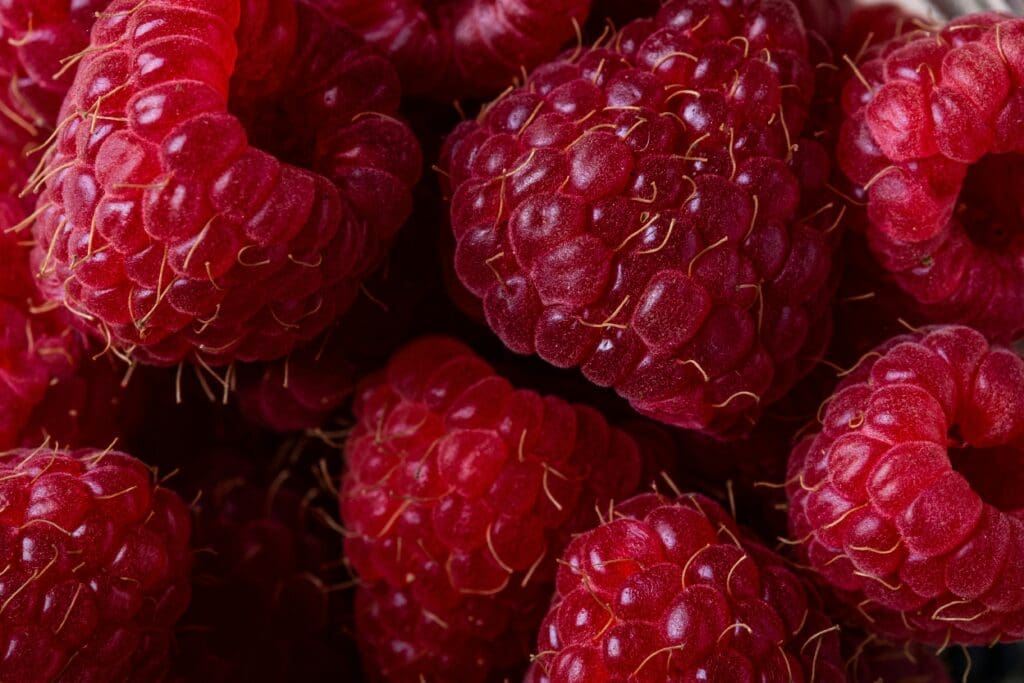
- Raspberries – 8 grams
- Whole wheat spaghetti – 6 grams
- Barley – 6 grams
- Quinoa – 5 grams
- Broccoli – 5 grams
Per medium fruit:
- Pear – 5.5 grams
- Apple with skin – 4.5 grams
- Baked potato with skin – 4 grams
- Banana – 3 grams
Bonus fiber boosters:
- Chia seeds (1 oz) – 10 grams
- Bob’s Red Mill Protein Rolled Oats (⅓ cup) – 5 grams
Your 50-Gram Day: Sample Menu
This isn’t theoretical—this is how you actually do it.
Breakfast (20g fiber)
- ½-1 cup Bob’s Protein Rolled Oats – 7g
- 1 cup raspberries (fresh or frozen) – 8g
- 1 tablespoon chia seeds – 5g
Alternative: Substitute 1 cup blueberries + 1 banana for 7g
Lunch (29g fiber)
- Baked potato with skin – 4g
- 1 cup lentils – 15g
- 2 cups broccoli – 10g
- Toppings: salsa, nutritional yeast
Alternative: Swap broccoli for 2 cups cooked kale (5g)
Dinner (31g fiber)
- 1 cup quinoa – 5g
- 1 cup black beans – 15g
- 1 cup baked super firm tofu – 4g
- ½ avocado – 5g
- 1 cup fresh sauerkraut or kimchi – 2g
Daily total: 80 grams of fiber
The Reality Check: Start Smart
If you’ve been eating mostly low-fiber foods for years, expect some digestive adjustment. The solution isn’t to avoid fiber—it’s to use the ‘low and slow’ approach [pause for an 80s music icons break].
Using beans as an example: Start with ¼ or ⅓ cup instead of jumping to a full cup.
The key is consistency. Your digestive system will adapt if you expose it to fiber-rich foods daily. Once a week won’t cut it.
Don’t blame the beans—it’s not their fault. Your gut microbiome loves fiber, but it doesn’t love going from 0 to 60 in 7 seconds. Let your digestive system do its job, and you’ll be rewarded with fewer cravings as your healthy gut bacteria flourish.
Real-World Results: My 70-Gram Day
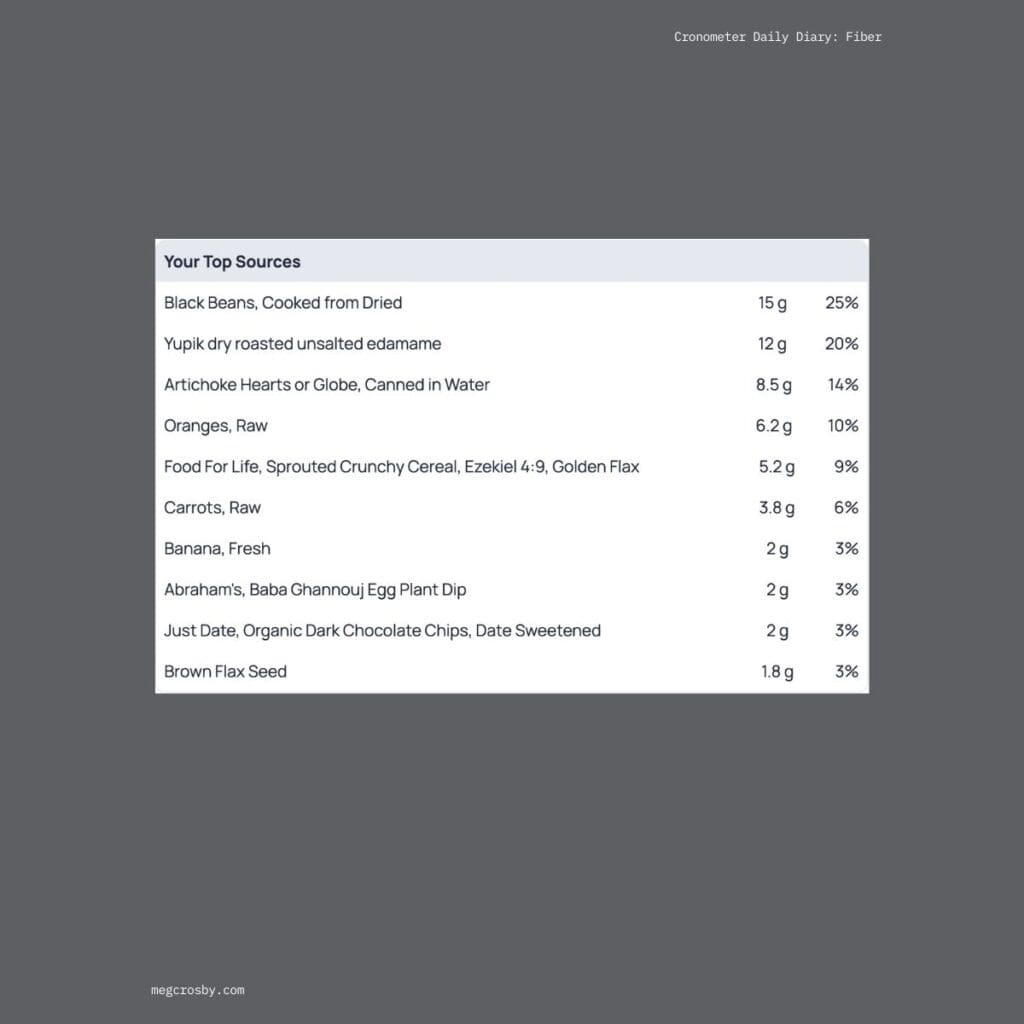
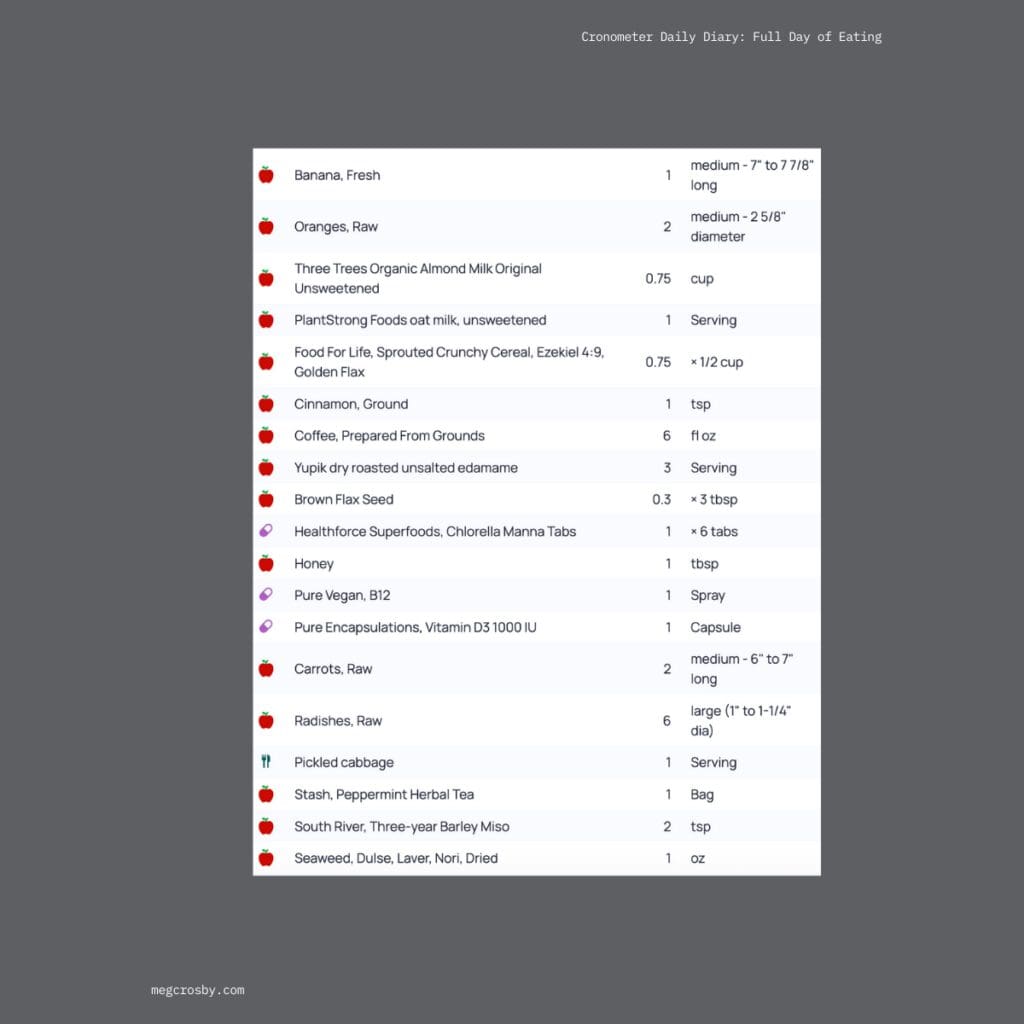
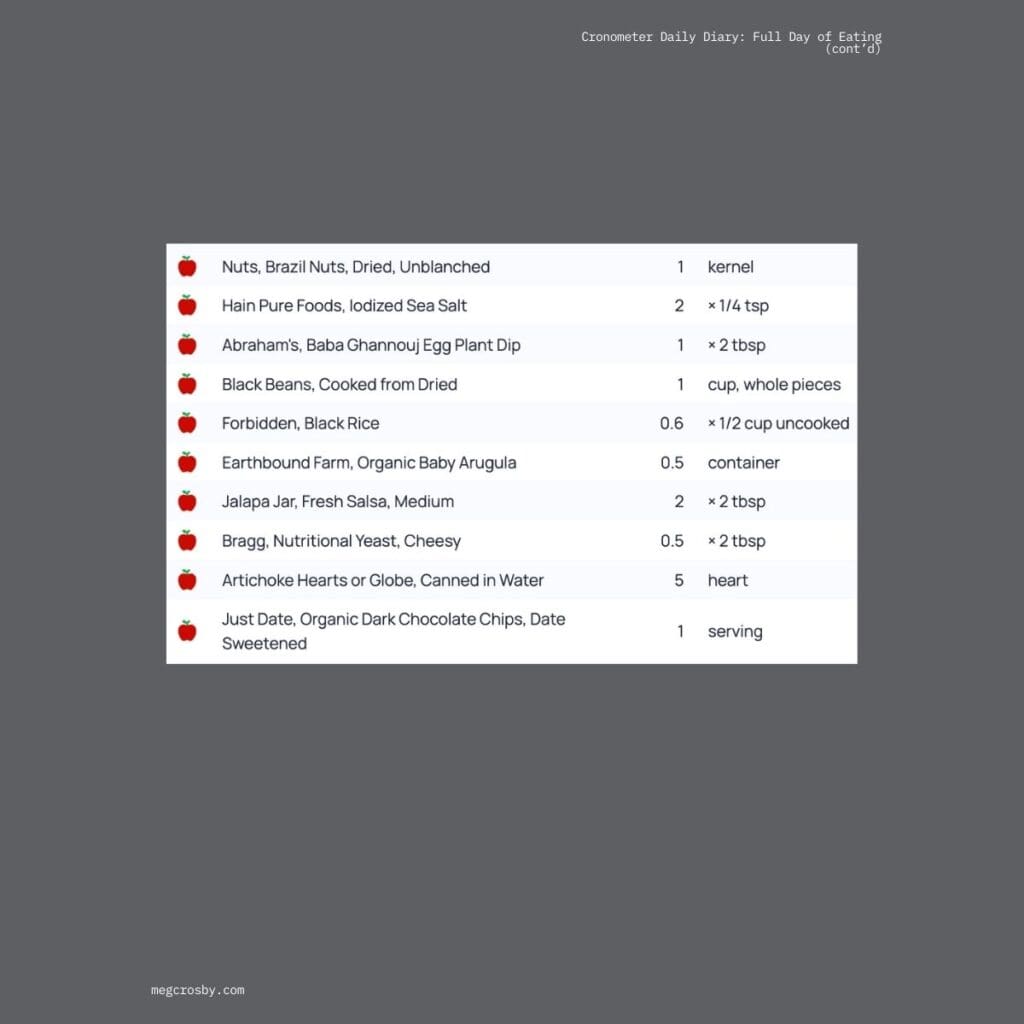
Here’s the data from tracking my intake in Cronometer. I hit 70 grams without much effort. The key is not limiting your portion sizes. It’s eating a lot of food—all plants, all satisfying.
Total calories: 1,948 (for reference only—this isn’t about counting calories)
Total fiber: 70.3 grams
This wasn’t a special “high-fiber day.” This was a Tuesday.
Why Fiber Wins
While everyone’s obsessing over protein and healthy fats, fiber is quietly doing the heavy lifting. It’s your secret weapon for:
- Weight management without restriction
- Blood sugar stability throughout the day
- Gut health for immune function, metabolic regulation, mental health, heart health
- Disease prevention backed by decades of research
- Sustained energy from steady glucose levels
The research is overwhelming. The implementation is straightforward. The results speak for themselves.
Your move
Pick three fiber-rich foods from the list above. Add them to this week’s grocery cart. Start with small portions and build consistency.
This isn’t a ‘wait 12 months to see results’ intervention. Stay consistent, develop new meal patterns, and you’ll notice changes in energy, satiety, and even weight within weeks. Your blood markers will reflect the improvement too.
Thanks for reading!
Like this post? The newsletter is the blog, plus. Subscribe to You Are What You Read — one email a month on redefining your Next 50. Only what works.
References & Additional Reading
- Dietary fiber intake and risk of cardiovascular disease: systematic review and meta-analysis
- Fiber and prebiotics: mechanisms and health benefits
- The Health Benefits of Dietary Fiber: Beyond the Usual Suspects of Type 2 Diabetes Mellitus, Cardiovascular Disease and Colon Cancer
- Dietary Fiber and Risk of Colorectal Cancer and Incident and Recurrent Adenomatous Polyps in the Prostate, Lung, Colorectal, and Ovarian Cancer Screening Trial
Image credits: Rodion Kutsaiev, National Cancer Institute on Unsplash
This post does not constitute medical advice. Please consult with your healthcare provider regarding your specific health needs.