


Read time: 6 minutes
There’s a nutrient that determines whether the calcium you take ends up in your bones or your arteries. Chances are, you’ve never heard of it.
At 53, when my osteoporosis diagnosis revealed a lumbar spine T-score of -3.6, I was stunned. I’d expected maybe osteopenia at worst—I thought my bones were fine. But -3.6 is well below -2.5, the threshold where low bone density (osteopenia) becomes bone disease (osteoporosis). I learned that building bone density involves a much more complex equation than I’d ever realized: resistance training to stress the bones, plus calcium, vitamin D, and vitamin K2 all working together. It’s not just about calcium—it’s about creating the right conditions for bones to actually use that calcium effectively.
The nutrient combination that actually builds bones? Calcium + vitamin D + vitamin K2. Most people have never heard of K2, and that’s a massive gap in nutrition education.
Bone Health’s Nutrition Education Gap
Here’s the extent of most people’s bone health education, including mine: “Calcium is good for bones.” Growing up, calcium was the only bone nutrient anyone mentioned. Much later, in my 40s, I assumed I’d figured out the basics: eat calcium-rich foods and do weight-bearing exercise.
Maybe you’ve heard “take vitamin D too” if you’re lucky. But vitamin K2? The nutrient that determines whether your calcium actually reaches your bones instead of your arteries? Never mentioned. This isn’t a minor oversight—it’s a fundamental gap in how we approach bone health.
What I discovered in my research changed everything.
Taking calcium without adequate vitamin K2 is like having excellent building materials delivered to the wrong construction site. The calcium might be absorbed, but without K2 directing it to your bones, it can end up in your arteries instead—exactly where you don’t want it.
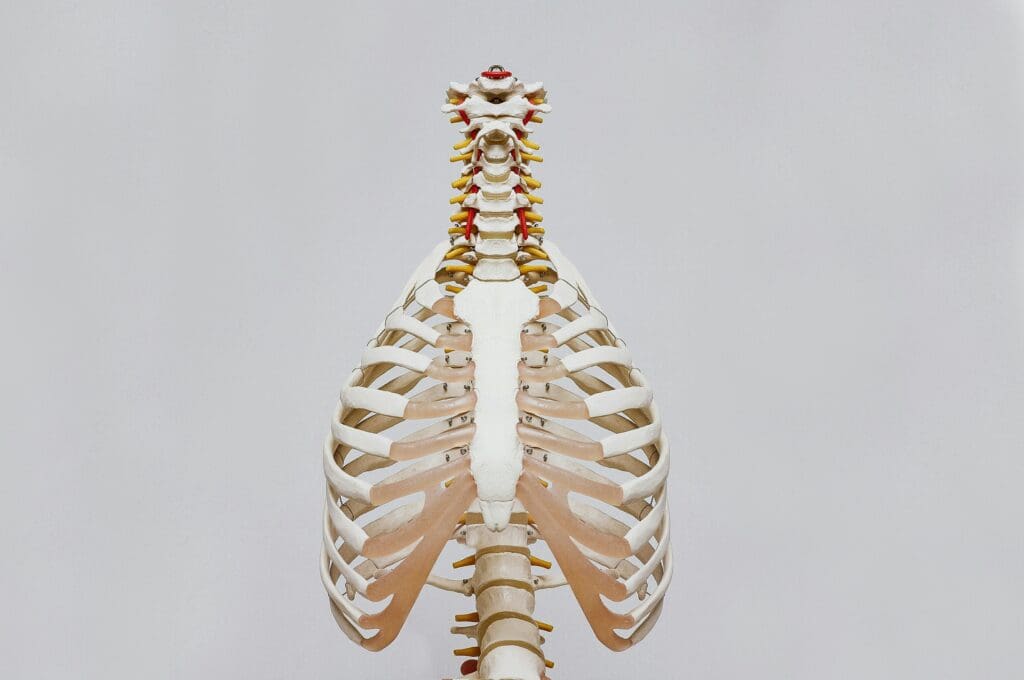
The Calcium-D-K2 Connection: Your Bone Building Team
Think of bone building as a three-person job:
Calcium provides the raw material—the actual building blocks your bones need.
Vitamin D acts as the gatekeeper, helping your intestines absorb calcium from food.
Vitamin K2 is the construction foreman, directing calcium to your bones and teeth while keeping it away from your arteries and soft tissues.
The K2 Food Challenge: Limited Healthy Options
Here’s the problem: vitamin K2 sources are surprisingly limited in typical Western diets, and many of the richest sources aren’t ideal for overall health. According to the Cleveland Clinic, the healthy K2 sources include:
- Natto (fermented soybeans): The highest natural K2 source available
- Chicken breast: Contains moderate amounts of K2
- Sauerkraut: Fermented vegetables provide some K2
- Fermented milk (kefir): Contains K2 from the fermentation process
Many other K2-rich foods fall into “moderate” or “choose rarely” categories due to high saturated fat, cholesterol, or processing concerns. This includes certain cheeses, organ meats, and other animal products that, while high in K2, may not align with optimal cardiovascular health.
For anyone prioritizing both bone and heart health, natto emerges as the clear winner—delivering the highest K2 levels with additional benefits like fiber and plant protein, without the saturated fat found in many other K2 sources.
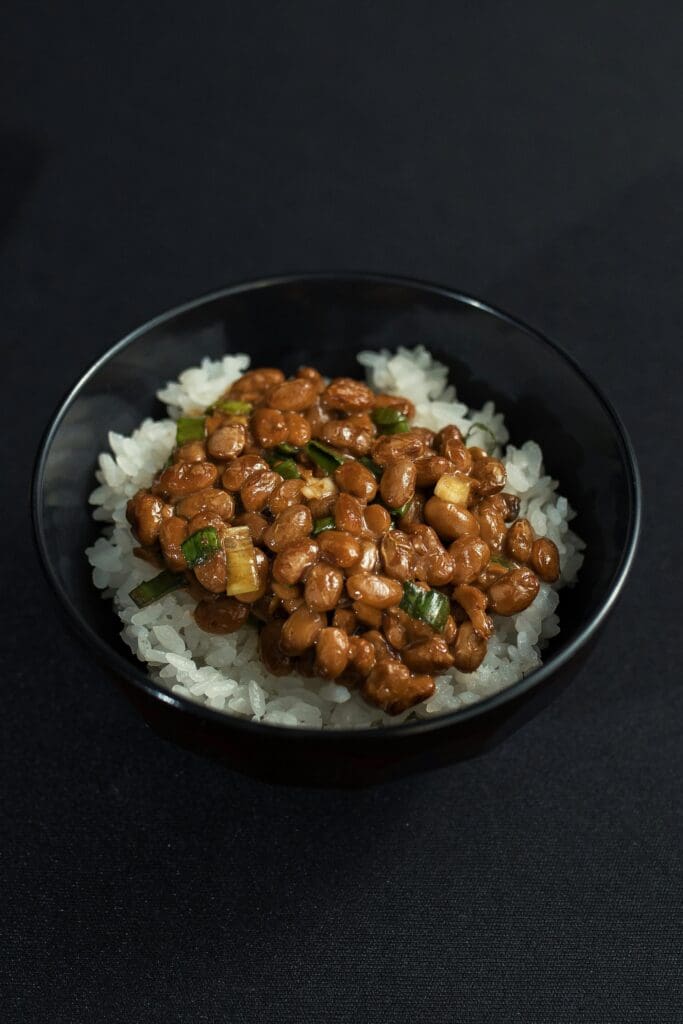
My Personal K2 Protocol: Real-World Implementation
Based on my research and my 5-step osteoporosis rebuild plan, here’s exactly what I’m implementing for my specific -3.6 T-score diagnosis:
1-2 tablespoons of natto 5+ days per week: Yes, it’s an acquired taste, but the K2 content is unmatched. I mix it with tamari, mustard, and brown rice and eat it as a side dish.
K2 supplement (15mg): To ensure consistent intake on days I don’t eat natto.
Calcium supplement (250mg): Now that I understand the K2 connection, calcium supplementation makes sense as part of the complete system.
Vitamin D supplement (5,000 IU): I recently increased my dosage to reach my target of 50 ng/mL.
Important note: This protocol is specifically designed for my osteoporosis diagnosis with a T-score of -3.6. If my results had indicated osteopenia instead, I’d be approaching this differently—focusing more on calcium-rich foods rather than supplementation and likely using a lower K2 dose. The severity of bone loss influences the intervention strategy.
Medical disclaimer: Vitamin K affects blood clotting, so anyone taking blood-thinning medications should discuss K2 supplementation with their healthcare provider.
The Hidden Cost of Incomplete Bone Health Education
By 2050, hip fractures are projected to increase by 310% in men and 240% in women compared to 1990 rates. The lifetime risk for hip, forearm, and vertebral fractures is around 40%—equivalent to cardiovascular disease risk. One in three adults aged 50 and over dies within 12 months of suffering a hip fracture, and older adults have a five-to-eight times higher risk of dying within the first three months of a hip fracture compared to those without a hip fracture.
For women, bone loss accelerates dramatically after menopause due to declining estrogen levels, making this knowledge even more critical.
Why This Matters Beyond Osteoporosis
Even if you don’t have a bone density diagnosis, understanding the calcium-D-K2 relationship is essential. Peak bone mass occurs around age 30, and after that, we’re all managing gradual bone loss. The earlier you start optimizing bone health, the better your long-term outcomes.
This isn’t just about preventing fractures in your 80s—it’s about maintaining the structural foundation that supports your movement, protects your organs, and serves as your body’s mineral bank throughout your life.
In a perfect world, nutrition education would be required curriculum. In the absence of that, the best we can do is set aside time to build our own health literacy. My mission is to make that easier by focusing on what’s most important for you to know right now.
Your bones are counting on more than just calcium. Make sure they’re getting the complete team they need.
Thanks for reading!
Like this post? The newsletter is the blog, plus. Subscribe to You Are What You Read — one email a month on redefining your Next 50. Only what works.
References & Additional Reading
Bone Health Statistics:
- International Osteoporosis Foundation. Facts and Statistics. https://www.osteoporosis.foundation/facts-statistics/epidemiology-of-osteoporosis-and-fragility-fractures
- CNN Health. (2019). Hip fractures are deadly for many seniors. https://www.cnn.com/2019/05/13/health/hip-fracture-death-partner
Vitamin K2 and Bone Health:
- Gundberg, C. M., et al. (2012). Vitamin K status and bone health: an analysis of methods for determination of undercarboxylated osteocalcin. Clinical Medicine Insights: Endocrinology and Diabetes, 5, 15-25. https://pmc.ncbi.nlm.nih.gov/articles/PMC4566462/
- Vannucci, L., et al. (2020). Calcium, vitamin D, vitamin K2, and magnesium supplementation and skeletal health. Clinical Cases in Mineral and Bone Metabolism, 17(2), 73-79. https://pubmed.ncbi.nlm.nih.gov/32972636/
Calcium and Cardiovascular Risk:
- Maresz, K. (2015). Proper calcium use: Vitamin K2 as a promoter of bone and cardiovascular health. Integrative Medicine: A Clinician’s Journal, 14(1), 34-39. https://pmc.ncbi.nlm.nih.gov/articles/PMC4566462/
- Beulens, J. W., et al. (2013). The role of menaquinones (vitamin K₂) in human health. British Journal of Nutrition, 110(8), 1357-1368. https://pmc.ncbi.nlm.nih.gov/articles/PMC7230802/
- Brancaccio, M., et al. (2020). Calcium supplements: Good for the bone, bad for the heart? A systematic updated appraisal. Nutrition, Metabolism and Cardiovascular Diseases, 30(9), 1463-1471. https://pmc.ncbi.nlm.nih.gov/articles/PMC7276095/
Image credits: Nino Liverani on Unsplash, Matheus Bertelli
This post does not constitute medical advice. Please consult with your healthcare provider regarding your specific health needs.