


Read time: 4 minutes
You’re at the grocery store, staring at plant milk options. Almond, oat, pistachio, hemp, cashew, soy, macadamia…even black sesame. Every package promises something different—protein, sustainability, taste, creaminess. You just want to grab what’s healthiest and get home.
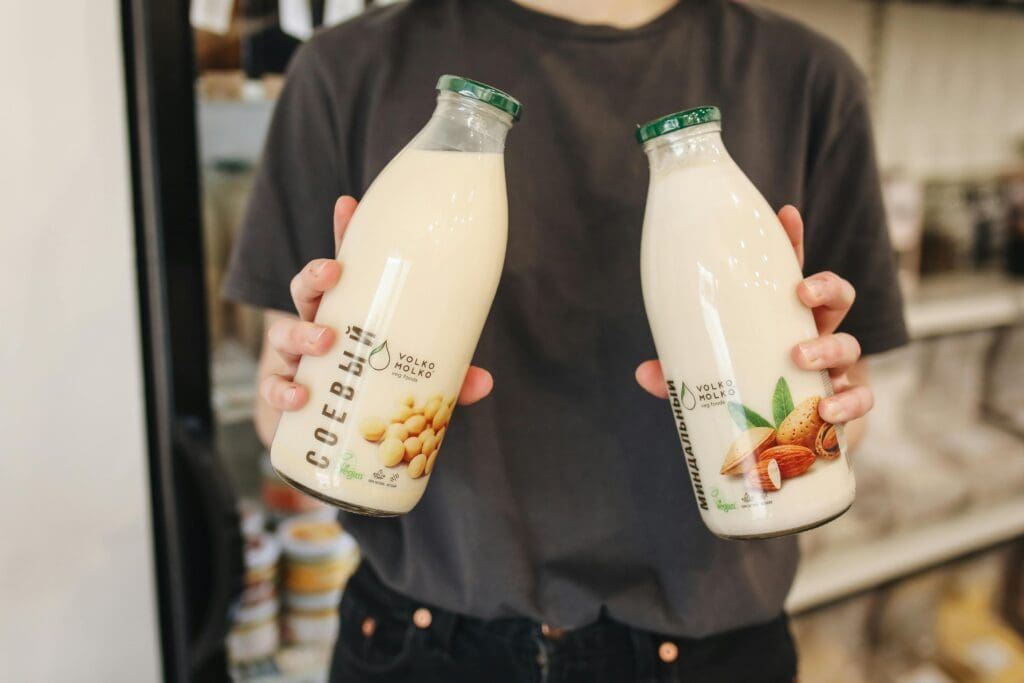
There’s a clear winner on nutrition: soy milk.
Here’s what I’ve learned: after going dairy-free 15 years ago (which eliminated my chronic acne), I started with soy because it was the only option. When almond milk hit the market, I switched for the taste. But a few years ago, I came back to soy—the protein and phytoestrogen benefits were too significant to ignore, especially with my family history of breast cancer.
Setting the Record Straight on Soy
Soy milk isn’t new—it’s been a dietary staple in Asian cultures for over 2,000 years, with records dating to China’s Eastern Han dynasty. The outdated concerns you may have heard were based on flawed 1990s research that’s been contradicted by decades of studies since. The science is clear: soy is protective and nutrient-dense.
The Soy Advantage
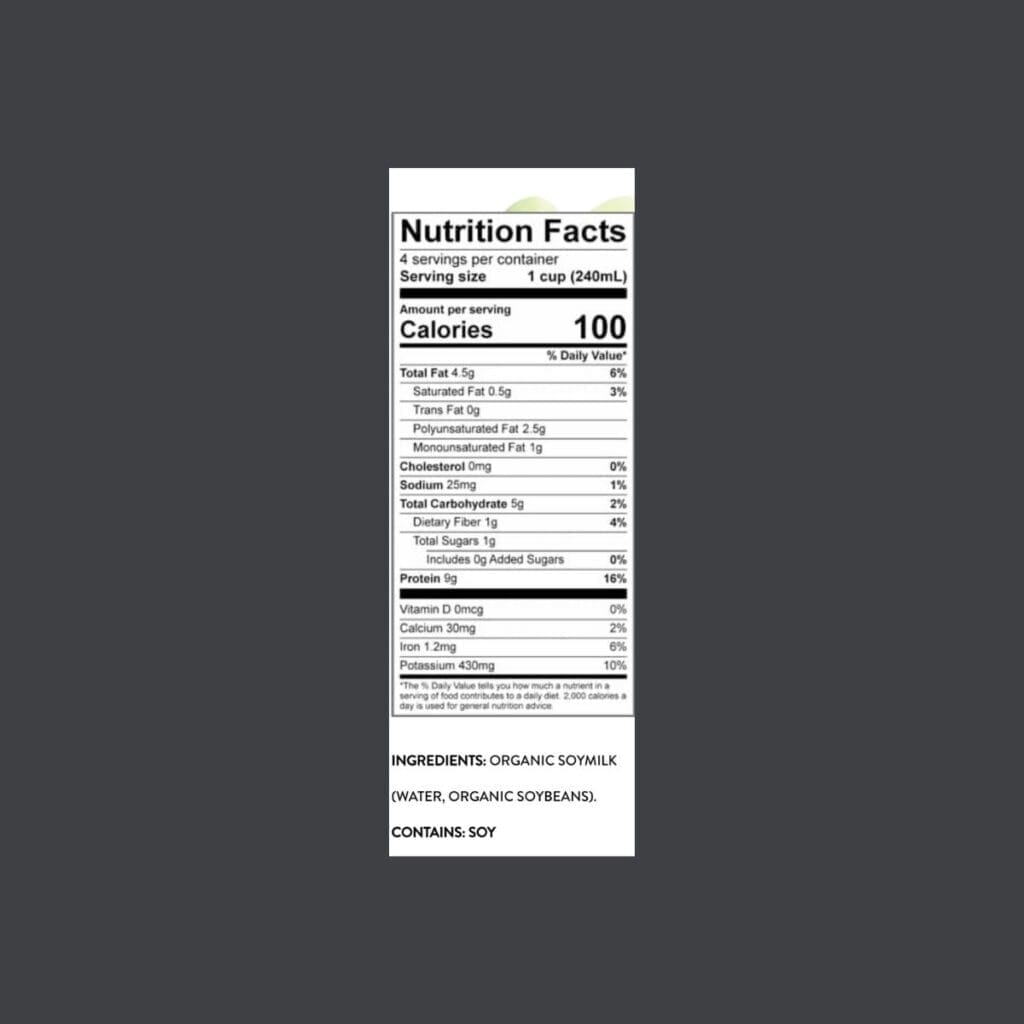
Soy milk delivers 9-12 grams of protein per cup—exceeding the 8 grams in whole cow’s milk—with just 0.5-1 gram of saturated fat compared to cow milk’s 5 grams. Other plant milks typically max out at 2-3 grams of protein.
Beyond protein, soy contains phytoestrogens—plant compounds that research suggests may offer protective benefits against breast cancer. For someone with a family history like mine, this matters.
Bonus for latte drinkers: soy produces a stable and creamy microfoam without added oils, thanks to its natural protein and fat content.
The 30-Second Label-Reading System
Skip the marketing claims on the front of the package. Flip it over and look at two things: the ingredient list and the nutrition facts.
Look for:
- Three ingredients maximum: the plant source (soybeans, almonds, etc.), water, and salt
Skip these:
- Added oils (sunflower oil, canola oil, rapeseed oil, etc.)
- Gums, fillers, and preservatives (gellan gum, guar gum, xanthan gum, carrageenan, phosphates)
- Added sugars (cane sugar, coconut sugar, etc.)
These additives serve processing convenience and shelf appeal, not your health.
Bookmark this: EWG’s Food Scores database provides product scores for nutrition, ingredient and processing concerns.
What to Buy
Two brands consistently meet the quality standard:
West Life plain, unsweetened soy milk is my go-to. Shelf-stable, widely available, and delivers 9 grams of protein per cup with clean ingredients.
Three Trees takes it up a notch with 12 grams of protein per cup—the highest I’ve found. You’ll find it in the refrigerated section, and it’s worth trying if your store carries it.
Both give you exactly what you need without the junk.
If You’re Switching from Sweeter Options
Your taste buds may need a week or two to adjust if you’re coming from another plant milk with added sugars or oil. I still love the taste of homemade almond milk, but I choose soy for the nutrition. The protein and phytoestrogen benefits matter more.
The grocery store plant milk decision just got simpler. Look for soy, check the ingredients, and move on with your day.
Thanks for reading!
Like this post? The newsletter is the blog, plus. Subscribe to You Are What You Read — one email a month on redefining your Next 50. Only what works.
References & Additional Reading
- Messina, M. (2016). Soy and Health Update: Evaluation of the Clinical and Epidemiologic Literature. Nutrients, 8(12), 754. https://pubmed.ncbi.nlm.nih.gov/27886135/
- Trock, B. J., Hilakivi-Clarke, L., & Clarke, R. (2006). Meta-analysis of soy intake and breast cancer risk. Journal of the National Cancer Institute, 98(7), 459-471. https://pubmed.ncbi.nlm.nih.gov/16595782/
- Chi, F., Wu, R., Zeng, Y. C., Xing, R., & Liu, Y. (2013). Post-diagnosis soy food intake and breast cancer survival: a meta-analysis of cohort studies. Asian Pacific Journal of Cancer Prevention, 14(4), 2407-2412. https://pubmed.ncbi.nlm.nih.gov/23725149/
- Sethi, S., Tyagi, S. K., & Anurag, R. K. (2016). Plant-based milk alternatives an emerging segment of functional beverages: a review. Journal of Food Science and Technology, 53(9), 3408-3423. https://pubmed.ncbi.nlm.nih.gov/27777447/
Image credit: Polina Tankilevitch
This post does not constitute medical advice. Please consult with your healthcare provider regarding your specific health needs.