


Read time: 5 minutes
If you’re training hard—whether that’s resistance training, endurance training like running or cycling, or simply staying active in your 40s and beyond—you already know recovery isn’t optional. It’s what determines whether your training compounds into real progress or just leaves you tired.
Yet most of us treat recovery as an afterthought. We finish the workout and move on with our day, not thinking about what comes next. The result? Slower progress, persistent fatigue, and workouts that feel harder than they should.
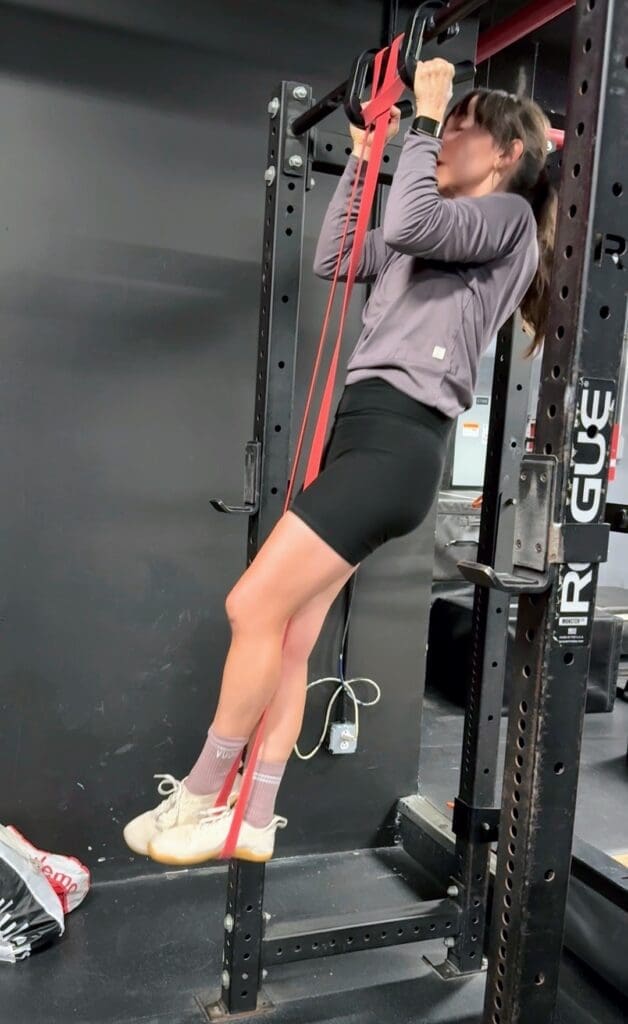
In September, I learned I have osteoporosis in my lumbar spine—a diagnosis I didn’t expect at 53. Adding resistance training with heavy weights once a week was the one component of my rebuild plan I was dragging my feet on.
Later that month, at my monthly physical therapy session, I met Shawn. My physical therapist’s go-to personal trainer happened to have an appointment at the same time. A week later, I was taking the subway to Herald Square and walking east through Koreatown for our first weight training session.
Why hire a trainer instead of figuring it out myself? Three reasons: form is everything, I’m more likely to stick to a schedule with accountability, and injury risk feels real. The last time I lifted heavy—even with a trainer—I walked away with a femoral hernia. This time, I wasn’t taking any chances.
I already do Bar Method 5-6 days a week, but that wasn’t enough. To rebuild bone density, I needed to add heavy resistance training. The challenge? Training this much demands a recovery strategy. Without it, I’m just breaking my body down without building it back up.

The Foundation: What Moves the Needle
My recovery framework centers on nutrition and sleep—the same two practices that show up in everything I write about Next 50. That’s intentional. These aren’t just habits. They’re the biological mechanisms that determine whether your body recovers, adapts, and builds strength, or just breaks down.
Nutrition: Fuel the Repair
I eat vegetables every day, but on training days I’m especially intentional about it. The phytonutrients and antioxidants in plants help combat the oxidative stress and inflammation that come with intense training. Raw fruits and vegetables are particularly hydrating, which matters when your body is working overtime to repair muscle tissue.
Hydration is critical for recovery. My daily goal is 90 ounces of water. I bring my Hydro Flask to training sessions and focus on drinking throughout—enough that I need to refill it before leaving the gym. A simple routine that does its job and makes lugging a bottle around town worth it.
On training days, I’m also mindful about eating enough. Under-fueling is one of the fastest ways to sabotage recovery, especially as we age.
Sleep: Non-Negotiable Recovery Time
Going to bed early is already my default, but I’m especially mindful on training days. If I’m planning a dinner out, I avoid scheduling it on a training day—I know I sleep better when I cook at home. I aim to finish dinner by 7pm with lights out by 10pm.
Why? Because muscle protein synthesis—the process of building and repairing muscle tissue—happens primarily during deep sleep. Your body releases human growth hormone in pulses during deep sleep, driving muscle recovery. Quality sleep also regulates cortisol, reduces inflammation, and restores energy systems.
Whoop tracks my sleep and shows me the direct correlation between sleep quality and how I feel in my next training session. Poor sleep doesn’t just make you tired—it measurably reduces your performance and slows your recovery.

The Experiment: Strategic Supplementation
Nutrition and sleep are the non-negotiables. Supplements are just that—supplemental. I’m experimenting with one that might help given my body type and bone health needs.
If you’ve read the book Outlive, you may remember the “Yogini” body type—people with extreme passive range of motion for whom putting on muscle is particularly difficult. I relate to this body type. Add to that my Dexafit results showing my lean mass “needs focus” (the lowest ranking) and my osteoporosis diagnosis—building muscle isn’t optional, it’s essential.
Creatine
After I lost two pounds of muscle, I started supplementing with creatine. I’ll be honest: I don’t love it. It’s effort (powder form means mixing it with water), it’s costly, and initially I experienced bloating. Three months in, the bloating has subsided, but I still find it mildly dehydrating.
So why continue? The research on creatine monohydrate shows it can help add 2-4 pounds of lean muscle mass over 4-12 weeks of training compared to training alone, particularly when combined with resistance training. For someone actively trying to build muscle in their 50s, that potential matters enough to keep testing.
Beyond the Gym: Recovery Applies Everywhere
Whether you’re recovering from a challenging workout, a demanding week at work, travel, or fighting off a cold, the same principles apply.
Recovery isn’t just about muscles. It’s about giving your body the resources it needs to adapt and strengthen. Nutrition provides the raw materials. Sleep facilitates the repair processes. Strategic supplementation—when evidence-based and personalized—can potentially enhance both.
The goal isn’t perfection. It’s consistency with the practices that move the needle. That’s what powers sustainable progress in your next 50 years.
Thanks for reading!
Like this post? Get more. Subscribe to You Are What You Read — one email a month on redefining your Next 50. Only what works.
References & Additional Reading
Nutrition and Exercise:
- American Heart Association. Food as Fuel Before, During and After Workouts. https://www.heart.org/en/healthy-living/healthy-eating/eat-smart/nutrition-basics/food-as-fuel-before-during-and-after-workouts
Creatine and Muscle Growth:
- Wu SH, Chen KL, Hsu C, et al. Creatine Supplementation for Muscle Growth: A Scoping Review of Randomized Clinical Trials from 2012 to 2021. Nutrients. 2022;14(6):1255. https://pmc.ncbi.nlm.nih.gov/articles/PMC8949037/
Sleep and Exercise Recovery:
- Dattilo M, Antunes HK, Medeiros A, et al. Sleep and muscle recovery: Endocrinological and molecular basis for a new and promising hypothesis. Medical Hypotheses. 2011;77(2):220-222. https://pubmed.ncbi.nlm.nih.gov/21550729/
Image credits: Nataliya Vaitkevich, Polina
This post does not constitute medical advice. Please consult with your healthcare provider regarding your specific health needs.