


Read time: 8 minutes
What if I told you that one meal could deliver more disease-fighting compounds than most people consume in an entire week? That a single bowl could provide the same protective benefits researchers associate with dramatically reduced rates of heart disease, certain cancers, and cognitive decline?
This isn’t about expensive superfoods or exotic supplements. It’s about strategic plant diversity—and it takes just 15 minutes to prepare.
I’ve been a salad lover since childhood—so much so that when my grandparents asked me where I wanted to go for my birthday lunch in elementary school, I picked the place with the best salad bar. (I know, I wasn’t a typical kid.)
Years later, in my 30s, I had a revelation at a small restaurant in Paris. The salad I ordered must have contained 5 different herbs (not including lettuce and other vegetables)—think fresh chopped parsley, thyme, dill, chives, fennel, mint—this was unlike anything I’d experienced in the U.S. previously. The flavor complexity was next level. I still think about that salad today, and it inspired me to experiment with my own ingredient combinations.
Now, after years of studying nutrition research and refining my approach, I’ve developed what I call my “future-self salad”—probably the dish I make that I’m most proud of. I eat some version of this salad most days, and it has become my signature creation.
Before you think “great, another person who’s always loved salad telling me to eat more vegetables,” let me be clear: you don’t have to love salad to benefit from this approach. Think of it as an investment in your palate—start with tolerance and watch enjoyment develop as your taste preferences adapt. The health benefits are worth the gradual adjustment period.
This 15-ingredient future-self salad delivers hundreds of protective phytonutrients, antioxidants, and anti-inflammatory compounds that work together to support your body’s natural defense systems.
The Science Behind Plant Diversity
Here’s what the research shows: people who consume the widest variety of plant foods have the lowest rates of chronic disease. The Harvard Nurses’ Health Study, following over 100,000 participants for decades, found that those eating the most diverse plant-based diets had significantly reduced risks of heart disease, stroke, diabetes, and certain cancers.
The reason? Each plant contains unique protective compounds that work together. The anthocyanins in red onions protect your cardiovascular system differently than the sulforaphane in kale protects against cancer. The quercetin in onions supports immune function while the lycopene in tomatoes guards against cellular damage.
This single salad delivers 15 different plant foods—each contributing its own arsenal of protective compounds.
The Sourcing Strategy
Creating this protective meal starts with intentional shopping. Once these ingredients are in your fridge, the salad comes together in minutes. Here’s my sourcing strategy:
Farmer’s Market Finds
- Red little gem lettuce: Provides folate and vitamin K for cardiovascular and bone health
- Sun gold cherry tomatoes: Rich in lycopene, linked to reduced prostate cancer risk and heart disease protection
- Radish: Contains glucosinolates, compounds that support liver detoxification
- Cucumber: Delivers silica for skin health and anti-inflammatory compounds
- Red spring onions: Packed with quercetin, a powerful anti-inflammatory and immune-supporting flavonoid
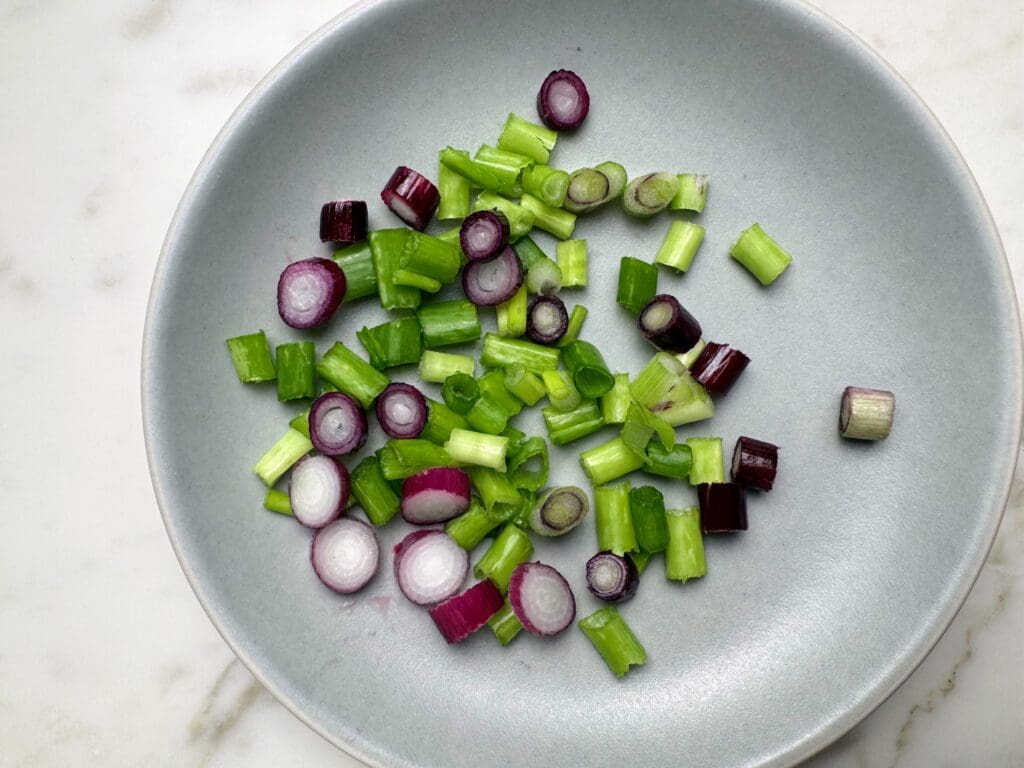
Garden Fresh (20×20 Rooftop Planter)
- Dino kale: Loaded with sulforaphane, one of nature’s most potent cancer-fighting compounds
- Shiso: Contains rosmarinic acid, which supports respiratory health and reduces inflammation
- Basil: Rich in eugenol and other volatile oils with antimicrobial and anti-inflammatory properties
Grocery Store Staples
- Sweet white onion: High in organosulfur compounds that support cardiovascular health
- Celery: Contains apigenin, a flavonoid with neuroprotective and anti-cancer properties
- Lemon: Vitamin C and citrus flavonoids that enhance iron absorption and support immune function
- Avocado: Monounsaturated fats that improve nutrient absorption and support heart health
- Nutritional yeast: B vitamins essential for energy metabolism and nervous system function
Online Sourcing
- Botija black olives: Contain hydroxytyrosol and other polyphenols with powerful antioxidant properties
- 7-herb Italian balsamic vinegar: Multiple herbs provide additional polyphenols and flavor compounds
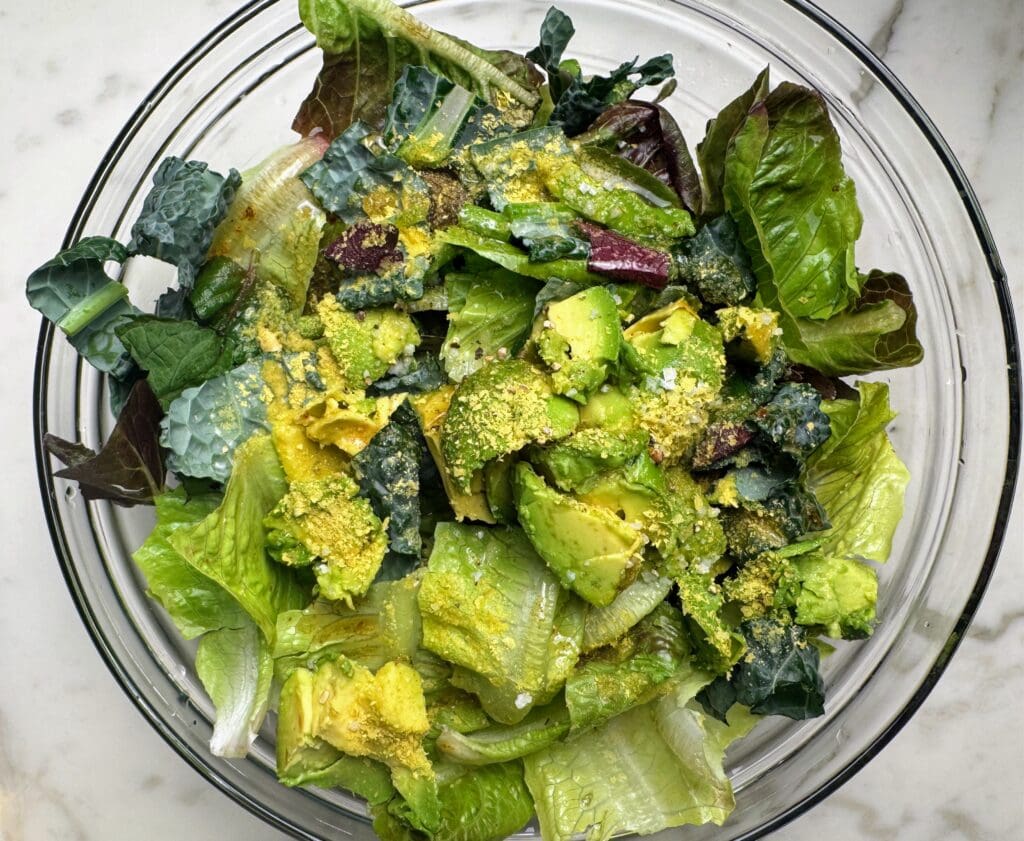
The 15-Minute Assembly Method
The beauty of this system is its simplicity:
- Rinse and chop all vegetables, adding them to your largest mixing bowl
- Score and scoop ½ avocado directly into the bowl
- Squeeze ½ lemon over everything (enhances nutrient absorption and flavor)
- Add 1-2 tablespoons balsamic vinegar
- Sprinkle ½ to 1 tablespoon nutritional yeast to taste
- Season with sea salt and pepper if desired
- Mash avocado into salad, then chop and toss all ingredients to coat vegetables with the lemon, nutritional yeast, avocado, and balsamic vinegar
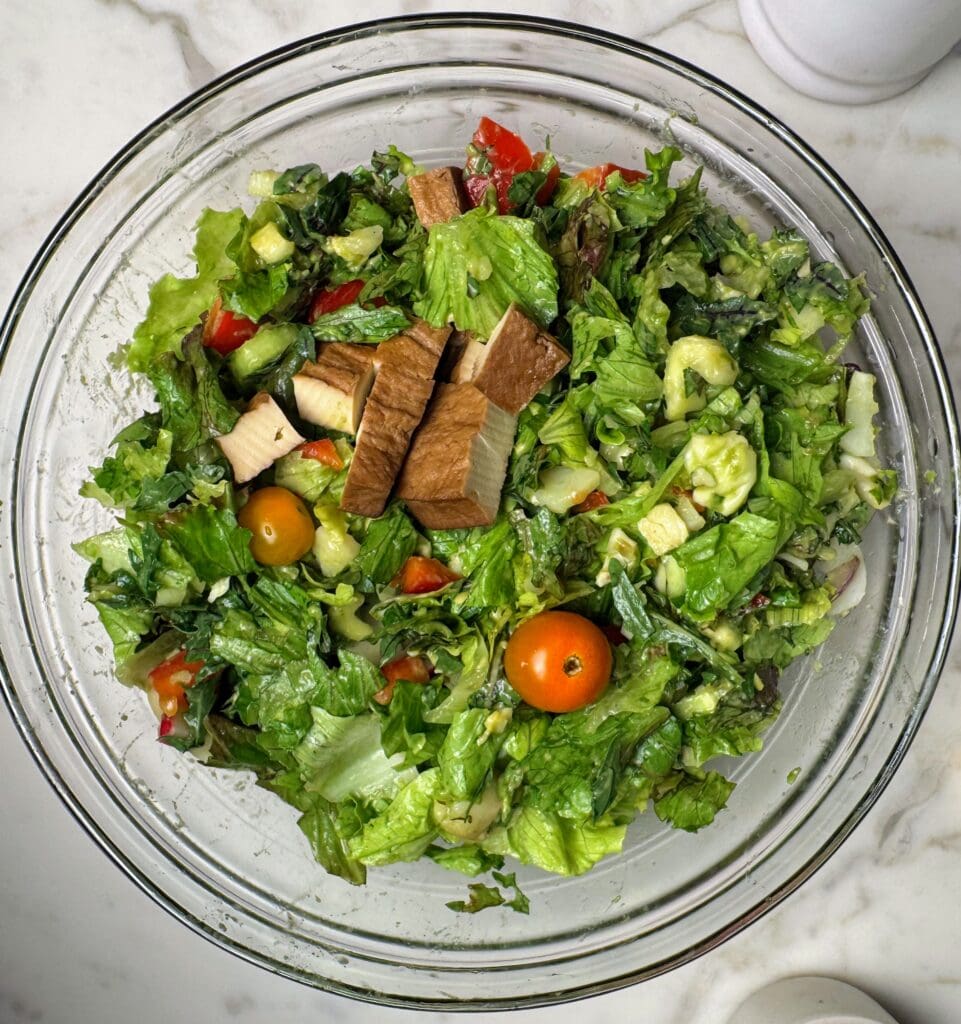
Make it heartier: For a more filling meal, I typically add ½ to 1 cup of baked or air-fried cubed tofu, black beans, or chickpeas. These additions provide extra fiber, minerals, and help make the salad more satisfying.
No fancy plating required—eat directly from the mixing bowl. This is about maximizing protective compounds, not presentation.
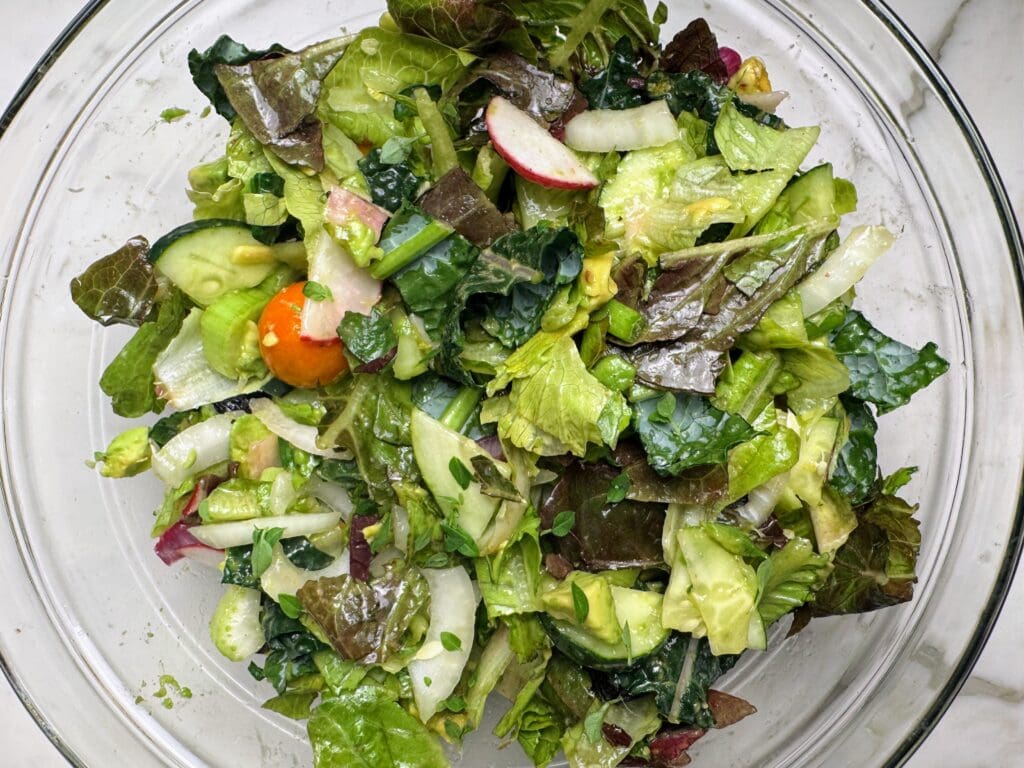
The 15-Ingredient Advantage: Why Diversity Matters More Than You Think
Here’s what most people miss about disease prevention: it’s not just about eating “some” vegetables—it’s about eating a wide variety. Research shows that people who consume 30 or more different plant foods per week have significantly more diverse gut microbiomes and lower rates of chronic disease than those eating fewer varieties.
This single salad delivers 15 different plant foods in one meal. That’s already halfway to the weekly target that correlates with optimal health outcomes, better immune function, and reduced inflammation markers.
Bonus Benefit: Built-In Mindful Eating
If you’re a fast eater, this salad will naturally slow you down. The variety of textures—from crunchy radishes to hearty kale—requires thorough chewing, giving your body time to register fullness, and supporting optimal digestion. One salad, numerous benefits.
Building Your Plant Tolerance (The Overlooked Strategy)
If your digestive system isn’t accustomed to this much fiber, start smaller and build volume gradually over time. Consistency matters more than quantity initially. Your gut microbiome will adapt, and you may notice improved digestion, better immune function, and enhanced overall resilience as your system adjusts.
Why This Works When Other “Healthy” Approaches Don’t
This salad succeeds where other healthy eating attempts fail because it addresses the real barriers to consistent nutritious eating:
Satisfaction: The combination of fiber, healthy fats, and sheer volume keeps you full
Flavor complexity: Multiple taste and texture elements prevent monotony
Convenience: 15 minutes from start to finish
Flexibility: Substitute ingredients based on availability or season
Comprehensive protection: 15 different plant foods deliver a spectrum of protective compounds
Your Future-Self Investment
Think of this salad as your daily investment in your future self. While you can’t control your genetics, you can control the protective compounds you provide your body each day. This meal delivers hundreds of bioactive compounds that support your immune system, reduce inflammation, protect against cellular damage, and optimize your body’s natural defense mechanisms.
The research is clear: the people with the lowest rates of heart disease, cancer, diabetes, and cognitive decline are those eating the most diverse, plant-rich diets. This salad makes that level of protection accessible in a single, simple meal. It’s one of the data-driven habits that can support a slower pace of aging at the cellular level.
Your Next Step
Pick five ingredients from this list that you can source this week. Choose vegetables you already love alongside one or two you’re trying for the first time, or don’t typically buy. Build your first version with what’s accessible to you. As you develop the shopping rhythm, add more variety. The goal isn’t perfection—it’s consistency and the cumulative protective benefit of eating this way regularly.
Your future self—and your long-term health outcomes—will thank you for making this simple shift toward comprehensive nutritional protection.
Thanks for reading!
Like this post? The newsletter is the blog, plus. Subscribe to You Are What You Read — one email a month on redefining your Next 50. Only what works.
References & Additional Reading
- Fruit and vegetable intake and the risk of cardiovascular disease, total cancer and all-cause mortality
- Plant-based diets and cardiovascular health
- Association between Dietary Diversity and All-Cause Mortality: A Multivariable Model in a Mediterranean Population with 18 Years of Follow-Up
- Associations between plant-based dietary patterns and risks of type 2 diabetes, cardiovascular disease, cancer, and mortality – a systematic review and meta-analysis
- Effect of Plant-Based Diets on Gut Microbiota: A Systematic Review of Interventional Studies
- The American Gut Project: comparing the microbiome of different populations
- Polyphenols and human health: prevention of disease and mechanisms of action
This post does not constitute medical advice. Please consult with your healthcare provider regarding your specific health needs.