


Read time: 5 minutes
What if one simple food swap could give you steady energy, keep you satisfied longer, and deliver nutrients that support your long-term health? There’s an option sitting unnoticed in the bulk bins at your grocery store that does exactly that.
Enter groats: the most minimally processed form of grains that provide steady energy, keep you satisfied, and deliver the kind of nutrition your body thrives on—all without the crashes of processed alternatives.
My Two-Decade Journey with Groats
My introduction to groats came in my 20s during a presentation by Dr. Gabe Mirkin in Washington, D.C. He advocated for whole grains and shared a brilliant hack for busy professionals: using a thermos to cook grains on the go. For over a year, I took that thermos to my first post-college job in Arlington, Virginia, eating perfectly cooked grains for lunch daily.
Years later, while living in San Francisco, I attended a raw food cooking class in Oakland that featured soaked oat groats prepared as “oatmeal.” The texture and flavor were revelatory—completely different from the bland, ultra-processed instant oats most people know.
These experiences taught me that the simplest nutritional upgrades often deliver the most dramatic results. Groats represent exactly that kind of back-to-basics approach—whole grains as they’ve existed for thousands of years, not factory creations.
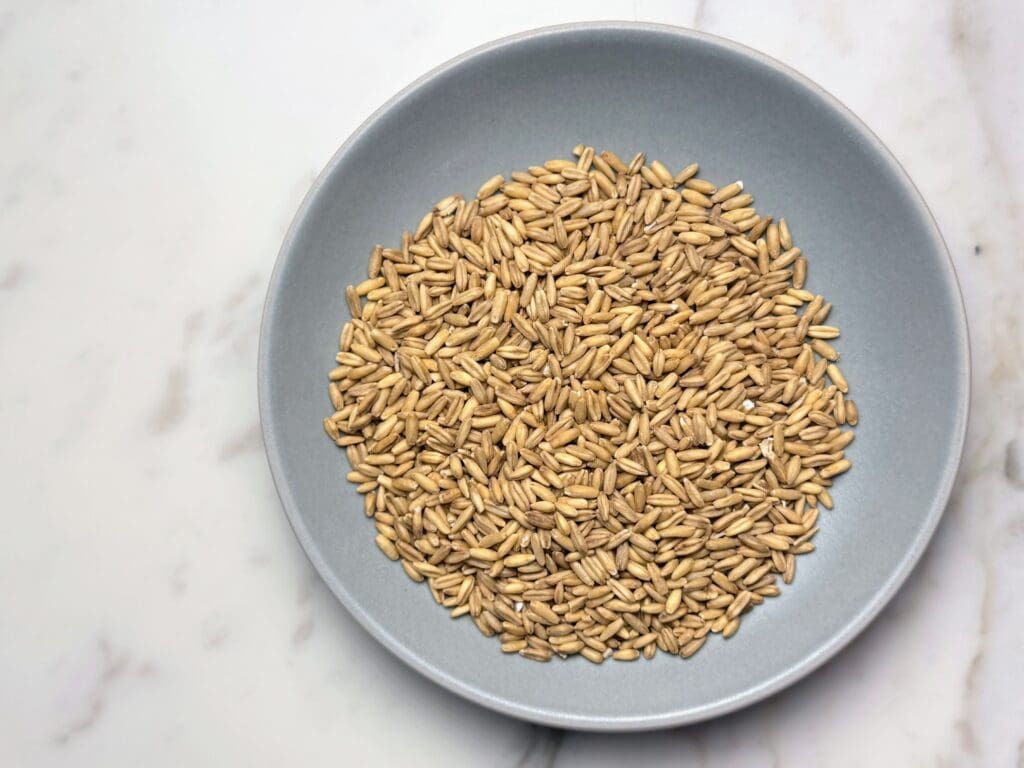
What Are Groats? (And Why You Should Care)
Groats are simply the whole kernel of any grain with only the inedible outer husk removed. Think of them as the grain equivalent of eating an apple instead of drinking apple juice—you get all the fiber, nutrients, and slow-release energy that processing strips away.
The Processing Spectrum (from least to most processed oats):
Groats → Steel-cut → Scottish → Rolled → Quick → Instant
The further right you go, the more you compromise nutrient density and blood sugar stability.
Why Groats Deserve a Place in Your Nutrition Plan
Four compelling reasons to make this simple swap:
Steady Energy Release
Unlike refined grains that are stripped of their fiber-rich bran and nutrient-dense germ, groats retain all three parts of the grain kernel. Research shows that intact grain kernels produce significantly more favorable blood glucose responses compared to processed grains, providing sustained energy for demanding work.
Iron Rich
One cup of cooked oat groats delivers 7.2 mg of iron—90% of the daily recommended intake. This matters because iron deficiency is one of the most common nutrient deficiencies worldwide, particularly among women, directly impacting energy levels and cognitive function.
Antioxidant Power
Oat groats contain phenolic compounds and phytoestrogens that function as antioxidants, helping combat the chronic inflammation that underlies many health issues.
Satiety Factor
Half a cup of uncooked oat groats provides 14g protein and 8g fiber—nutrients that work together to keep you satisfied longer, reducing the afternoon energy dips that derail productivity.
Three Strategic Preparation Methods
Method 1: The Planner’s Approach (Soaking)
Soak groats in water and salt for 12-24 hours at room temperature, changing water once. This creates a nutty, satisfying texture perfect for busy mornings. Requires advance planning but delivers the best texture and flavor.
Method 2: The Professional’s Hack (Thermos Cooking)
Add boiling water to groats in a wide-mouth thermos, cover, and let sit 4 hours or overnight. Perfect for meal prep or office eating. This is the method Dr. Mirkin taught me decades ago—brilliant for busy schedules. I use a Hydro Flask Food Jar for this method.
Method 3: The Traditional Approach (Stovetop)
Cook like steel-cut oats but allow 50 minutes cooking time. Reliable but requires active cooking time.

Recipe: High-Performance Oat Groat Bowl
Adapted from a raw food cooking class by Heather Haxo Phillips
Serves 2-3
Ingredients:
- 1½ cups dry oat groats (yields 2 cups soaked)
- 1 tablespoon grade A maple syrup
- ¼ teaspoon sea salt
- ½ teaspoon cinnamon (add cardamom or pumpkin spice for variety)
- ½ teaspoon vanilla extract (optional)
- 1 apple, chopped
- 2 tablespoons water
- Plant milk for serving
Instructions:
- Soak groats 24 hours, changing water after 12 hours
- Drain and rinse thoroughly
- Process all ingredients in food processor until chunky but well-mixed (not liquified)
- Serve with plant milk and optional toppings like cacao nibs or nuts
Nutrition per serving: 433 calories, 15g fiber, 21g protein, 68% daily iron—with zero added sugars beyond the minimal maple syrup.
💾 Save this recipe — Bookmark this page or add it to your recipe app for easy access.
Strategic Sourcing
Check bulk bins at Whole Foods or your natural food stores first—they’re often the most economical option. Whole Foods used to stock oat groats reliably (though my local store has disappointingly switched to only buckwheat groats). Online options include specialty grain retailers and Amazon.
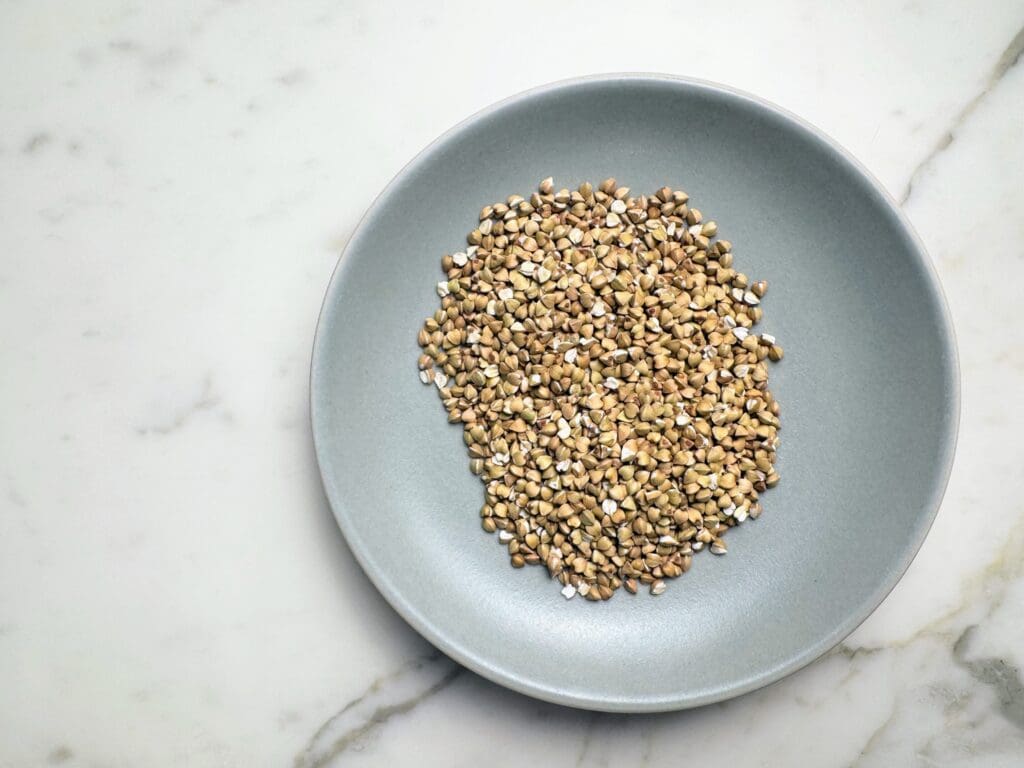
A Final Note on Variety
While this post focuses on oat groats, consider experimenting with other varieties like buckwheat groats, wheat berries, and rye groats. Each offers unique flavors and nutritional profiles while providing the same whole-grain benefits.
Your Implementation Strategy
Start with the thermos method if you’re new to groats—it requires minimal effort and delivers consistent results. Once you experience the sustained energy difference, you’ll naturally want to experiment with the other preparation methods.
This isn’t about perfection; it’s about making one strategic swap that compounds over time. If you’re not ready for the 24-hour soak, here’s my recipe for savory steel-cut oats — one step down the processing spectrum, 22g fiber and 24g protein in a bowl.
Your energy levels, blood sugar stability, and long-term health will thank you.
Thanks for reading!
Like this post? The newsletter is the blog, plus. Subscribe to You Are What You Read — one email a month on redefining your Next 50. Only what works.
References & Additional Reading
- CDC Diabetes Facts & Statistics
- Harvard Health: The lowdown on glycemic index and glycemic load
- Oat-based foods: chemical constituents, glycemic index, and the effect of processing
- Diet and inflammation
- Harvard School of Public Health: Oats
- Dr. Gabe Mirkin on whole grains
This post does not constitute medical advice. Please consult with your healthcare provider regarding your specific health needs.