


Read time: 7 minutes
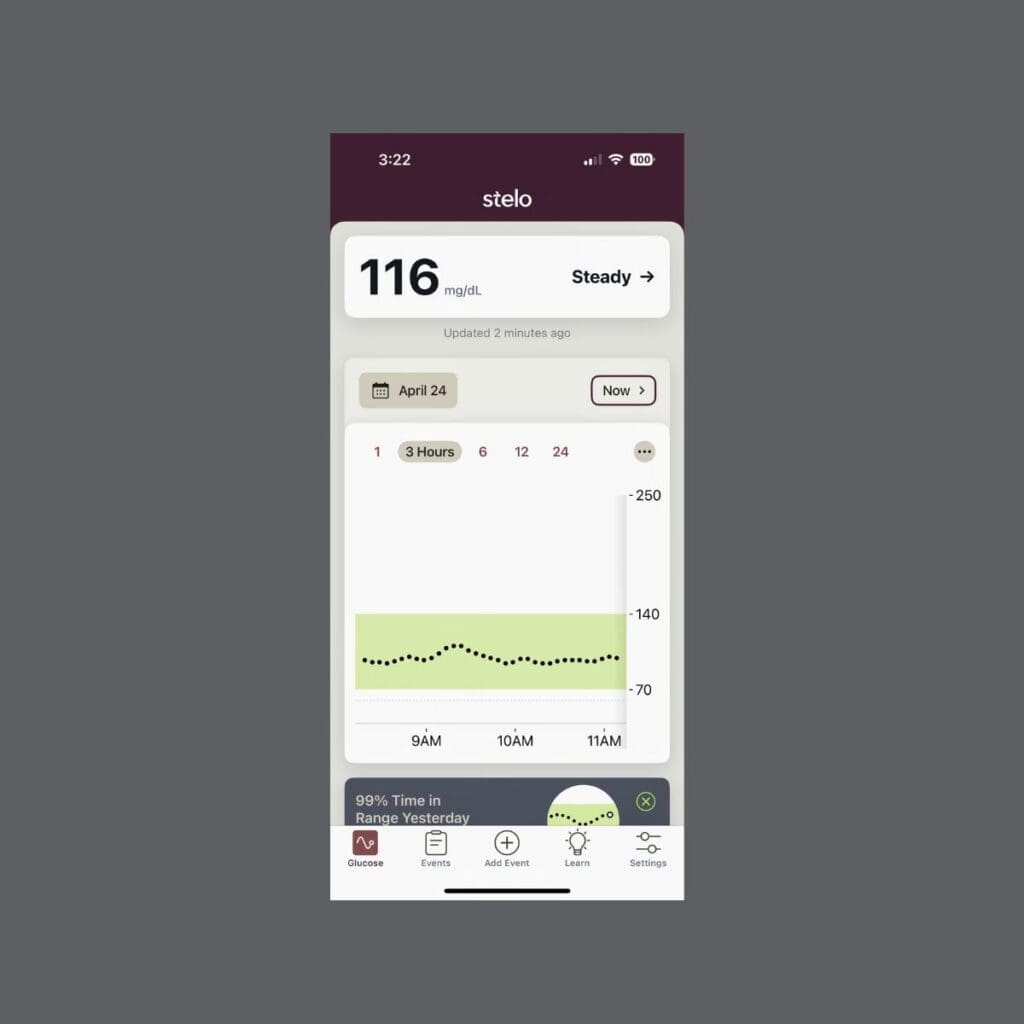
I’ve been wearing a continuous glucose monitor (CGM) for the last 5 days. Not because I have diabetes, but because I wanted to see real data on how my whole food, plant-based diet affects blood sugar. I expected my data would challenge the popular narrative that “carbs” cause harmful blood sugar spikes.
Why I Started This Blood Sugar Experiment
CGMs are made for people with diabetes to provide them with real-time data to help them manage the disease.
Wearing a CGM was not on my ‘to-do’ list. My step-dad had an unopened, over-the-counter CGM. He asked if I wanted to wear it. I was curious, so I took the opportunity. I don’t think CGMs are necessary for people who don’t have high fasting glucose and/or high A1-C (pre-diabetes or diabetes). Both the fasting glucose and A1-C tests are easily accessible as part of a routine annual exam.
I’ve been wearing the Stelo CGM since April 24.
My goal was to confirm my hypotheses that what I ate was a contributor to, not a detractor from, healthy blood sugar levels.
As I write this post, I have about 84 hours of CGM data. I’m focusing this post on the impact of my morning smoothie on my blood sugar. I’ll share data from other meals in a future post.
What Does Healthy Blood Sugar Look Like?
- Blood sugar rises and falls within the range of 70 to 140 mg/dL. This is normal.
- Blood sugar levels typically return to pre-meal levels within 2 hours after eating.
Factors That Influence Your Blood Sugar Levels
Hormones, stress, dehydration, physical activity, and what we eat can all have an impact on blood sugar.
The Smoothie Recipe That Keeps Blood Sugar Stable
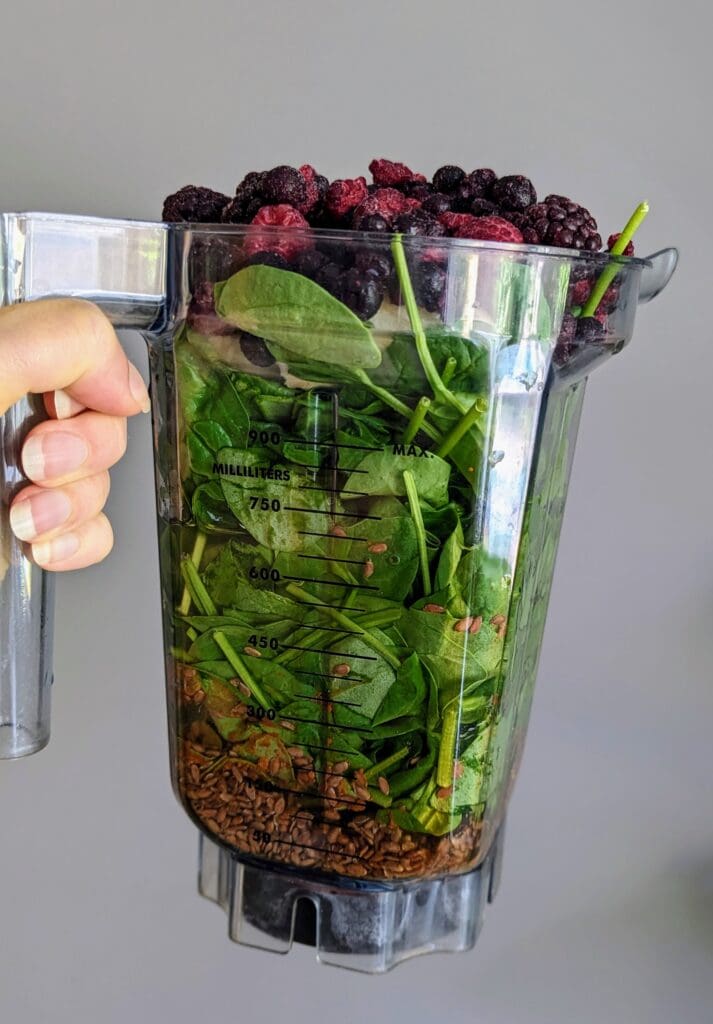
- 2-4 tablespoons chia (or whole flax) seeds
- 7-8 cups of raw vegetables, I used ½ green cabbage and ½ spinach
- 2-3 cups of fruit, my smoothie go-to fruits are 1 banana and 2-3 cups frozen blueberries, or frozen mango and blueberries or fresh pear, banana and blueberries
- West Life plain, unsweetened soy milk or Malk unsweetened vanilla almond milk
- Water, fill your blender about half-way to the top after adding vegetables and fruit
- Ice (optional for a colder smoothie)
Don’t omit the chia seeds. They play a key role in helping all the cells in your body function as they should. Omega-3 fatty acids play an essential role in reducing inflammation, brain and heart health. Chia seeds are also high in fiber.
💾 Save this recipe — Bookmark this page or add it to your recipe app for easy access.
How to Make This Blood Sugar-Friendly Smoothie in 10 Minutes or Less
- Add chia seeds, then vegetables, then fruit, then plant milk and water to your blender, I use a Vitamix with a 2 liter (8 cup) blender jar.
- Starting on low speed, gently increase the speed to High. Use the tamper that came with your blender to push ingredients towards the blade, until the blender is pulling the entire blender full of ingredients down towards the blade on its own.
- Blend for an additional 60 or so seconds, until smooth. Total blend time from start to finish is about 2 minutes.
- I like using green cabbage because it costs very little, it’s a cruciferous vegetable, and it has a mild taste, undetectable in a smoothie.
- If you can buy large bags of organic spinach or “power greens,” organic frozen blueberries and mango at Costco, this will save you some money. Bananas are cheap at most grocery stores.
Context matters. It’s not just a single ingredient, it’s not just the food. Hydration and movement also matter.
My Morning Routine That Supported Stable Blood Sugar
✔️ 24-32 ounces of plain water prior to smoothie
✔️ Morning walk 3,000-4,000 steps
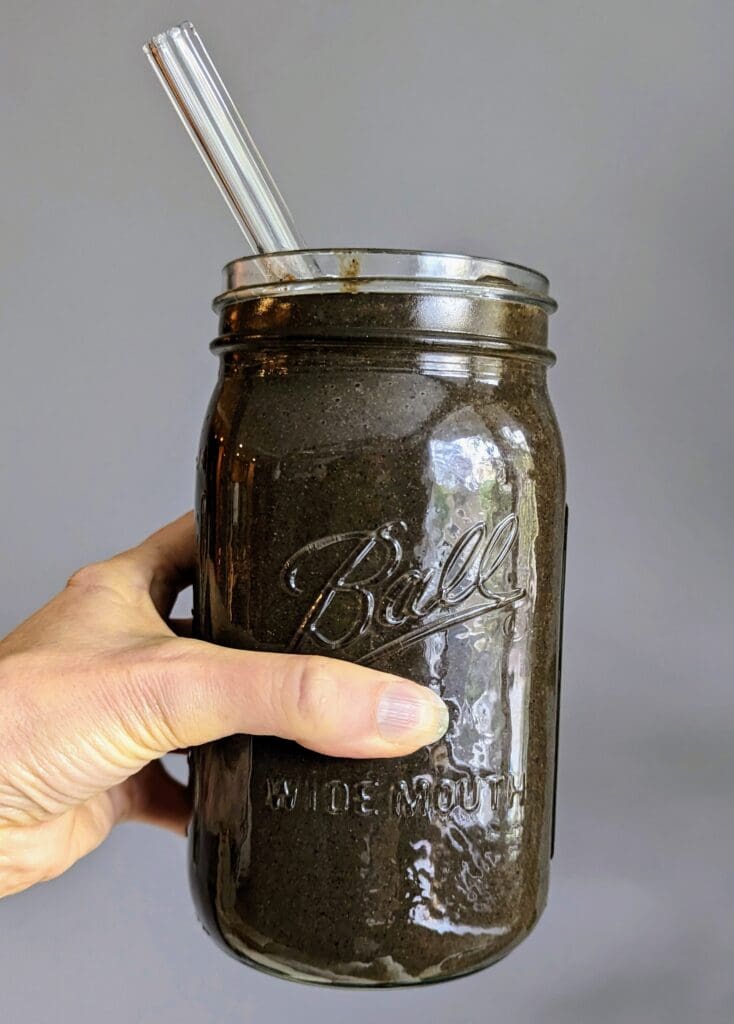
✔️ ~30 ounce smoothie
✔️ ⅓ – ½ cup dry roasted edamame
I also drank 12 ounces of coffee – because I like it, not because it supports stable blood sugar.
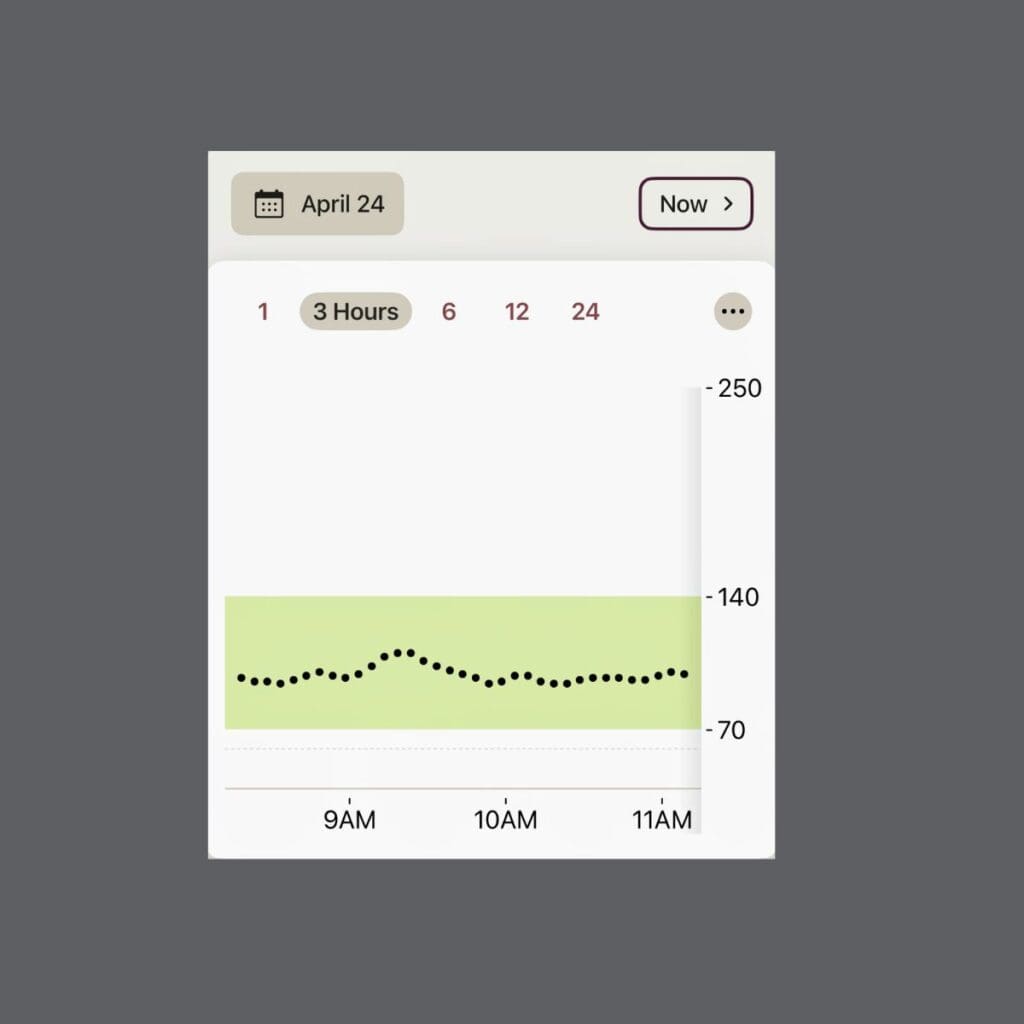
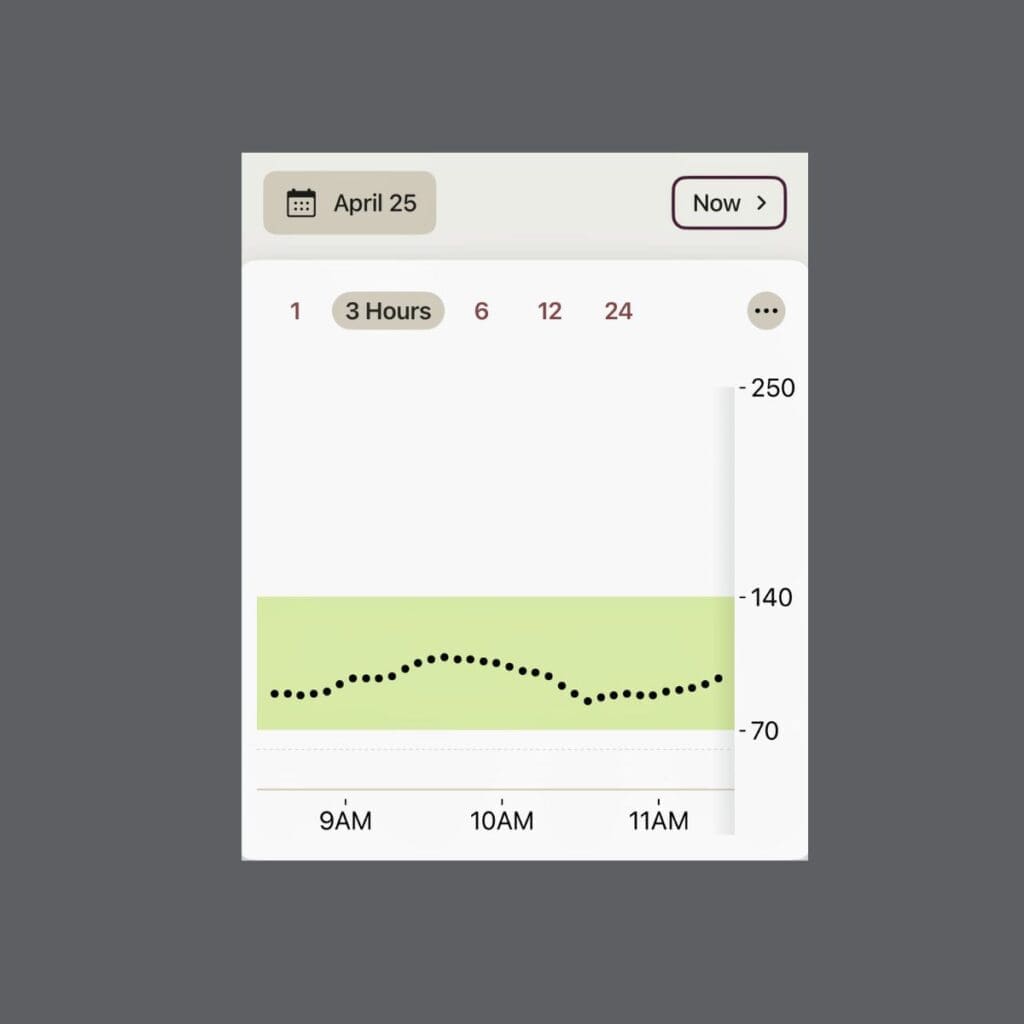
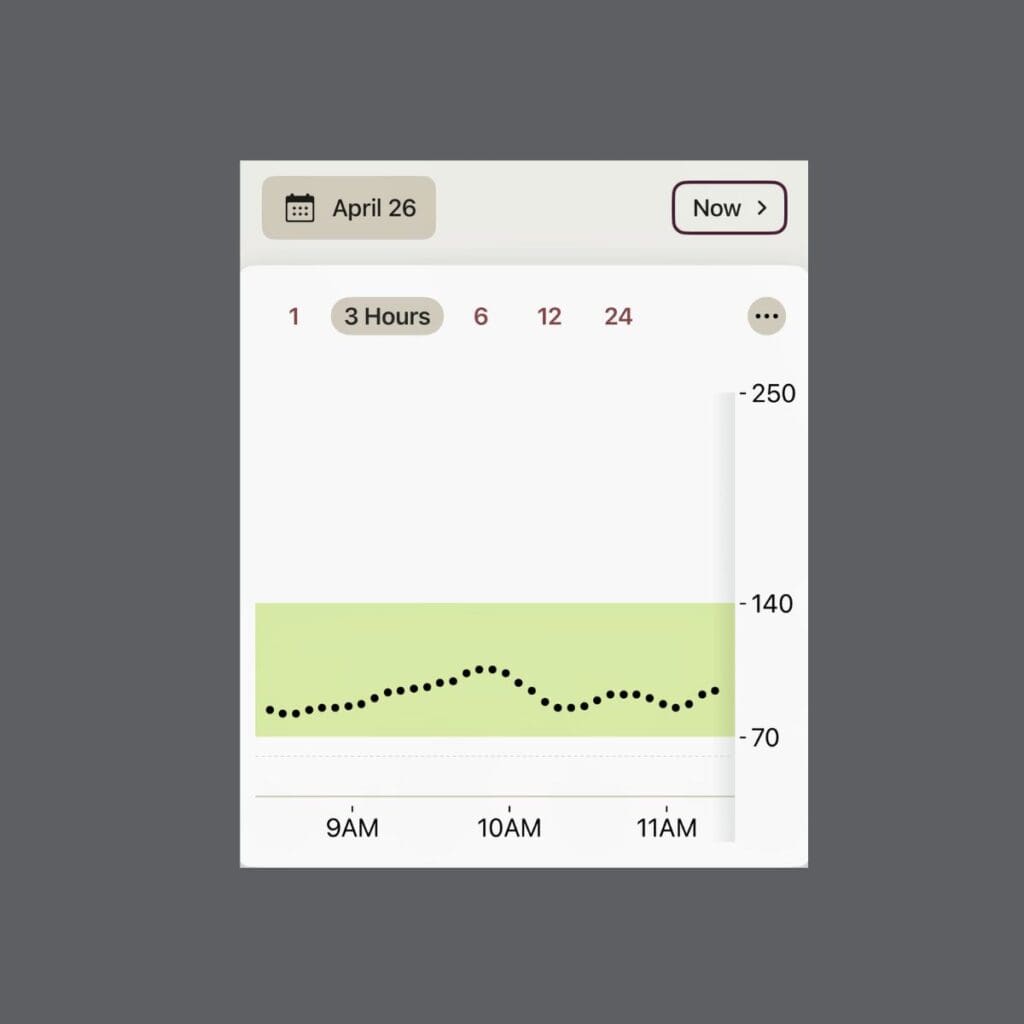
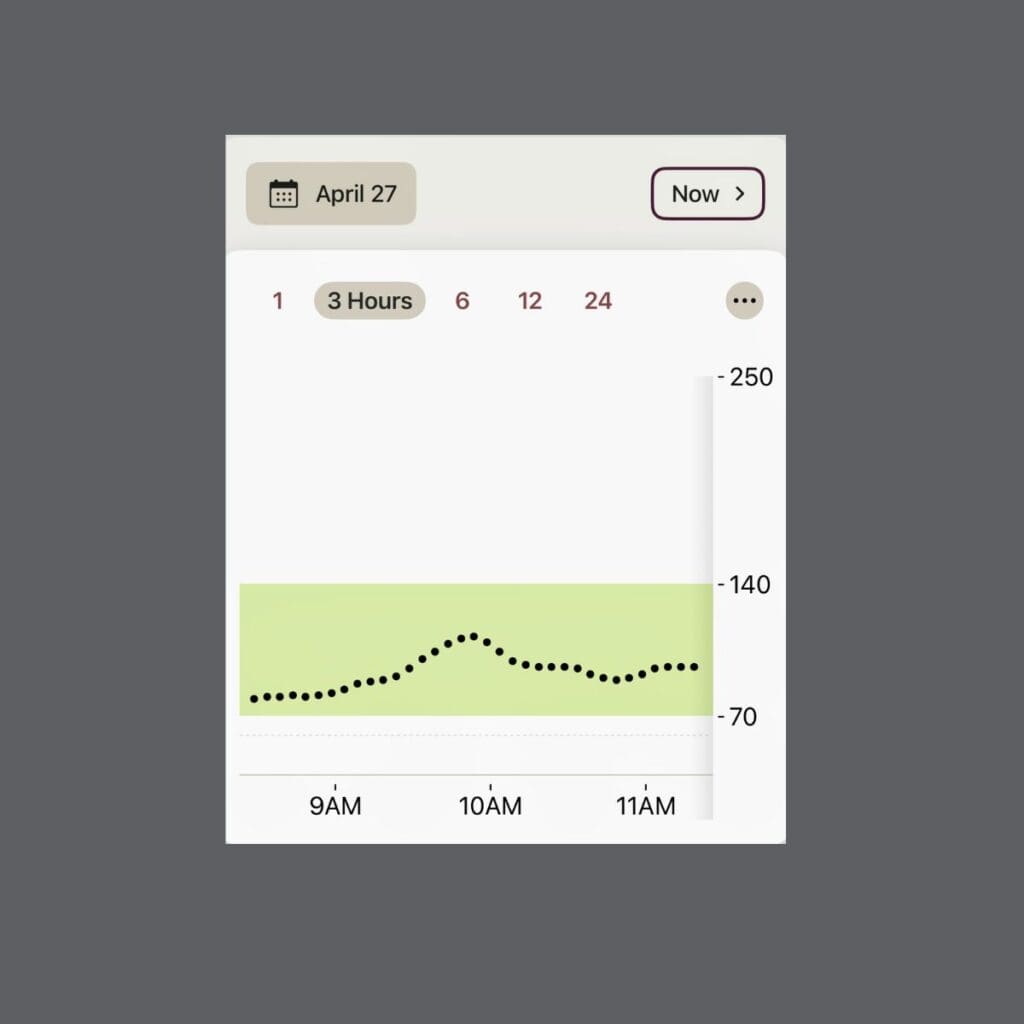
Here’s what the data showed after 5 days of drinking this smoothie
Key Findings from My CGM Experiment
- Post-smoothie blood sugar peaked at 112 mg/dL
- Returned to baseline in 45 minutes
- Overall glucose response: stable
What about someone with diabetes?
Would this smoothie work for them too?
I have that data from my step-dad. We’ve been drinking the same smoothie over the past 5 days. While his average glucose levels are higher than mine, the smoothie kept his blood sugar below the recommended post-meal level of 180 mg/dL for people with diabetes. His blood sugar also returned to normal within 2 hours of drinking the smoothie. His portion size was smaller, about 16 ounces.
You might be wondering why this smoothie with fruit didn’t cause the blood sugar spikes that many health influencers warn about. The answer lies in understanding how whole foods interact with our bodies differently than processed foods.
Why whole foods work differently than processed foods
- Whole foods contain fiber, often lots of it
- Whole foods, especially those I use in my smoothie recipe, are more nutrient-dense – they contain more vitamins, minerals, and other beneficial compounds
Blood sugar goes up. It goes down. That’s normal.
My CGM experiment showed no data to support that fruit is harmful to my blood sugar.
The Real Culprit Behind Blood Sugar Problems
Obesity and excess body fat around your organs (visceral fat) are primary causes of insulin resistance. Insulin helps move glucose from your blood into your cells so your body can use it for energy. Insulin resistance happens when cells in your muscles, fat and liver don’t respond to insulin as they should.
Sedentary lifestyle, poor sleep, dehydration, diets high in refined foods, and stress are all related to insulin resistance.
If you’re interested in other evidence-based health strategies, check out my post on sleep habits that transformed my restorative sleep.
The takeaway
My CGM experiment revealed what nutrition research has long shown: whole plant foods, including fruit, don’t cause harmful blood sugar spikes when consumed as part of a balanced lifestyle with adequate fiber, movement, and hydration.
The real problem isn’t carbs from whole foods. It’s the combination of processed foods, sedentary behavior, poor sleep, and chronic stress that drives insulin resistance.
Next time someone tells you to fear fruit, ask to see their data. I’ve shown you mine.
Take action
Ready to optimize your own blood sugar through whole foods?
Here’s your next step: Try this smoothie for 7 days and track how you feel. No CGM needed – just notice your energy levels, hunger cues, and overall wellbeing. Share your experience by commenting below.
Thanks for reading! Ready to bridge the gap between knowing and doing? Get weekly health insights you won’t find anywhere else—subscribe to You Are What You Read and start turning evidence into action.
References and related reading
10 Surprising Things That Can Spike Your Blood Sugar
Blood Sugar Levels Can Fluctuate For Many Reasons
Two-Hour Postprandial Glucose
Processed Foods
Your Digestive System And How It Works
Cell Hydration And Insulin Signaling
Insulin Resistance
Chia seeds pack nutritional punch
This post does not constitute medical advice. Please consult with your physician before making any changes to your diet or health routine.