


Read time: 3 minutes
How do you know the person you’re getting your health information from is actually healthy? Do you care? You should.
Health advice is everywhere. What’s often missing is transparency. After more than a decade immersed in health content, weeding through the noise, I’ve learned to identify trustworthy sources of evidence-based information.

While some influencers tell us to avoid foods like soy and whole grains (staples of traditional diets for centuries), they promote other choices without showing real-world data, whether it’s their own results or the results of their clients or patients. I take advice from people who can show sustainable outcomes.
It’s not about perfect health—it’s about honest communication backed by evidence.
March 2025 lab results, LabCorp
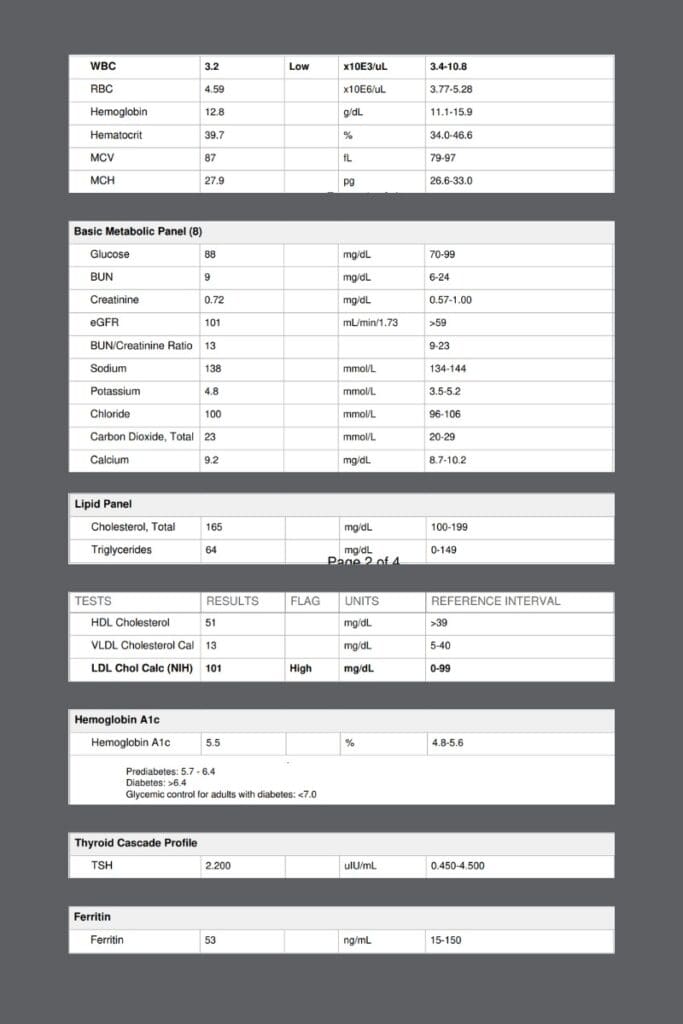
Notable changes
Here’s what changed since May 2024.
Moved in the wrong direction
Glucose, the level of sugar in the blood
Up ⬆️ from 81 to 84
Normal fasting glucose range is 70-99 mg/dL, according to the American Diabetes Association.
Triglycerides, a type of fat found in the blood
Up ⬆️ from 50 to 64
High triglycerides, >150, are associated with an increased risk of atherosclerosis (plaque buildup in arteries), which can lead to heart attack, stroke, and other heart problems [reference].
HDL, a type of cholesterol that helps remove other forms of cholesterol from the bloodstream, often called “good” cholesterol
Down ⬇️ from 61 to 51
HDL should be >50 for women and >40 for men, according to the CDC.
LDL, a protein-fat combination that carries cholesterol in your blood, often called “bad” cholesterol
Up ⬆️ from 94 to 101
The CDC recommends LDL levels below 100 mg/dL for optimal heart health.
Moved in the right direction
A1C, a measure of average blood sugar levels over the past 2 to 3 months
Down ⬇️ from 5.6 to 5.5
Pre-diabetes: 5.7 to 6.4, Diabetes: >6.4
Why This Matters
Sharing my lab results isn’t about showing off perfect health—it’s about practicing the transparency I want to see more of in health spaces. When someone gives you advice about nutrition, exercise, or wellness, you deserve to know if it’s actually working for them.
My bloodwork isn’t perfect. Some markers moved in directions I’d prefer they hadn’t. That’s real life. It demonstrates the complexity of our bodies and the complexity of how we live.
Next time you come across health advice online or on social media, I encourage you to ask:
Does this person share their results? Are they transparent about what’s working and what isn’t? Or are they just telling people what they want to hear?
I’ll be diving deeper into what these numbers mean, the lifestyle factors that might have influenced them, and my plan going forward in upcoming posts.
Until then, I’d love to hear about your experiences with tracking health metrics. Have you noticed significant changes in your numbers over time? Drop a comment below!
Thanks for reading!
Like this post? The newsletter is the blog, plus. Subscribe to You Are What You Read — one email a month on redefining your Next 50. Only what works.
This post does not constitute medical advice. Please consult with your healthcare provider regarding your specific health needs.