


Read time: 7 minutes
Sleep may be the most neglected, most undervalued pillar of health.
“Sleep deficiency can lead to physical and mental health problems, injuries, loss of productivity, and even a greater likelihood of death,” according to the Heart, Lung, and Blood Institute.
We’ve all had the experience of thinking, working and moving at half-speed after a poor night’s sleep. It doesn’t feel good.
My Sleep Journey
I’m not a night owl—never pulled an all-nighter in college and was usually in bed by 10:00pm on weeknights. Weekend nights in my 20s and 30s were different, with late nights out with friends, but I’d always return to my early schedule.
The real sleep disruption came during my years at Google. Waking up at 3:00am became the norm, and I’d lie there for an hour or more, my mind racing with work thoughts—tomorrow’s meetings, unresolved problems, that email I forgot to send. This went on for years, getting better or worse depending on what was happening at work.
My wake-up call came from reading Arianna Huffington’s The Sleep Revolution, which motivated me to take sleep even more seriously. A few years later, watching Matthew Walker on the Rich Roll podcast and then reading Why We Sleep further energized my commitment to sleep quality.
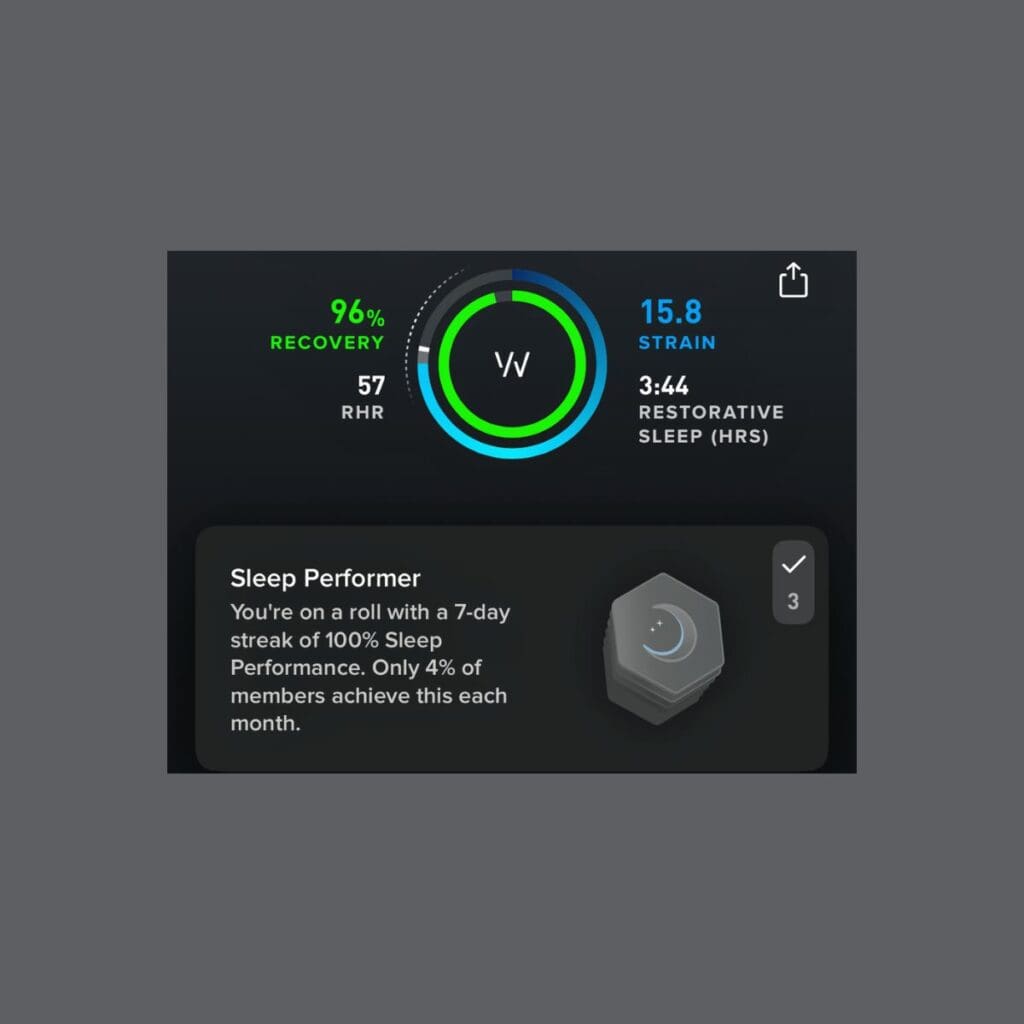
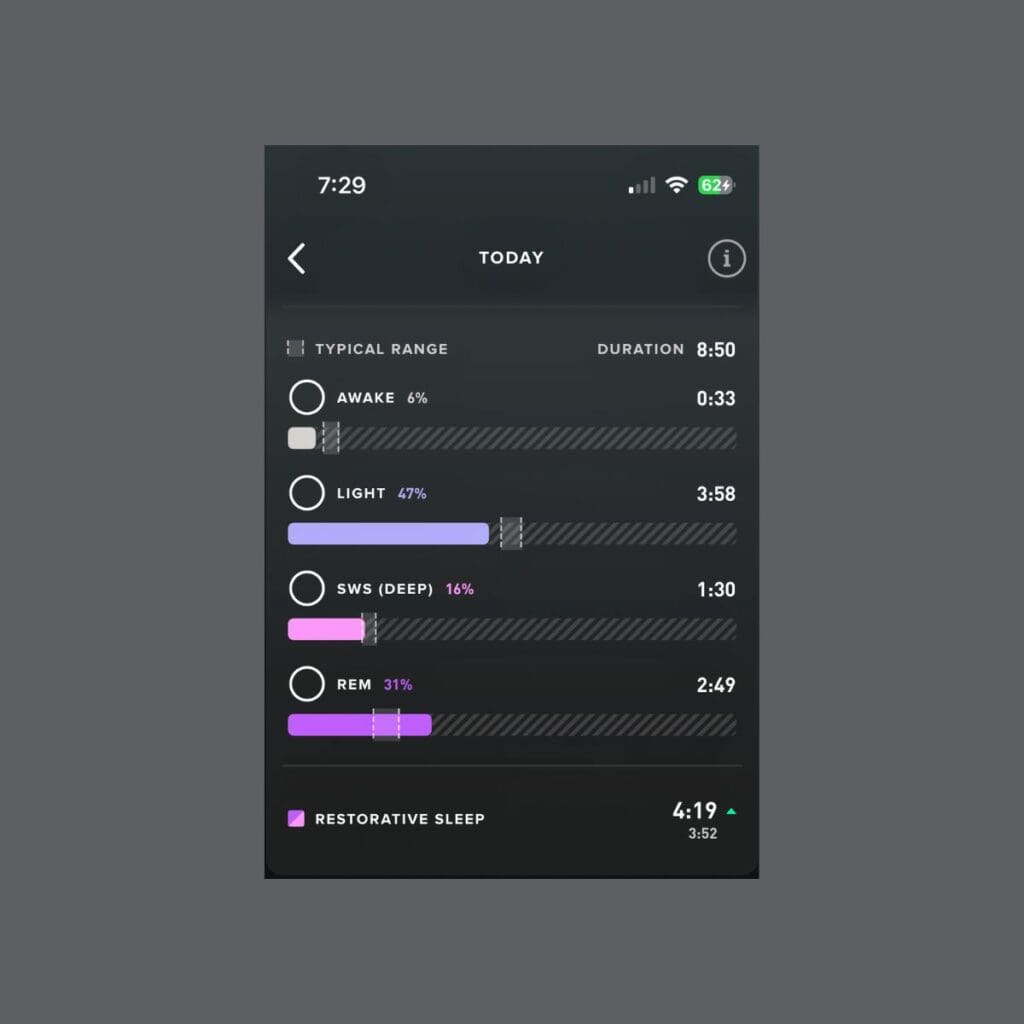
The changes started before I left Google—moving from San Francisco to New York changed my commute enough that I could stop using an alarm. But the biggest shift came after transitioning to health coaching, when I no longer had those racing thoughts about work and started exercising six days a week. I still call myself a light sleeper, but I’m now consistently hitting that 3-4 hours (40%) of restorative sleep that sleep experts recommend. While I don’t have the data to prove it, I estimate my restorative sleep has increased by at least an hour nightly. The habits I’m sharing in this post made the difference.

How I Measure Sleep Quality
Qualitatively
Energy, motivation, cognition (pace, creativity, problem solving), and mood. Our brains function better on sleep. Not just by a little.
Quantitatively
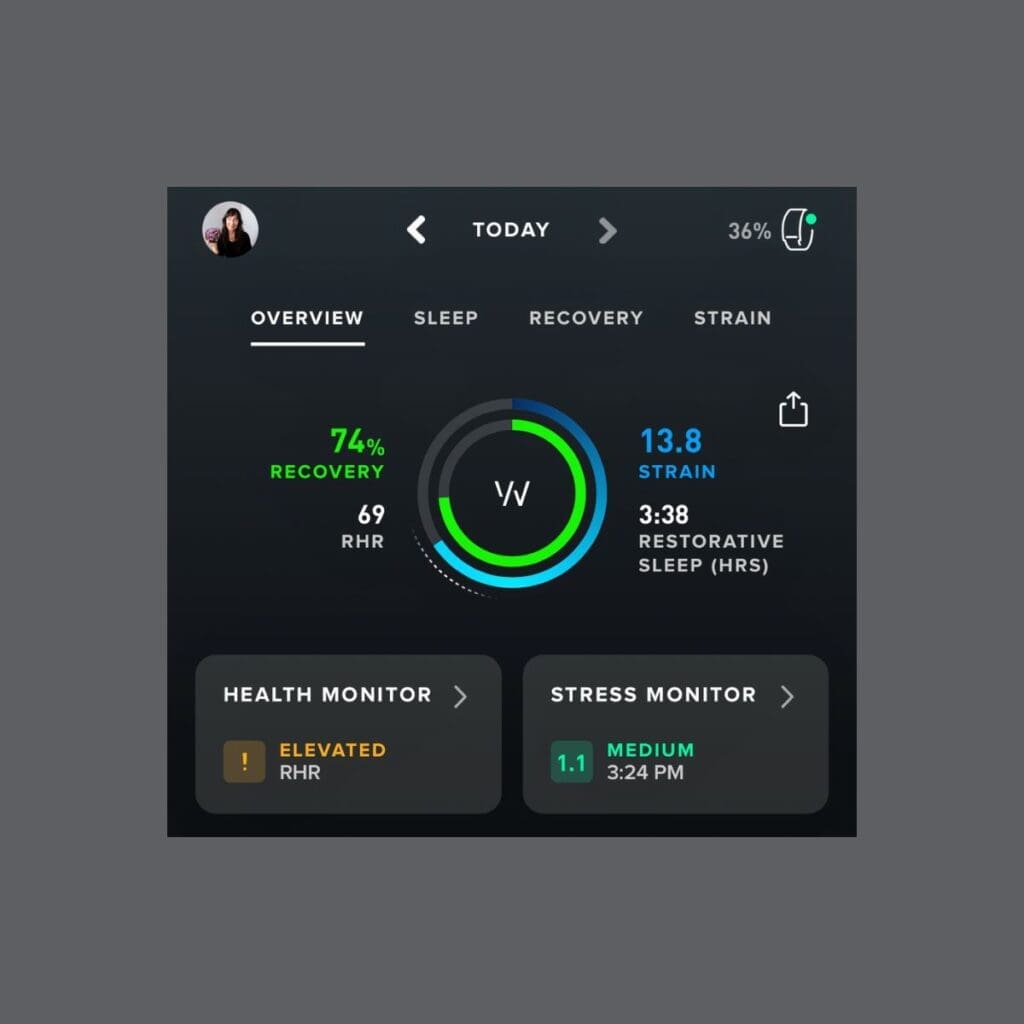
Whoop data. I like data. It’s objective.
If you use a sleep tracking device, these are my 2 favorite metrics for assessing sleep quality:
- Time spent in restorative sleep (deep sleep and REM)
- Resting heart rate (RHR)
I aim for 3-4 hours of restorative sleep nightly and a monthly average RHR of 58 or lower. These metrics help me assess which behaviors positively and negatively impact my sleep.
I’ve been experimenting with these habits for at least the last year, some for much longer. These are the habits that work. Start with one. Build from there.
The Sleep Habits That Changed Everything
Timing & Duration
Lights out by 10:00pm
10pm is good. 9:30pm is even better—my sleep quality is noticeably better. Would we be awake at 11:00pm and later without modern lighting? Probably not.
Plan for 9 hours in bed if your goal is 8 hours of sleep 8 hours in the bed is not 8 hours of sleep.
Consistent bed and wake times
This habit comes from Why We Sleep. I haven’t been able to sleep in for at least a decade, so this comes naturally. Consistency matters more than you think.
Environment
Remove your phone and other electronics from your bedroom
Electronics near our beds are posing as ‘connection,’ but they’re not our friends. I can still hear emergency calls from my phone outside the bedroom door. There was a time before cell phones.
Cool room
If my room is around 65 degrees, I’ll sleep better than if I’m waking up hot. I have less control over temperature in my NYC apartment than I’d like, but it makes a difference when possible.
Sleep mask
Complete darkness is essential for optimal melatonin production—even small amounts of ambient light can disrupt your sleep cycles. A comfortable, high-quality, light-blocking sleep mask has become as much a part of my routine as my mouthguard. Given that 99% of Americans live with some degree of light pollution, a sleep mask creates consistent darkness regardless of your environment.
Light Management
View morning light
Get natural light into your eyes within an hour of waking. No sunglasses, not through a window. The sun should be low in the sky, not overhead. I learned this from Andrew Huberman’s podcast.
View early evening light
If you have to choose between morning and evening light, choose morning. Evening light is helpful too—again, when the sun is low in the sky.
Dim overhead lights when the sun goes down
Bright overhead lights signal to our bodies that it’s daytime. Use dimmers and low lights—floor and table lamps—as much as possible.with the knowing. I’m more inclined to be mindful because of the additional insight I have on how alcohol impacts my biomarkers.
Food & Drink
Caffeine cut-off
Figure out the time that works for you. My coffee cutoff is around 12:00pm. I can go a little later with matcha and green teas. If you use Whoop or Oura, you can test this.
Stop eating 2 hours before bed
If I finish eating by 7:00pm, that’s a win. Sometimes it’s 7:30pm. This takes planning, especially if you commute.
Minimize alcohol
It’s social and may feel relaxing, but alcohol impacts your sleep. I drink a couple times a month with friends. A sleep tracker like Whoop shows exactly how alcohol affects your biomarkers—the data makes me more mindful.
Sight & Sound
No screens at least 1 hour before bed
Really. No screens. Two hours is even better. I watch television at night—it’s how I turn my brain off. But my 40″ screen is more than 7 feet from my face, not 12 inches like a phone.
Don’t look at the clock
Those middle-of-the-night bathroom trips happen, but checking the time can turn minutes of interrupted sleep into prolonged wakefulness. Repeatedly seeing “3:00am” can train your brain to associate that time with wakefulness. Keep clocks out of view.
Don’t set an alarm
Do this when you can, even just on weekends. Alarms are jarring and may trigger a stress response. Not the ideal way to start the day.
The Bottom Line
Sleep isn’t just about feeling rested—it fuels everything from our brains to our immune systems. When I consistently follow these habits, I experience mental clarity that makes work more productive, emotional resilience for daily challenges, and physical energy that powers me through workouts and beyond.
The beauty of these sleep habits is that they’re cumulative. Small improvements add up to significant results.
Your Turn
Ready to implement these strategies systematically? My free Sleep by Design guide gives you the complete blueprint, plus my exact bedroom setup details. Get it here.
Start by picking one or two habits from this list to focus on first. Notice how your energy, mood, and cognition respond. Gradually incorporate more as each habit becomes routine.
Despite everything I’ve learned about sleep, knowledge is not action. Often, I have to remind myself to stop whatever I’m doing and go to bed. I don’t get up because I’m disciplined—I get up because I know the earlier I go to bed, the better I feel the next day.
Thanks for reading!
Like this post? The newsletter is the blog, plus. Subscribe to You Are What You Read — one email a month on redefining your Next 50. Only what works.
References & Additional Reading
What Are Sleep Deprivation and Deficiency?
The Effect of Physical Activity on Sleep Quality and Sleep Disorder: A Systematic Review
The effect of alcohol on subsequent sleep in healthy adults: A systematic review and meta-analysis
Image credits: Photo by Polina Zimmerman, Photo by Polina
This post does not constitute medical advice. Please consult with your healthcare provider regarding your specific health needs.