


Read time: 5 minutes
I like data. It’s empowering. Data broadens my view, limits guesswork, and opens the door for informed decision-making. Information is agency.
Ignorance is bliss? Not for me.
So when I heard Dr. Joel Kahn discussing the coronary artery calcium (CAC) scan on a podcast recently, I decided to ask my doctor for one. I was also due for bloodwork, so the timing was perfect to add this scan to my care plan.
With a family history of heart disease, requesting this test was an easy conversation with my doctor.

What Is a Calcium Score Test?
A calcium score test is a specialized CT scan that measures calcium buildup in your coronary arteries. This calcium indicates the presence of plaque—a waxy, fatty substance that can narrow or block arteries, signaling atherosclerosis (coronary artery disease) and potential heart attack risk.
The test is quick, non-invasive, and provides concrete data about your cardiovascular health that standard cholesterol panels can miss.
Who Should Consider This Test?
According to Cleveland Clinic, calcium score testing is most beneficial for people between ages 40 and 70 who are at increased risk for heart disease but don’t have symptoms.
Increased risk factors include:
- Family history of heart disease
- History of smoking (current or past)
- High cholesterol, diabetes, or high blood pressure
- BMI higher than 25
- Inactive lifestyle
Special consideration: If you’re under 40 with a family history of high cholesterol, you might still benefit from testing.
Understanding Your Results
Calcium scores fall into clear ranges:
0 → No plaque detected
1-10 → Small amount of plaque
11-100 → Some plaque
101-400 → Moderate plaque
>400 → Large amount of plaque
For more detailed risk assessment at each level, the University of Maryland Medical Center provides excellent breakdowns of heart disease likelihood and heart attack risk.
My Results: A Reality Check
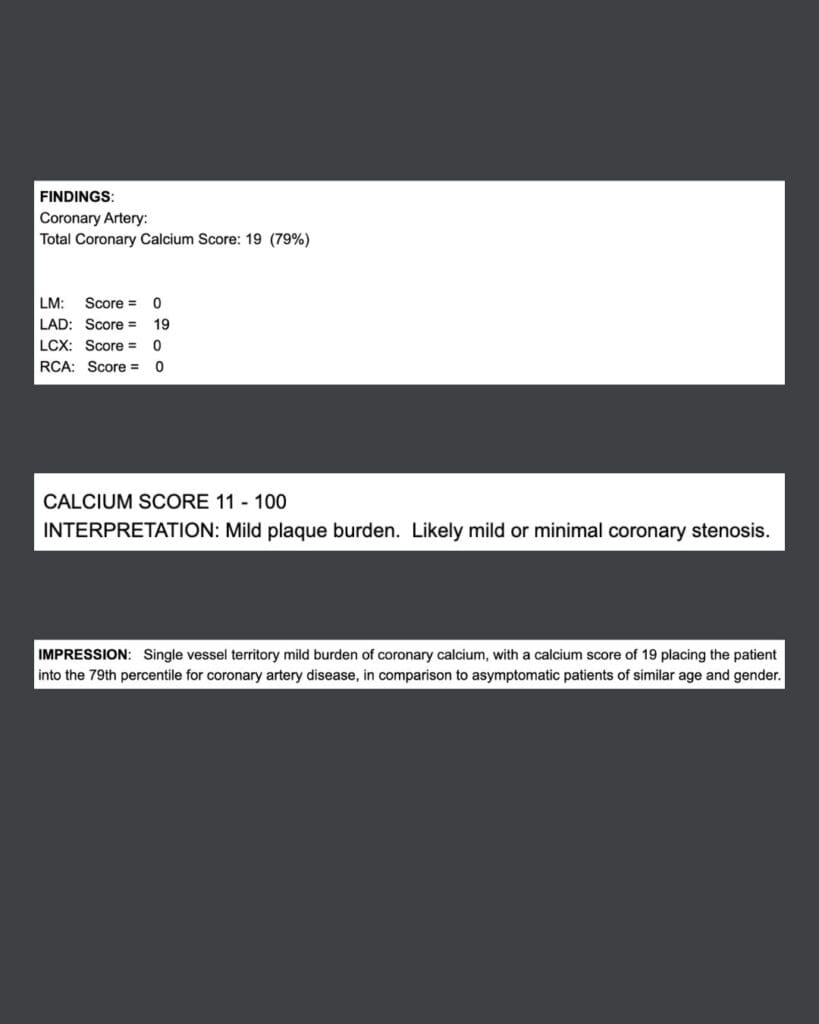
My calcium score: 19
This puts me in the “some plaque” category. When I looked up the percentile rankings, I discovered I’m in the 79th percentile for coronary artery disease risk for my age group.
Hold up, wait a minute (song link for my fellow Gen X’ers 🤸).
That percentage didn’t make sense initially. The math wasn’t mathing, given my current lifestyle.
Then I remembered: the lifestyle I share with you today is not the lifestyle I lived for at least two decades prior to age 40.
The Reality of Past Choices
Here’s what many people don’t realize about calcium scores: calcium in coronary arteries doesn’t reduce over time. According to Harvard Health, once plaque calcifies, it stays there.
So my score of 19 reflects two decades of less-than-optimal choices—the processed food, inconsistent exercise, and health taking a backseat to work and social priorities that characterized my 20s and 30s.
While I would have preferred a score of 0-10, I’m not anxious about this result. Why? Because I know I’m doing everything possible today to prevent further progression.

The Bigger Picture: Why This Matters
We have control over our lifestyle decisions. Every meal choice, every movement decision, every stress management strategy either supports or undermines our health.
The key is focusing on one decision or one new habit at a time. You don’t need to overhaul everything overnight—sustainable progress happens through consistent, manageable changes that build on each other.
This test gave me concrete data about where I stand and reinforced why the evidence-based strategies I’ve adopted matter so much. It’s also a powerful reminder that our past choices have consequences, but our current choices determine our future trajectory.
Speaking of evidence-based cardiovascular support, if you’re looking for specific nutrition strategies to optimize heart health, check out my post on the heart health mineral 98% of Americans are missing—to learn about one of the most underutilized tools for supporting cardiovascular wellness.
Test frequency note: Speak with your doctor. Cleveland Clinic recommends repeating calcium score tests every 3-5 years, but only if you had a normal score initially. If you’ve had abnormal results, repeat testing isn’t beneficial.
Your Next Steps
If you’re between 40-70 with risk factors, or under 40 with family history, consider discussing a calcium score test with your doctor. The information it provides can be a powerful motivator for lifestyle changes and help guide your prevention strategy.
Remember: this isn’t about perfection or dwelling on past choices. It’s about having the data you need to make informed decisions moving forward.
Thanks for reading!
Like this post? The newsletter is the blog, plus. Subscribe to You Are What You Read — one email a month on redefining your Next 50. Only what works.
References & Additional Reading
- Calcium Score Screening (Heart Scan) – Cleveland Clinic
- Cardiac Calcium Scoring – University of Maryland Medical Center
- Can We Reduce Vascular Plaque Buildup? – Harvard Health
- Plant Strong Podcast with Dr. Joel Kahn
Image credits: jesse orrico and Robina Weermeijer on Unsplash
This post does not constitute medical advice. Please consult with your healthcare provider regarding your specific health needs.