


Read time: 6 minutes
Half of all American adults have high blood pressure. Heart disease remains our leading cause of death. Yet there’s a simple, evidence-based strategy that could significantly impact these numbers—and less than 2% of us are doing it.
The missing piece? Getting enough potassium.
If you’re someone who wants to take control of your cardiovascular health through evidence-based nutrition, this is your strategic guide to one of the most underutilized minerals in the American diet.
Why Your Ancestors Had Better Heart Health (Hint: It Wasn’t Just Exercise)
Traditional paleolithic diets contained over 10,500 milligrams of potassium daily from whole plant foods. Today’s average American gets about 3,000 mg (men) and 2,300 mg (women) daily—leaving most people below the recommended intake of 3,400 mg for men and 2,600 mg for women.
This isn’t just a numbers game. This represents a fundamental shift from eating patterns that supported cardiovascular health to ones that actively undermine it.
What Potassium Actually Does (Beyond “It’s Good for You”)
Potassium is an essential mineral and electrolyte that functions as your cardiovascular system’s behind-the-scenes optimizer:
Regulates blood pressure
Potassium helps your kidneys remove excess sodium while relaxing blood vessel walls—a dual action that significantly reduces blood pressure.
Supports heart rhythm
Your heart relies on precise electrical signals to maintain steady beats. Potassium is crucial for these electrical impulses.
Protects against stroke
Research shows that higher potassium intake is associated with reduced stroke risk, particularly in people with high blood pressure.
Preserves kidney function
By helping regulate fluid balance and reducing strain on blood vessels, potassium supports long-term kidney health.
Maintains bone density
Potassium helps neutralize acids that can leach calcium from bones.
The American Heart Association, Institute of Medicine, and USDA Dietary Guidelines all recommend limiting sodium while increasing potassium-rich foods to reduce hypertension risk. The science is clear—the implementation is where most people struggle.

How Much You Actually Need
According to the National Institutes of Health, daily potassium recommendations for adults are:
- Men 19 and older: 3,400 mg
- Women 19 and older: 2,600 mg
- Pregnant individuals: 2,900 mg
- Breastfeeding individuals: 2,800 mg
For those trying to prevent or treat high blood pressure, the American Heart Association recommends 3,500 to 5,000 mg of potassium daily—significantly higher than the general recommendations.
The upper threshold for healthy adults is 4,700 mg daily. For context, getting this amount from food sources is both safe and beneficial—it’s the level associated with optimal cardiovascular outcomes in research.
Your High-Impact Potassium Strategy
These foods deliver the most potassium per serving. Focus on incorporating multiple sources daily rather than relying on just one or two:
Potatoes, baked with skin: 920 mg Lentils, cooked (1 cup): 731 mg Sweet potatoes, baked: 450 mg Avocado, ½ medium: 487 mg Spinach, cooked (½ cup): 420 mg Bananas, medium: 425 mg
The key insight: if you’re eating a diverse diet rich in plant foods with adequate calories, meeting your potassium needs becomes automatic rather than something you have to actively track.
Real-World Application: How I Hit My Target in Two Meals
Here’s how strategic food choices can help you get to your daily potassium goal:
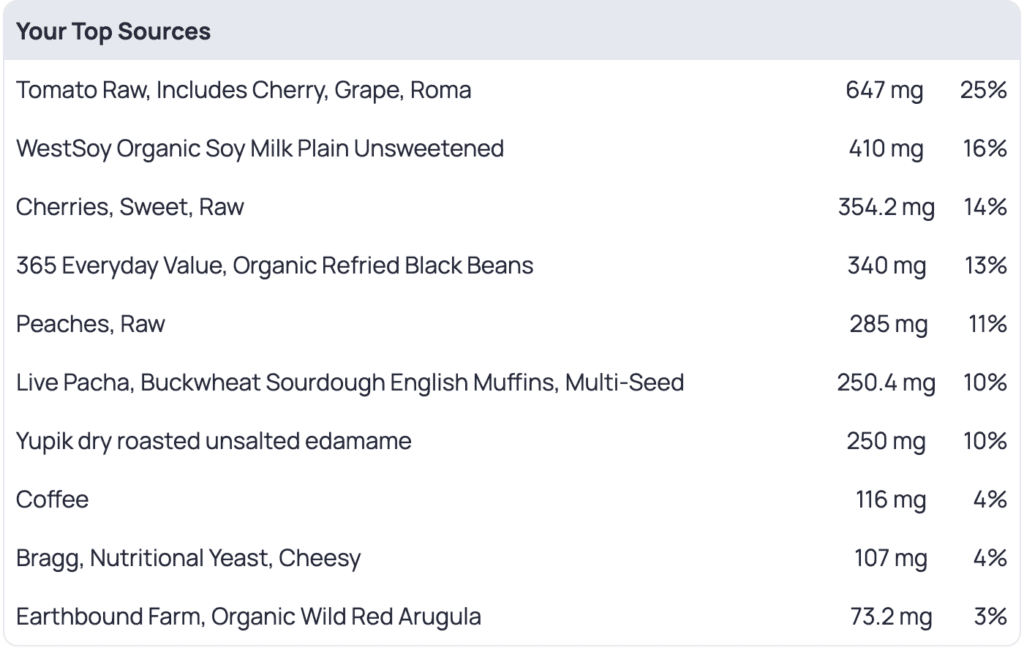
Breakfast: Matcha latte with 1 cup West Life plain, unsweetened soy milk and grated fresh ginger, 1 cup sweet dark cherries, 1/3 cup unsalted dry roasted edamame, 8 oz coffee
Lunch: Pacha Bread multi-seed english muffin with 1/2 cup oil-free refried black beans, Yellow Bird hot sauce, Bragg’s nutritional yeast, cherry tomatoes, Earthbound Farm wild red arugula, medium-sized peach
This combination provides 2,885 mg of potassium—111% of the daily target for women (2,600 mg)—with just two meals.
The Implementation Gap (And How to Close It)
Knowing potassium is important is easy. Restructuring your eating patterns to get enough is where the real work happens. Here’s the strategic approach:
Start with additions, not restrictions
Add one high-potassium food to each meal rather than trying to overhaul everything at once.
Make it convenient
Keep bananas, sweet potatoes, avocados, and canned legumes readily available for quick potassium boosts.
Track temporarily
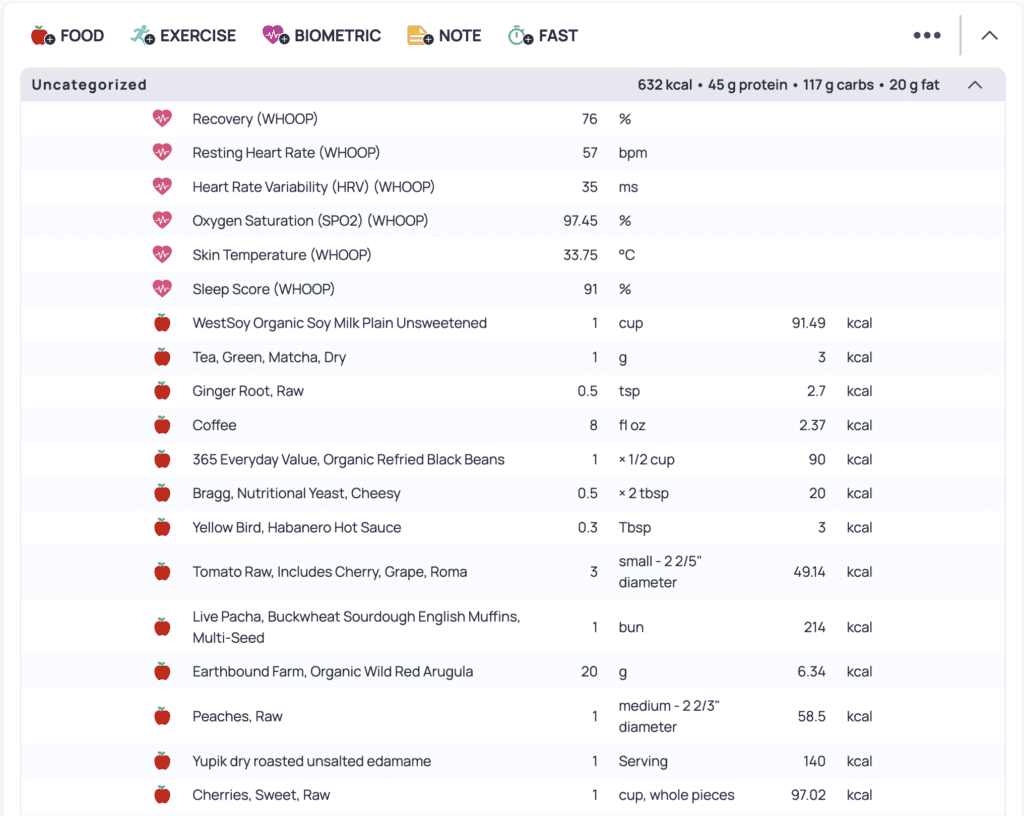
Use a nutrition app like Cronometer for a week to understand your current intake and identify gaps.
Speaking of tracking health metrics, I recently used a continuous glucose monitor to test how my nutrient-dense smoothies affect blood sugar—the results might surprise you and challenge everything you’ve heard about fruit and blood sugar. Read about it here.
Think systems, not single foods
Build meals around potassium-rich foundations (potatoes, legumes, leafy greens) rather than trying to add potassium as an afterthought.
Your Next Step
The research is overwhelming: adequate potassium intake significantly reduces cardiovascular disease risk. The implementation is straightforward: prioritize whole plant foods at each meal.
Upload a typical day of eating into the free app Cronometer to see exactly where you stand. Most people are surprised by how far they are from optimal levels—and how achievable the target becomes with strategic food choices.
Your cardiovascular system is depending on you to bridge the gap between knowing and doing. Start with your next meal.
Thanks for reading!
Like this post? The newsletter is the blog, plus. Subscribe to You Are What You Read — one email a month on redefining your Next 50. Only what works.
References & Additional Reading
- Why you need potassium and how to get more of it – UCLA Health
- Reducing the sodium-potassium ratio in the US diet: a challenge for public health
- Meta-Analysis of Potassium Intake and the Risk of Stroke
- Sodium and potassium intakes among US adults: NHANES 2003-2008
- Skip the salt and shake on potassium chloride? – NutritionFacts.org
- Get nutrients from food, not supplements – Harvard Health
This post does not constitute medical advice. Please consult with your healthcare provider regarding your specific health needs.