


Read time: 7 minutes
After two weeks of monitoring every post-meal glucose rise and fall, my data was consistent with the evidence-based body of research: maintaining healthy blood sugar isn’t just about avoiding certain foods—it’s about your entire lifestyle system.
This is part 3 in a series about my experience wearing a continuous glucose monitor for 14 days. Catch up on part 1 (The Smoothie That Doesn’t Raise Blood Sugar) and part 2 (CGM Experiment: What Happens to Blood Sugar When You Eat Carbs), if you missed them.
In this post, I’ll share:
- My 14-day results
- What I learned about my glucose levels by wearing a CGM
- The systems view beyond food → what the research says on how to get and maintain healthy glucose levels
My results
CGM device & app
I used the Stelo CGM by Dexcom. While I’ve not used any other CGM apps, I’d rate this one as “very good.”
The app provides:
- Minute-by-minute blood glucose data by clicking on the graph
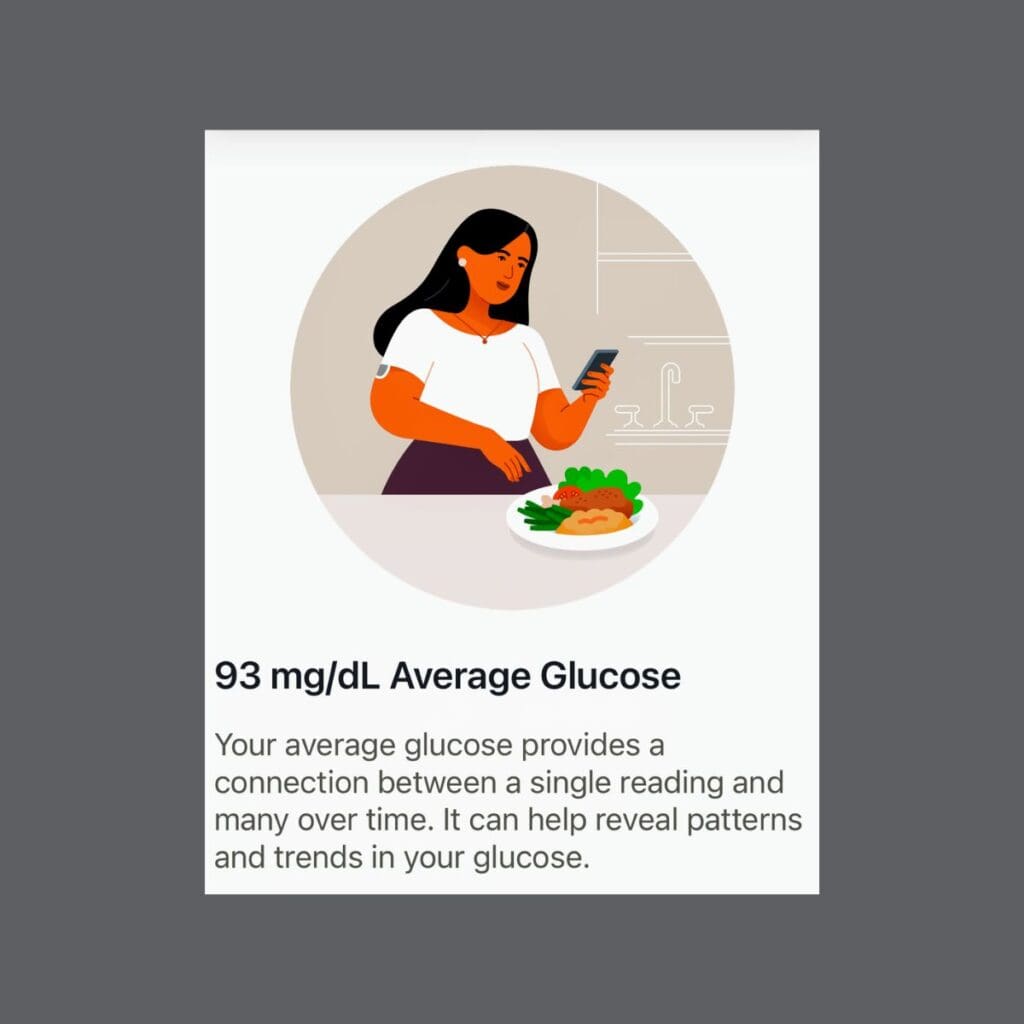
- ‘Average glucose’ for 1, 3, 7, and 14 day time periods
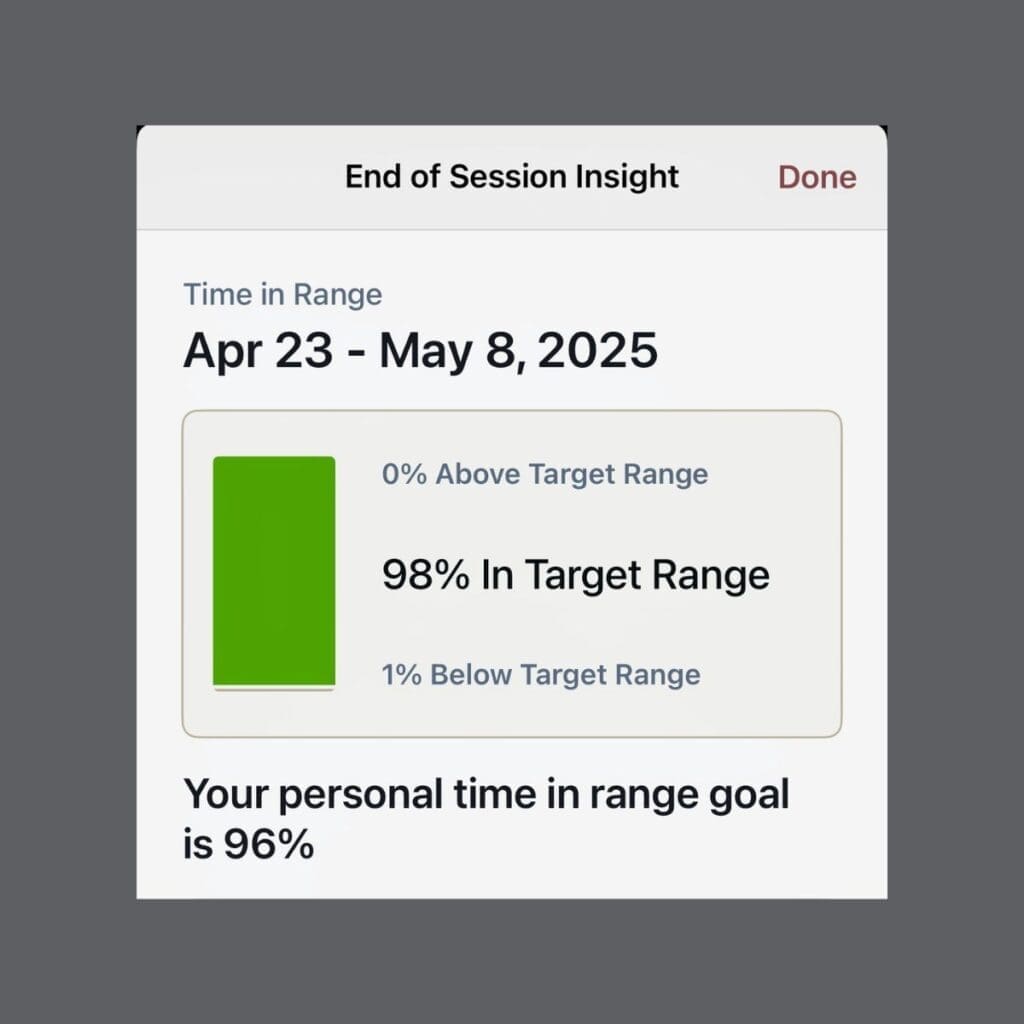
- ‘Time in range’ for 1, 3, 7, and 14 day time periods
- Glucose education in the “Learn” section of the app
What I’d like to see improved:
- Average time to return to (a self-selected) baseline, e.g. <100 mg/dL for 1, 3, 7, and 14 day time periods
“Within 2 hours of eating, your insulin and blood glucose levels should return to normal,” according to the University of Rochester Medical Center.
End of session insights
As provided by the Stelo app:
- Average glucose – 93 mg/dL
- Time in range – 98% in target range
- 0% above target range
- 1% below target range
What I learned about my glucose levels
The headline finding: Nothing I ate caused my blood sugar to rise above 140 mg/dL (the upper limit of healthy, non-fasted blood glucose range).
This included foods I thought might push my blood sugar over 140:
- A margarita (homemade, no sweetener)
- A glass of sparkling wine
- A piece of vegan chocolate spelt cake from Bread Alone
- White rice in an 8-piece avocado sushi roll from Whole Foods
- Sourdough bread from a local bakery
And foods I hoped wouldn’t, like my homemade banana bread.
Other personal insights
- Different bodies process glucose at different rates. It can take blood glucose 1-3 hours to rise after a meal. My rate was closer to 1 hour following most meals.
- My blood glucose levels returned to <100 mg/dL between 30 minutes and 1.5 hours following meals, most commonly in the 30-60 minute range.

The systems view beyond food
While I can’t say I’ve seen every video made by every influencer on blood glucose, from what I have seen, the focus seems to be food, and even more narrow than food, single ingredients, like oats.
This narrow focus isn’t consistent with the evidence-based recommendations on how to maintain healthy glucose levels – which our bodies were designed to do.
It’s also not consistent with my experience wearing a CGM for 14-days – thinking holistically about my lifestyle, and how my lifestyle factors impact my body’s ability to regulate glucose, turning carbohydrates and proteins into the fuel my body needs to thrive.
So rather than blaming a single food or a single ingredient, is taking responsibility for our lifestyles the real solution to regulating and maintaining our blood sugar? Because we want solutions and results, rather than quick fixes that don’t actually provide long-term, overall health promoting results, right?
The lifestyle factors that impact blood glucose levels
- Nutrition
I’ve been whole food plant-based for the last decade.
- Hydration
I follow the guidance of Dr. Brooke Goldner, which is 1 ounce of water per pound of bodyweight. For healthy people over 120 pounds, she recommends 1 gallon of water per day.
When I upped my water intake last year, I found it was also necessary to add salt to my water to ensure I was maintaining healthy sodium levels. I use iodized salt to ensure I’m also getting enough iodine in my diet.
Please work with your doctor if you have health issues!
- Sleep
I prioritize sleep quality and quantity, targeting and reaching on most days 8 hours asleep (not in bed, but asleep) and 3-4 hours of restorative sleep (deep sleep and REM).
- Activity level
I’ve been somewhere between moderately and very active since late 2022. For most of my life prior to that, I was lightly to moderately active.
If you’re a Whoop user, for reference, my average daily strain in April, 2025 was 15.2.
- Stress management
I’m not currently relying on any specific routines for this, but I practiced yoga for decades, and I’ve attended many pranayama workshops. I can’t recommend pranayama (breathing practices) enough for stress management.
- Social support
Humans are wired to connect, and this connection affects our health.

Factors Impacted by Lifestyle That Affect Blood Glucose Levels
- Inflammation
Our diet plays a significant role in inflammation. Some foods are inflammatory, others, like whole plant foods, are anti-inflammatory.
- Muscle tissue and adipose (fat) tissue
More muscle tissue and less fat tissue can lead to better glucose metabolism.
- Alcohol
Drinking reduces the body’s ability to regulate blood sugar. Though I had a margarita and a glass of sparkling wine during this experiment, my overall alcohol intake is low. That wasn’t always the case, particularly in my 20s and 30s.
Takeaway
Our bodies were designed to use glucose to feed our brains, bodies, and produce energy. My CGM experiment showed that my body was able to maintain healthy glucose levels after meals, including after eating “high glycemic” foods like potatoes, oats and fruit.
Our health outcomes are the result of a series of healthy behaviors, including nutrition, hydration, quality sleep, exercise, stress reduction, and social connection.
If you see someone online associating oats with diabetes, ask yourself why they would do this. The research shows quite the opposite.
“The consumption of oats has been determined to be beneficial for human health by promoting immunomodulation and improving gut microbiota. In addition, oat consumption assists in preventing diseases such as atherosclerosis, dermatitis, and some forms of cancer.”
We’re not getting any healthier by picking on ancient grains, like oats, as a source of chronic illness.
Your turn
What aspect of your lifestyle, beyond just food choices, do you believe most impacts your metabolic health? Has wearing a continuous glucose monitor or tracking your blood sugar changed your perspective on “good” and “bad” foods? I’d love to hear your experiences in the comments below.
Thanks for reading!
Like this post? The newsletter is the blog, plus. Subscribe to You Are What You Read — one email a month on redefining your Next 50. Only what works.
References & Additional Reading
Physiology, Glucose Metabolism
Two-Hour Postprandial Glucose
Alcohol and Diabetes
The Connection Prescription: Using the Power of Social Interactions and the Deep Desire for Connectedness to Empower Health and Wellness
A Review of Health Beneficial Properties of Oats
This post does not constitute medical advice. Please consult with your healthcare provider regarding your specific health needs.