


Read time: 5 minutes
Ever found yourself craving something sweet at the end of a demanding day? Unwilling to sabotage your health goals or spend an hour baking? This plant-based chocolate mug cake bridges that gap—with rich chocolate satisfaction in under two minutes and ingredients that prove you don’t have to choose between health and pleasure.
Field Testing: Dinner Party Edition
What’s a mug cake? I hadn’t heard of it until one popped into my Instagram feed one day while I was newly plant-based and following several vegan accounts for ideas, inspiration and support. The mug cake was posted by Chocolate Covered Katie. The concept was cool, but there was just one problem—it seemed to require a microwave, which I don’t have at home.
Fast-forward to last year when I was visiting my parents for my mom’s 80th birthday. I was cooking dinner for six people (well outside my usual comfort zone of cooking for 2-3). Making individual mug cakes felt manageable among the dinner prep chaos. I tested the recipe the evening before on my mom—after all, the birthday girl had to like her dessert! She did! Phew!
This experience reinforced my coaching philosophy that health isn’t about perfection—it’s about experimenting with new foods and finding enjoyable options that maintain your momentum rather than derailing it.
Why This Mug Cake Deserves a Spot in Your Recipe Bank
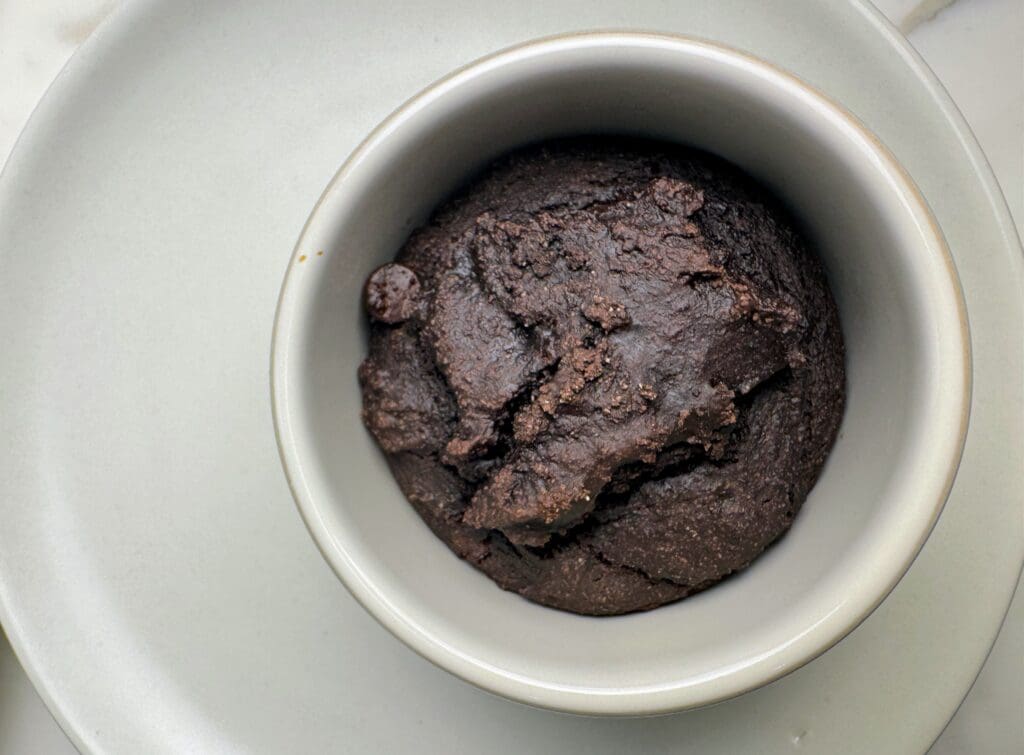
A mug cake is exactly what it sounds like: a cake cooked and served in a mug. What makes it perfect when you’re short on time but not willing to skip dessert is the simplicity: combine 10 straightforward ingredients, transfer to a microwave-safe mug, and cook for just 1 minute and 15 seconds. Dessert is served! I adapted this recipe from Shane and Simple—a great resource for plant-based recipes that don’t compromise on taste.
You can also halve this recipe for a smaller portion—perfect for when you want just a few bites of chocolate satisfaction.
Intentional Ingredients (and Why They Matter)
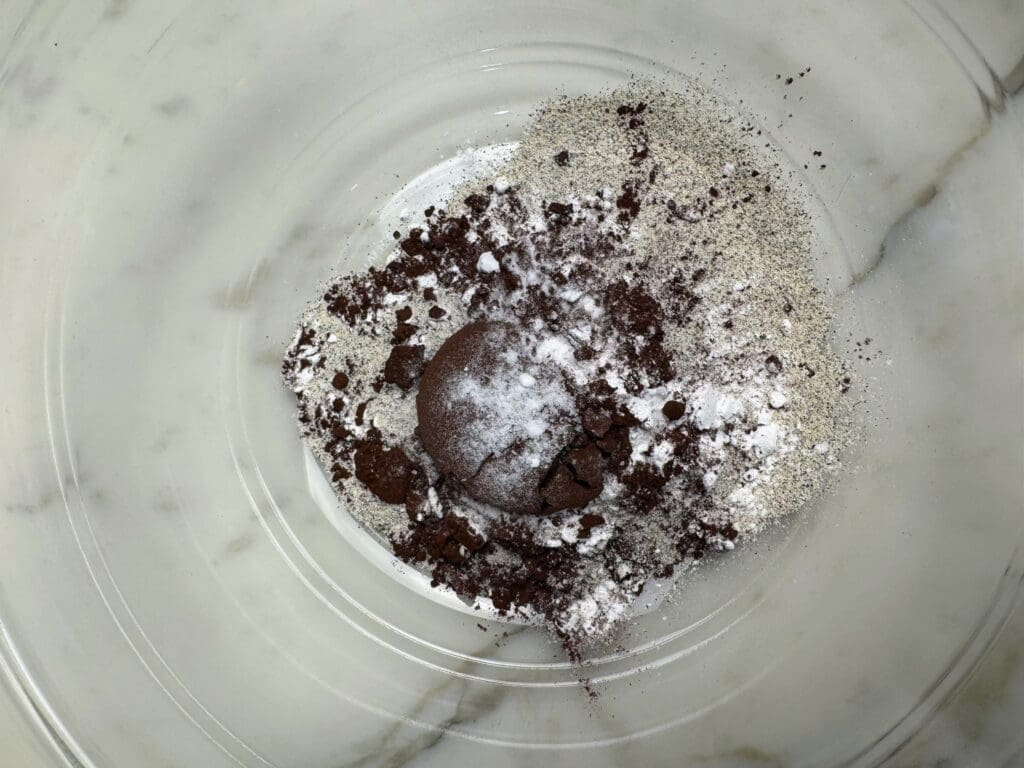
- Flour – I use buckwheat, spelt, or oat, which offer more fiber and nutrients than refined white flour. Buckwheat tops the pack with 12 grams of fiber per cup, compared to 6.8 grams in oat flour. These alternative flours may help stabilize blood sugar compared to conventional options.
- Raw cacao powder or cocoa powder – Rich in antioxidants and magnesium, which may support brain function and mood regulation. Check the label to ensure there’s just one ingredient: cacao or cocoa powder.
- Tapioca flour – Provides binding and thickening without the need for eggs or other animal products.
- Baking soda – The leavening agent that creates the cake-like texture.
- Salt – A small amount enhances the chocolate flavor.
- Maple syrup – I prefer the darkest I can find for maximum mineral content and flavor. Check the label to ensure there’s just one ingredient: maple syrup.
- Unsweetened applesauce – A strategic substitution for eggs, butter, oil, and additional sugar. Provides moisture while reducing overall calorie and fat content.
- Plant milk – Adds nutrition, a bit of fat, and moisture. Water works in a pinch. When using plant milk, check the label to ensure no or minimal additives.
- Vanilla extract – Adds a complementary flavor that pairs well with chocolate.
- Vegan chocolate chips – I’ve been using Just Date, which contains just cacao, dates, and cocoa butter—a cleaner option than other chips with added refined sugar.
Visit Shane and Simple’s site for the full recipe with detailed instructions.
No Microwave? No Problem
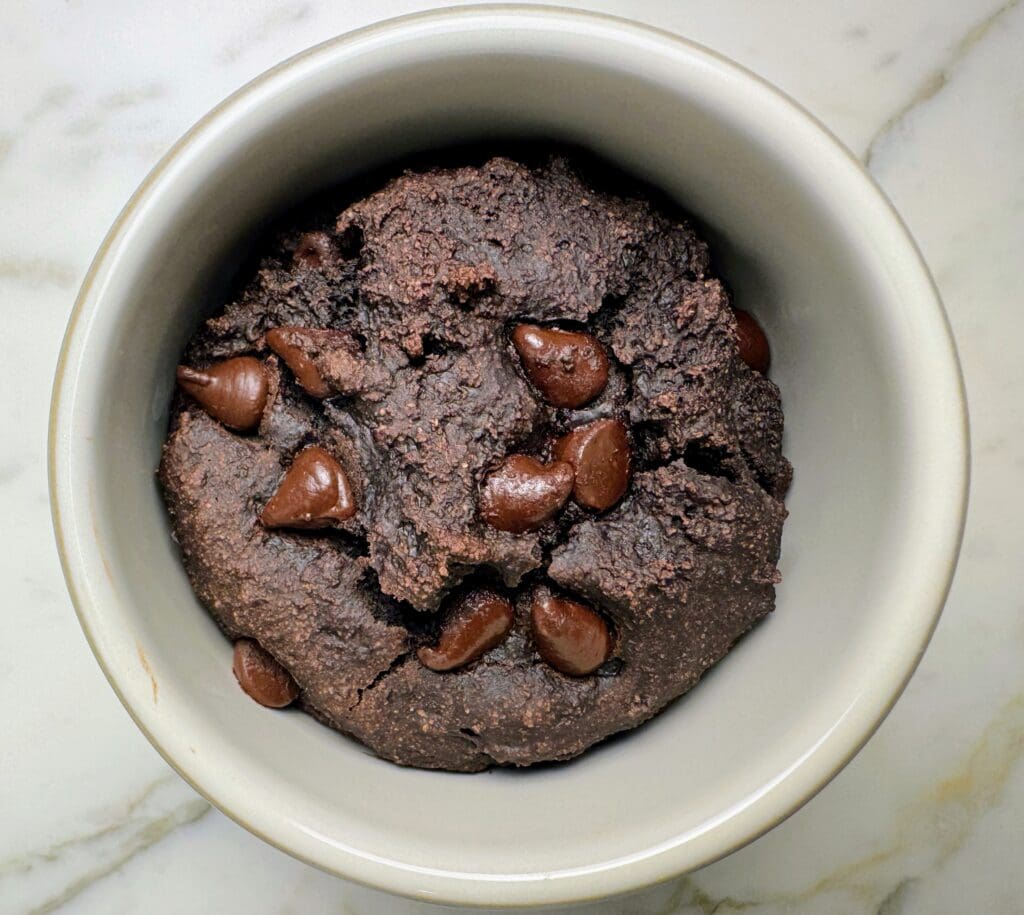
At home, I bake the cake in the oven using ramekins instead of mugs. The cake bakes in 15-20 minutes at 350 degrees. Not as fast as the microwave method, but still delivers a delicious result with minimal effort.
The Nutrition Breakdown
According to Shane and Simple, one serving (the full recipe) using whole wheat flour contains:
- Calories – 452
- Fiber – 10 grams
- Protein – 9 grams
- Fat – 7 grams
- Sugar – 47 grams
This meets my criteria for a healthy(er) dessert option—particularly when compared to conventional chocolate cake recipes that can pack twice the calories and minimal fiber.
How This Fits Into Your Health Strategy
What makes this dessert work within a sustainable, health-focused lifestyle is that it:
- Satisfies chocolate cravings (no feeling of deprivation)
- Contains real, recognizable ingredients
- Provides substantial fiber to slow sugar absorption
- Can be made in single portions (no leftovers tempting you from the fridge)
- Requires minimal time and energy to prepare
If you’re a chocolate lover like I am, this recipe deserves a spot in your healthy lifestyle toolkit. Not as an everyday food, but as a strategic option when you want something sweet without derailing your health goals. And since what we eat impacts how we sleep, making smart dessert choices can support your sleep quality too – another crucial pillar of your overall health ecosystem.
Your turn to experiment—try it and let me know what you think!
Thanks for reading!
Like this post? The newsletter is the blog, plus. Subscribe to You Are What You Read — one email a month on redefining your Next 50. Only what works.
References & Additional Reading
- Shane and Simple’s Original Vegan Chocolate Mug Cake Recipe
- Cleveland Clinic: Choosing Healthier Sweeteners
- Cleveland Clinic: Fiber: What It Is and What It Does for the Body
This post does not constitute medical advice. Please consult with your healthcare provider regarding your specific health needs.