


Read time: 5 minutes
Sleep advice has evolved. We’ve moved beyond “get 8 hours” to understanding that quality matters as much as quantity. There’s a more specific target for brain health that flew under my radar until recently.
Here’s What You Already Know
Adults need 7-9 hours of sleep nightly. This isn’t arbitrary—it’s the range consistently supported by research for optimal health, cognitive function, and longevity.
You already know sleep impacts everything: your energy levels, mood, decision-making, immune function, and even your risk for chronic disease. When you’re sleep-deprived, you feel it. Your brain moves slower, your patience wears thin, and everything requires more effort.
If you’ve been following along, you know I’m serious about sleep. My previous post details the habits that transformed my sleep quality after years of 3:00am wake-ups in my 30s and 40s.

Here’s What You May Know
Sleep happens in cycles, moving through different stages throughout the night. Two of these stages—deep sleep and REM (rapid eye movement) sleep—are considered “restorative sleep.”
The general recommendation you may have heard: aim for 30-40% of your total sleep time in these restorative stages combined. If you’re sleeping 8 hours, that’s roughly 2.5-3 hours of deep sleep and REM combined.
This percentage-based target is helpful, but it leaves you doing mental math. If you use a sleep tracker, you’re calculating percentages rather than having a clear number to reference.
Here’s What You Probably Didn’t Know (New to Me Too)
Dr. Dale Bredesen, a physician and Alzheimer’s expert, recommends more specific targets:
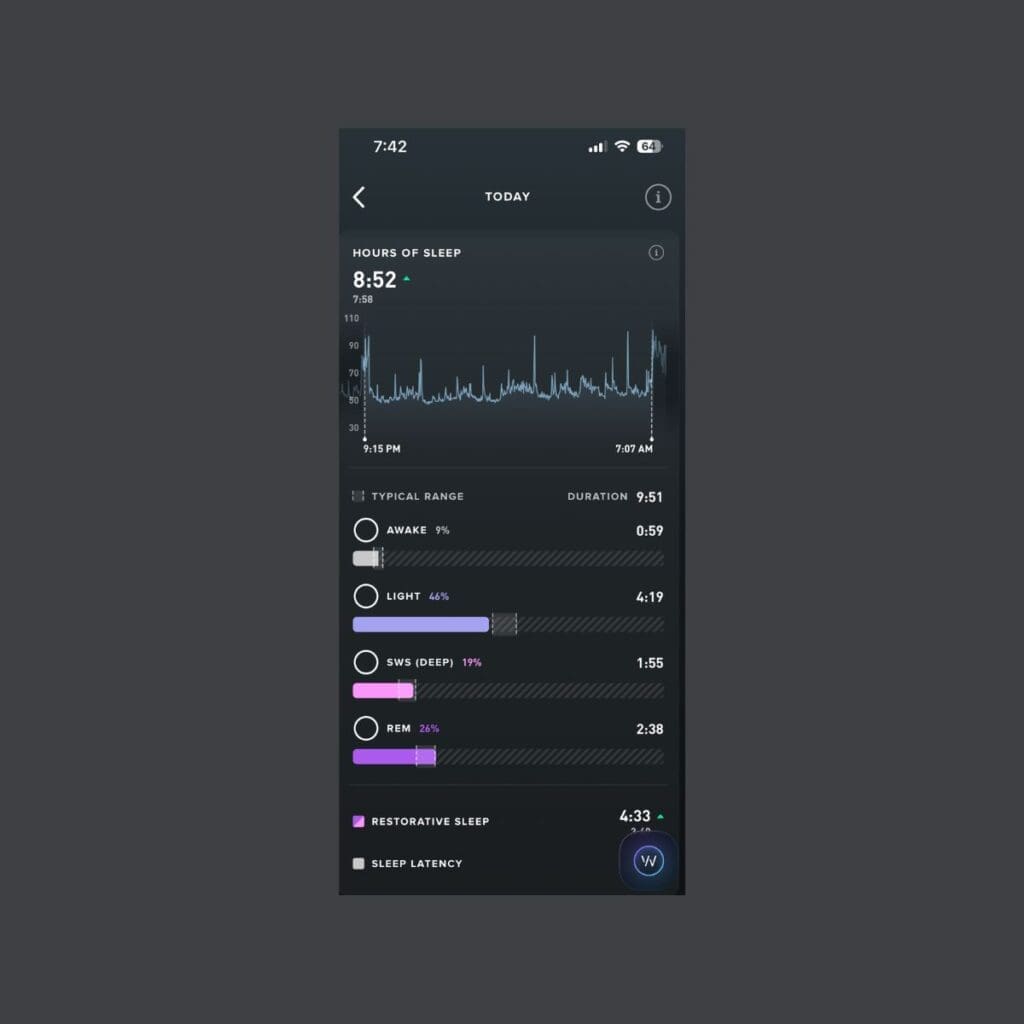
60 minutes of deep sleep + 90 minutes of REM sleep nightly
When I heard this on a recent podcast, something clicked—finally, a clear target. These are simple, specific numbers you can track and reference. Much more actionable.
Here’s why these numbers matter for your brain:
Deep sleep is when your brain clears metabolic waste, including beta-amyloid proteins that accumulate and contribute to Alzheimer’s disease. It’s also when your brain consolidates memories and processes what you learned that day. Think of it as your brain’s cleaning and filing system.
REM sleep is when your brain processes emotions, strengthens neural connections, and does creative problem-solving. This is the stage associated with dreaming. Your brain is highly active during REM, integrating information and making connections between seemingly unrelated concepts.
Both stages are essential, but they do distinctly different work for cognitive health.
Sleep and Brain Health
Bredesen’s recommendations come from decades of research on Alzheimer’s prevention and protecting cognitive function as we age. Consistently missing these targets doesn’t just leave you tired—it may increase your risk for cognitive decline over time.
For high performers, this matters beyond disease prevention. These are the sleep stages that fuel:
- Sharp, clear thinking
- Creative problem-solving
- Emotional regulation under pressure
- Quick decision-making
- Learning and memory consolidation
When you’re consistently hitting 60 minutes of deep sleep and 90 minutes of REM, you’re giving your brain what it needs to perform at its best. When you’re not, you’re operating below your potential, even if you’re getting “enough” total hours.
No Tracker? No Problem
These specific targets are incredibly useful if you use a sleep tracker like Whoop or Oura Ring. You can see exactly where you stand and adjust your habits accordingly.
But you don’t need technology to improve your sleep quality. Here’s what matters:
Focus on 7-9 hours and consistency. Go to bed and wake up at roughly the same time every day, even on weekends. This alone will improve your sleep architecture.
The habits that improve sleep quality naturally increase time spent in deep and REM sleep. Everything I covered in my previous post—managing light exposure, timing your caffeine, creating a cool, dark sleep environment, putting down screens before bed—these behaviors optimize your sleep cycles.
If you do track your sleep, use these numbers as your new benchmark. If you don’t track, focus on the fundamentals. The result is the same: better sleep, better brain function.
Your Next Step
Whether you’re tracking specific sleep stages or not, the path forward is clear. Quality sleep requires intentional habits.
Start with one or two behaviors from my sleep habits post. Notice how your energy, clarity, and mood respond. Then add another.
Want the complete blueprint? My free Sleep by Design guide gives you my tested list of high-impact sleep habits, a systematic approach to implementation, and my exact bedroom setup.
Sleep isn’t luck. It’s a series of choices that either support or sabotage your brain’s ability to do its essential maintenance work. Now you know the specific targets your brain needs. The habits that get you there are within your control.
Thanks for reading!
Like this post? Get more. Subscribe to You Are What You Read — one email a month on redefining your Next 50. Only what works.
References & Additional Reading
Sleep Stages and Circadian Rhythms – Sleep Foundation
The Role of Sleep in Cognition and Emotion – Annals of the New York Academy of Sciences
Reversal of cognitive decline: A novel therapeutic program – Integrative Medicine (Encinitas)
Image credit: SHVETS production
This post does not constitute medical advice. Please consult with your healthcare provider regarding your specific health needs.